Tao of the Farm – Principle number 17: “You can do it alone, but its better with family”

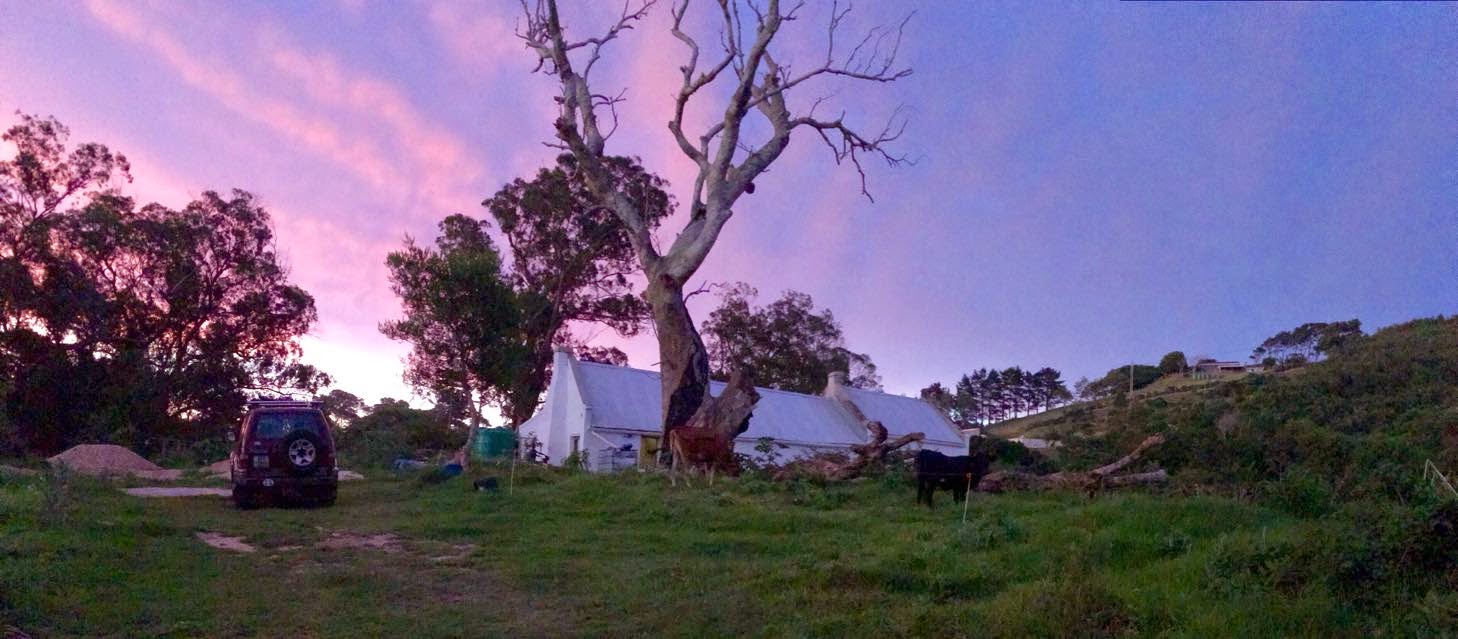
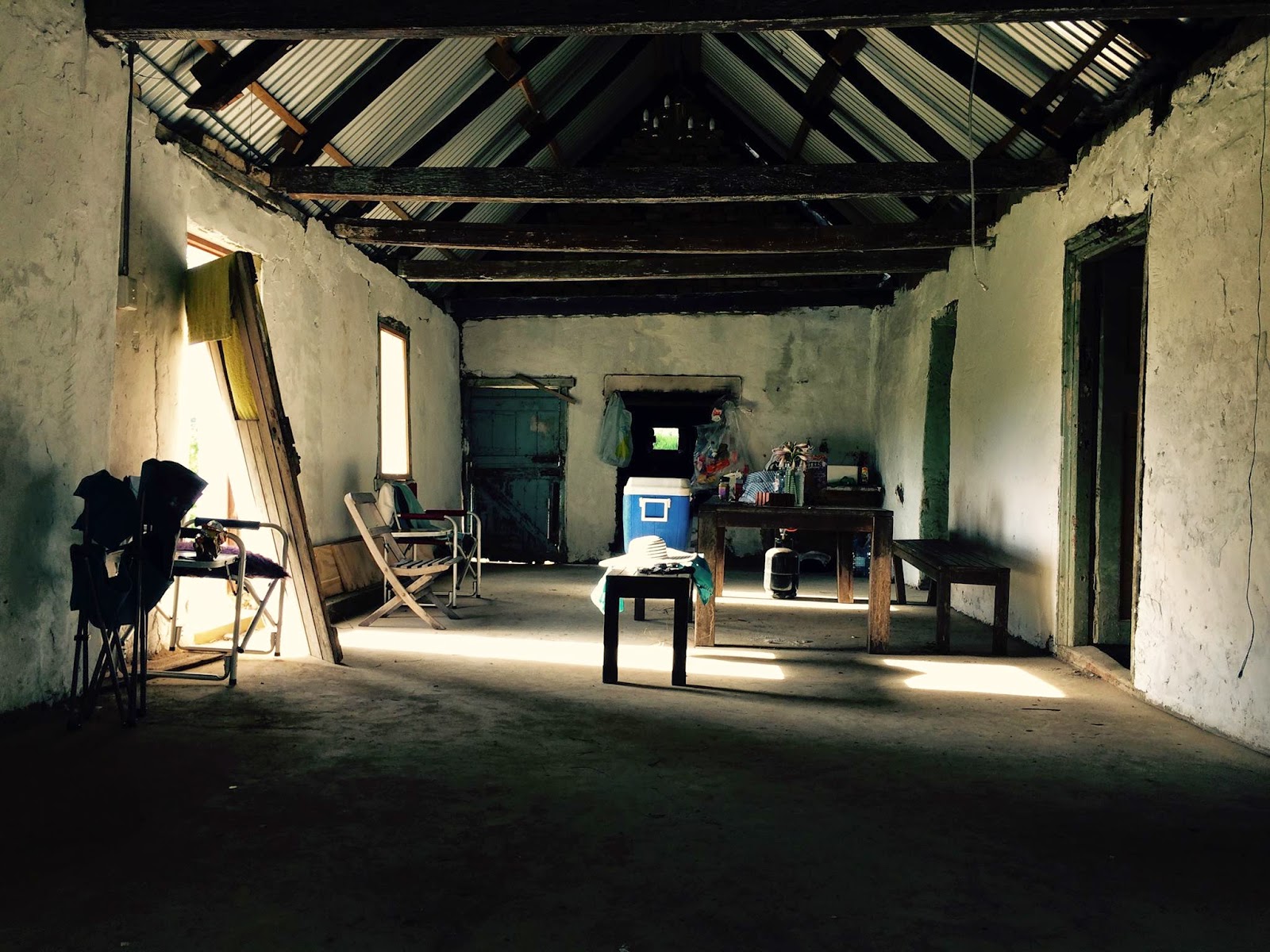
As I write this I am sitting at the table inside the “long room“ in the farm cottage It’s a warm summer Sunday afternoon and we have been here since lunch time yesterday. But what makes this weekend different is that my family is here with me. You see, the cottage has now been repaired to the point where it is now just about weather proof. (Depending on exactly where in the cottage you stand during a rain storm) The cottage also has running water, lights that switch on and off and toilet that flushes.  (all off grid I am proud to say) These simple conveniences make it possible for my wife, my daughter, my sister in law and her son to stay over with me at the farm last night. It was the first time for my wife to sleep over here, so I count it as a bit of a milestone. The thing is though, it just feels better to me for me to be going about my chores, moving the cattle, feeding the chickens or watering the fruit trees with my wife and family here on the farm. Yes we had a fun braai outside last night and a pleasant breakfast this morning, but for the most part it’s just about knowing that we are here together, not necessarily that we are having deep, meaningful conversation or helping each other physically. When, as I have been doing for over a year now,  I work on the farm over the weekends leaving my family at home in town, it feels different. It feels more rushed, strained perhaps. As if though a part of me feels that I am stealing time from them. I don’t know. I have not consciously recorded thinking that I am stealing time, it’s just that when we are here together allowing time to pass slowly together, it just feels so much better, It feels very right. It feels as if though it were meant to be. So perhaps this too is a lesson from the farm, one of the laws of the farm, that are true to the farm, but true also to our civilisation.
Let’s think about this a little. Because the idea of family and its “usefulness” seem in some parts of the world to have become caught up in politics of  polarity , where the term “family values” have become used as a code to mean, conservative, male dominated and religious. I am not talking about that here. Rather what I am observing is and process of evolution, where our species has grown to become strong and prosperous by holding together in tight family groups. Other species have evolved in such a way so as to make them highly successful to live alone for the most part. On the farm here we often see bushbuck. Sometimes a big impressive grey black male, will reveal himself for a few seconds before bounding off into the forest. At other times the female will peer through the shrubs, smaller and brown. We have not yet seen them together. It seems bushbuck are quite successful at living apart from each other for most of the time. But the ducks that visit the dam, are always in a family group. Sometimes there are four of them together, other times just two. I have not yet seen a lone duck on the dam. Ducks seem to be family birds.
Of course, humans have big brains and an impressive amount of will power, we can chose to do many things that may go against our evolutionary programming. We would live completely by ourselves ad we have proven it. Every now and then there is some record broken of how some brave person has circumnavigated the globe single handed in a yacht, even smaller than the previous brave person who did so. Of course it’s possible. What I am working on though in my own life, is to observe in me, what are the “laws” what is my evolutionary programming? In order that I can embrace it and work with it.  In order that I can understand when I feel down or lonely that it is probably that I am feeling removed from my family. And by contrast, perhaps the reason Or maybe one of the reasons)  I am feeling right now that I am feeling energised and reconnected with farm and with my life and with my mission is that I feel I am together in this with my family. We are on a joint mission. We are working together. We work at different speeds and we need different things to make us comfortable and relaxed, but we are all on the same mission.

Are we there yet?

(this piece first appeared in The Herald on 24 December 2014)
Perhaps as you read this you have reached your holiday destination? You have sped along the freeways or braved the airport terminal. You are where you want to be. Because, it is at this time of the year when many of us try to be somewhere else. We try to be where we are not normally. At the first chance we get, when we are released by our bosses for a few days or when we get a little extra cash, we escape, we run away, we go somewhere else. “Why is this?”, I asked my wife as we sipped Australian wine and chomped Paraguayan peanuts on our air Malaysia flight to Buenos Aires some time back. Can it be that the physical and spatial reality that we have built for ourselves is so intolerable that the only thing that keeps us there is that we don’t have enough time or money to leave it behind? No, this can surely not be the case. But even when we look a little closer, even at those times  of the year when we are not on holiday, still we find this intense drive to be in a different place. Driven by the idea that the different place is better. Our cities are living testimony to this obsession. Streets, roads, highways, overpasses, underpasses, airports, railway stations, IPTS lanes parking areas all built at huge expense and at massive cost to the environment to be sure that we can get as quickly as we can from where we are now to where we are not. Stopping along the way, is controlled, frowned upon or downright illegal depending where you are trying to get to. We see it also in the things we purchase and consume. It is not good enough to have ordinary butter, it must be Irish butter, our olive oil comes from Argentina, Portugal or Greece, our cars from Korea and our phones form China.  The other day I bought spring onions imported from Kenya. I kid you not…Spring Onions! Are we discontented? Are we displeased with this place, our place and the things that come from our place? No, I don’t think so at all. But I do think, as individuals, we are weak, we are without centre, we are easily manipulated and easily swayed by institutions and corporations that will make money for themselves in exchange for our freedom and for our time.
How much of our tax money is used to fund roads, bridges, harbours and runways? How much of our monthly salary goes to paying for cars, petrol and repairs. How many bright minds in our economy go to working in the motor industry, petrol industry, tyre fitment centres, vehicle finance and vehicle insurance? All collaborating and conspiring to build the machines and the system that make it efficient and effortless to get you to be somewhere else.  Imagine the extra cash we would have if we did not need to pay for all of this year in and year out. We are fortunate of course because we don’t have to imagine car free towns and cities, we can actually visit them and observe for ourselves (or rather just Google them and save the cost of the flight ticket). There are many, many examples of kind and caring societies that have managing the car and taking back the city’s streets. Quebec, Venice, Curitiba and Stone Town are beautiful examples of how this can be done in such a way that these places become a delight for residents and visitors.  We don’t have to imagine cities that grow their own food we only need to look to the Urban Agriculture of Mumbai, New York and especially Havana where 90% of the city’s fresh produce come from local urban farms and gardens and where more than 200,000 Cubans work urban agriculture sector. We don’t have to imagine a city that provides more than 90% of its energy needs from renewable resources, we need only to look to Reykyavik in Iceland.
 But my appeal is not only that we allow ourselves to imagine a city with fewer cars, less pollution  and less imports,  but also that we begin to imaging a city that we are happy to live in, happy to work in and happy to spend time in. My appeal is that we begin to imagine a city that attempts not to dream up new products that we can manufacture and ship across the ocean, but rather cities that make responsible use of their land, their water their sunlight and forests to feed themselves, cloth themselves and house themselves.  Perhaps this requires a mind-set though in which we begin to understand that we are not casual observers of the cities and towns we live in, but rather that we are active participants, actively creating the shape and form of our cities by the way in which we allow our lives to play out in them and by the way in which we choose to spend our money in them. Or will we remain trapped in the idea that the solution will come from somewhere else, that our clothing will come from China, that our electricity from Eskom in Mpumalanga, our food by refrigerated truck from Cape Town and that the only way we could navigate our city is cars running on Saudi fuel.
But wait, I can’t be chatting for too long, I have got to get back to the all-important task of basting my Brazilian Christmas Turkey.

Snakes Alive!

Of course we have lots to fear in this life. There are so many ways in which we can get hurt, killed, robbed  or betrayed. Everyday we are exposed to danger. Motorcars are viscous killers. Any home contains all kinds of ordinary looking things that can kill us if we are not careful. And I am not even talking about rat poison or pool acid, just ordinary stuff, which when taken in the wrong quantities can kill us, like vodka, or paracetamol or lying  in a bath. But it is of course not logical or acceptable to live in fear of bathwater, electricity or a motor car just because it can, in certain circumstances, be deadly. It seems though that we discriminate differently between Urban dangers and rural dangers. Or so it seems this week with the excitement caused by the appearance of two (very small) snakes in our rainwater tank. I have builders working on site and they were terrified. It effected their work. Some in my family too, (I dont want to mention any names) are hinting at not ever returning to the farm that is loved by all of so much. Of course I as a husband and a father must make every effort to understand that not all of us are the same and that some and may have different loves and fears. I understand this. It is not good enough for me to explain that as we warm up into summer, the snakes will be on the move and we should be on the look out.

Anyway, the snakes turned out to be two Spotted Bush Snakes Philothamnus semivariegatus. (thanks to the people at snakesofsouthafrica for help with the identification) which are not poisonous at all. There are dangerous snakes on the farm, like the Puffaders that like to lie on a sunny path waiting to be stepped on. What I am trying to say though, is that we are confronted everyday with a strong bombardment of ideas of what is “normal” and what is not. We are told that “Normal” is to work in a cubicle, commute to work in a Toyota Corrola, and watch rugby on Saturdays. So it is with normal dangers that confront us every day in the city. Because they are “normal” we tolerate them. Even when they kill us, we continue to tolerate them. But snakes, scorpions and frogs are “abnormal” dangers and they are to be eradicated, chopped into little pieces, burned, poisoned and obliterated. Such is the logic of our time.

So, while I can see that all this, to keep the peace I have had to make a visible effort to do something about the snakes. So I have cleared all the longer grass around the house and reduced the number of places snakes can hide. And also very cleverly I have installed a very innovative anti snake device onto my watertank.

You can watch the video if you like.

So, How have the cows been?

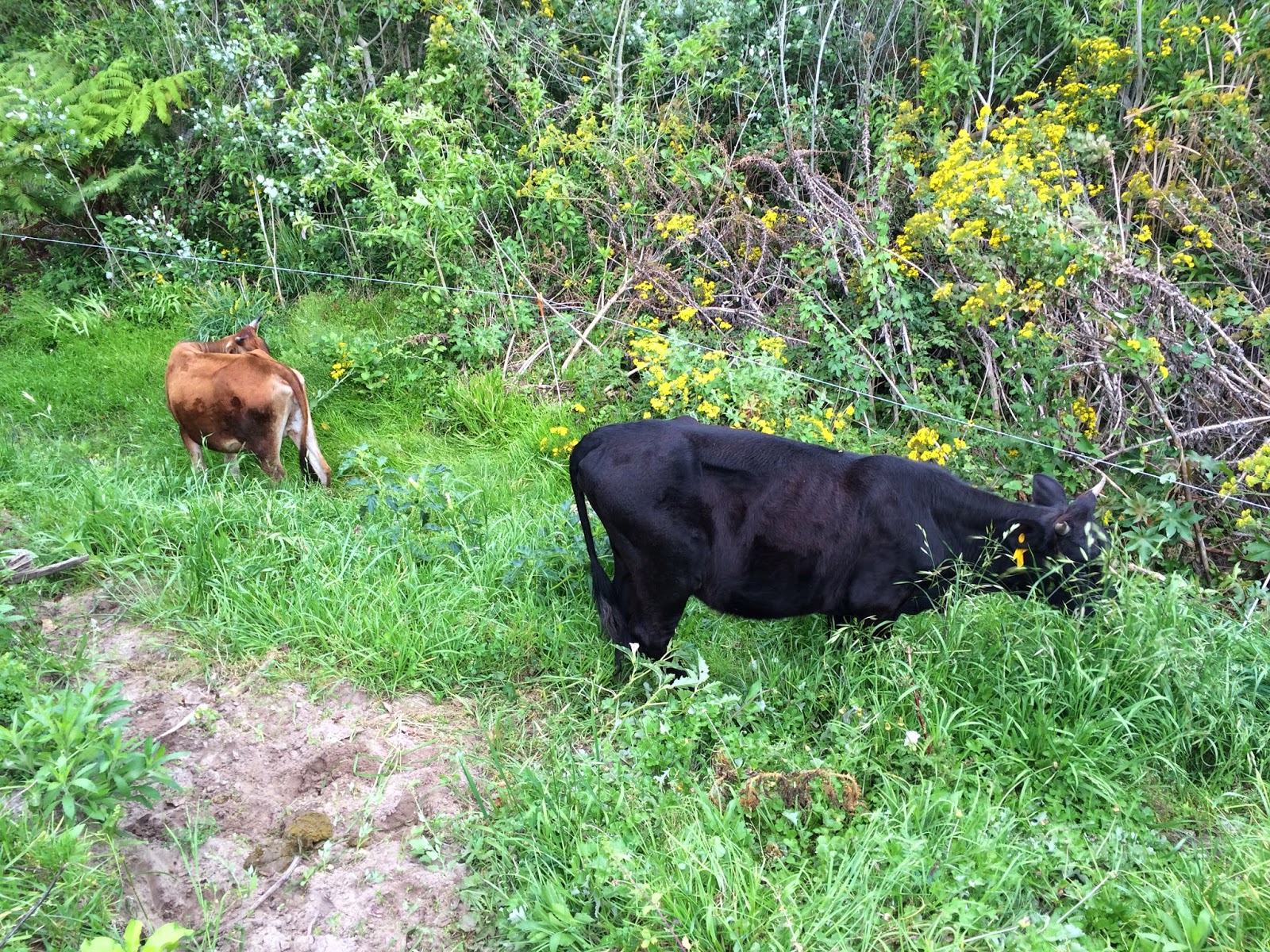
I have not spoken much about the cattle since I lost the calves and the bull. But is actually going quite well now with the two heifers. A brown one and a black one. We move them to new pasture everyday with the portable electric fence.

watch this video

We keep the “camp” small enough to ensure that they graze everything down (not just the tasty stuff). Cattle are picky eaters, they will first go for the greenest grass and then try the other stuff if they have to. So by keeping the camp just the right size I can ensure that they get enough, but that they don’t just pick and choose the best grazing. The important part of this strategy is that all the unpalatable stuff gets eaten as well, making space for other species to come through. The exercise is really all about building the soil. The cattle improve the soil in three important ways:

  1. They leave there manure behind – adding the nitrogen that’s crucial to get life going in the soil
  2. When grass is grazed, it automatically cuts off the proportionate amount of roots underground (thus adding much needed carbon to the soil)
  3. The animals hooves disturb the soil surface helping seeds get a chance to germinate.
Overgrazing is of course an incredibly destructive force, but in the a managed environment, grazing animals can build the soil and save the planet. (life is not possible without topsoil – just think about it)
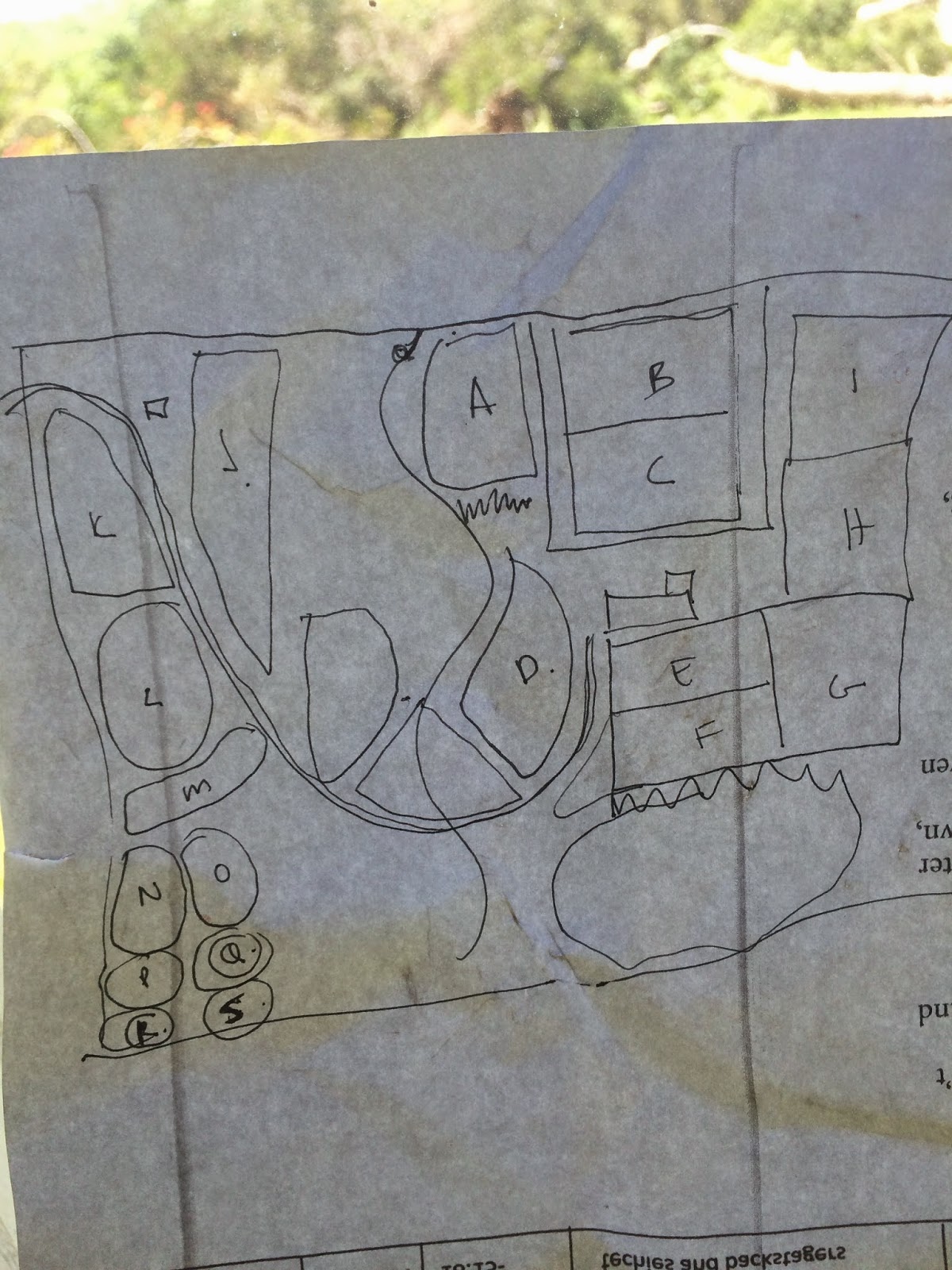
So how it practically works though the week, it that Mandoza (my trusted assistant) moves the cattle to new grazing every day. I prefer to move them in the afternoon when the sugar content of the grass is higher. I have a simple diagram which I leave in the cottage so Mandoza and I can refer to camps by alphabetical letter. We talk mainly by texting through the day. I charge the battery  for the electric fence here at home and once or twice a week I would make sure a newly charged better is taken to the farm. If we use this configuration we have 20 camps. so that would mean that would mean that each camp would get 20 days rest if each camp were grazed for one day. Of course depending on rain and time of the year, 20 days may or may not be enough time for the grazing to recover, so the idea would be to vary the size of the camp accordingly. I can see now that we have had some rain and the days are warmer, the grass is looking good and I can keep the size of the camp quite small, giving me perhaps 30 or 40 camps in total. The grazing is looking quite healthy, If I compare it to my neighbour’s place where he has sheep, cattle and goats continuously grazing the grass down to about 50 mm high, then we are looking very good.
I am also slowly, but surely expanding the pasture. Over the weekends I spend time with the chainsaw cutting out the alien invasive species: Black Wattle, Port Jackson, Inkberry, Blugum, Poplar and Cape Wattle. I start buy cutting paths just wide enough to run the electric fence in. I create a camp in a forested portion. The cattle eat some and stomp down other parts including brambles and vines making it easier for me to come in with the chainsaw. I find it does not take long for the grass to begin to establish in areas where I have opened up the ground to new light that was previously blocked by tree cover. Anyhow, I enjoy working with the cattle. I see them as my landscaping assisants. We work together to bring this farm to be the most that is can be,

Making way for something better.

The thing is, I have refused to accept that my life would become ordinary. I have refused to accept that I would be satisfied with a 40 hour work week and a pay check. I have refused to accept that I would be satisfied with a life that requires me to focus for its duration one specific discipline, one specific focus, one specific profession. But this has caused me some pain and some confusion and some clutter. I can see how, in my defiance I have taken on more and more projects and responsibilities. The assumption in the back of my mind being that I am some kind of superman that has no limit to my ability to take on new stuff. But now, for the last few months at least I have begun with a campaign of cutting down. Taking on the farm has made me realise, number one, that this is what I really want to get right. If turning the farm into a healthy, vibrant and productive family place (perhaps like it may have been many many years before) is the one thing I achieve in my life, then I will consider that a life well spent.

Or at least this is what is running through my head as I dismantle the Hothouse that I built in 2011 to house my aquaponics pilot project. At the time I had expected it only to last a year or two so the time is right for it to go. The real pressure for it to go has of course come from my children and from my wife. They would like things to look a little neater in the backyard. I can resist. I can be forceful, but that would also not be right. So down comes the hothouse.

I had built the entire structure from scrap timber. Timber that I bought from a scrap dealer, called DIY Timber but scrap nonetheless.

I put everything together with my Ryobi Hand held electric screwdriver / drill, so taking it apart gain, involved me unscrewing the boards and the brackets. This allowed me to save most of the timber which I have now taken to the farm. I will probably use it for a new hen house project I have in mind. I must say though, that I learned a lot from taking down the hothouse. I could see what worked and what did not. The plyboard that I used to form the circular from were not a good idea. They did not hold their shape. The tunnel plastic was great. It did begin to rip but only in the top point which had a poor detail that was too sharp. I learned from this hothouse in order to be in anyway warm in the winter months, every minute of sunlight must be captured. All shadows must be avoided, and by the same token, things can get very hot in mid summer, not for the Tilapia, they love worm water, but for some of the plant species, so some way to ventilate is critical.

The timber has generally held up very well over the last three years, but where it has been in touch with moisture, either in direct contact with the soil or where tanks or filters cause continuous moisture, the timber has begun to show signs of rot.

By taking this structure down I now make it possible to build a better one. One that is an improvement on the first one. I would not be able to build a better one if the old one is still there, or it is unlikely, because some of the components need to be re-used and because it just never becomes a priority above the other items on the to do list. But what other parts of my life and my schedule have become old and tired and need to be taken down to make way for new possibilities?  Or am I extending the metaphor of the hothouse to where it does not belong. Are there some parts of the the way I do business, the way I practice as an architect, the way I invest my money, the way I spend my time, that can be dismantled, pulled apart to make way for something better. Maybe and I can see that is what I have been doing in the last while. Cutting down slowly. realising that I am human and can only do so much in a given day and in doing this maybe, just maybe, I am making way for something better.

Who will champion PE’s ICC?

(this piece first appeared my regularish column in the The Herald on 9 September 2014)
I was fortunate to, last month, spend a week in Durban. I was one of four thousand five hundred delegates from around the world that attended the 25th World Architecture Congress. It really was a great event with great speakers, great exhibitions and great and inspiring debates in the corridors and coffee bars that make conferences like these worthwhile.  Yes, my mind was on the papers and presentations, but maybe, even more than this my mind was on the city of Durban and the International Convention Centre, where this fantastic event was being hosted.
As I was shuttled from the distant airport or as I booked into my beachfront hotel or enjoyed a steak for supper, I was asking myself: “What does Durban offer the conference goer that Port Elizabeth does not?”  I was asking myself “What gave the people of Durban the confidence to build the International Convention Centre, where we in Port Elizabeth have failed to build ours?”
Because many of us remember how, before the World Cup came around, Nelson Mandela Bay Municipality was all set to build our own International Convention Centre on our own beachfront. All the studies had been done by the world’s leading thinkers on these matters and showed that there is probably no other investment our city could make that could attract such a significant amount of new visitors to our region as an International Convention Centre. And not just any old visitors, but big spending business people, who, wherever they go around the world, seem to burn money before, during and after the conference on hotel accommodation, restaurant meals shopping and touring. The amount of new jobs, new opportunities, new rates and new taxes that was predicted would have been generated by this project is actually quite staggering.
It is all so sad therefore, that at the precise moment when our city seemed poised to push the big “GO” button on our own very own ICC, that  Sepp Blatter announced to the world in 2006 that South Africa would be hosting the Fifa 2010 World Cup. From that day on everyone went crazy. Any plan, any idea, any vision and any project that did not, in some way, support the World Cup was shelved and forgotten. So with the passage of time, people now forget that the plan for our ICC was not shelved because it was a bad idea,it was shelved because the World Cup got in the way.
Back to the streets of Durban and my Hotel on the beachfront. Yes, Durban’s beachfront is nice, but not nearly as nice as Port Elizabeth’s. The Durban beachfront is actually decidedly down market and positively shabby. It seems that the whole “upmarket” part of what was the beachfront has upped and moved off to the North Coast, to Umhlanga, to Belito and to Salt Rock. I don t know the places that well, but I do know that PE’s beachfront still contains its upmarket restaurants, hotels and apartments. It does this gracefully, while still accommodating ordinary people that are unable to spend large amounts of money. PE has cleaner beaches, our sand has a better colour and the skies are crisper. Port Elizabeth has a better beachfront. Fullstop!
In the evenings after the lectures, exhibitions and talks, my wife and I would visit Durban’s Florida Street. It’s a restaurant zone about 10 minutes taxi drive from the ICC. It’s nice, with a good range of restaurants, bars, antique shops and art galleries. To be honest though, our own Stanley Street is better. Stanley Street offers a wider range and has a much better “street vibe” and is distinct by being nestled in a uniquely preserved heritage precinct that is Central and Richmond Hill.
So, I come to ask myself : “What it is that is standing in the way of Port Elizabeth becoming a world class conference destination?” We really do have an offer that can out-compete Durban.  We have all the key ingredients to make ourselves into a conference city, that can be better than Durban and, importantly, we have the rare opportunity to locate an ICC on the beachfront. Imagine being able to step out of the conference and see the waves, smell the sea and check out the talent along a public promenade back to your beachfront hotel or your fancy restaurant. Colleagues, our city has it all. All except an International Convention Centre. Yes, I know our friends at the Boardwalk Casino have tried to convince us that what they have built at their new hotel is the same thing. While we must all understand that the casino bosses were well motivated to convince that gaming board that what they were building would save the city from building an ICC, the truth is that their conference venue is nice and it’s better than what they had before, but just does not do the trick. It just does not have the scale required to attract the kind of conferences envisaged by the city prior to 2006.
But all is not gloomy, because we are very fortunate to have in our city many very highly paid and skilled public leaders. They can be found in our Development Corporations, Development Agencies, National Departments, Provincial Departments and Municipal Directorates. (Remember, an ICC is a public investment, requiring taxpayer’s money.) So my challenge to the clever and powerful people of this city is: Which one of these individuals in these powerful institutions will step up to the plate?
This project needs a champion.
Who will it be?

Freedom is our Heritage. It belongs to us.

Well today is Heritage Day, but is so wet here that I cant bring myself to make a braai. Its quite interesting actually that the idea of having a braai on Heritage day has caught on. Because, if I were to question people I meet in South Africa everyday and ask them about their heritage, they will most often speak about their specific national, tribal or language identity. In some cases the individual may also have some kind of clan or family heritage that they like to speak about. Heritage, for so many of us has been about trying to answer the question “How are you different from other people?” Well I am not sure that’s the only way to think of it. There are so many things that we in fact have as a common Heritage. That’s why I like the idea of “Braai” day, because no matter who you are, your ancestors at some stage cooked meat over an open fire. This is an in and inescapable truth and a comforting ritual that we are all still drawn to in some way. We are all drawn to music, we are all drawn to conversation and laughter and we are all drawn to being outside and breathing fresh air. This is our common heritage and this is what we should be celebrating. In my life these are the things that I celebrate. The minuscule and scientific differences between us are not of such a great fascination to me. Rather I see as  academic, the differences between Irish Whiskey and Scotch Whiskey, I see as academic the differences between Rooseterkoek and I’rostile. I see as academic the difference between Pot Roast Chicken and Umleqwa or Umqa and Pap.

I would also argue that it is our common heritage to interact with each other in a civilised way in order to exchange with each other goods and services, In fact, on our way out to the farm this morning Hlubi and I stopped in at the Lake Farm Centre for Intellectually Challenged Adults. They were having their annual fair. Unfortunately a little washed out, but there were still enough people to form a queue at the coffee and cake table and to buy out the boerewors rolls. We huddled indoors looking through the bric-a-brac or choosing the fresh fruit and veg on sale from local farms. It just came to me how different and pleasant this experience of trade is. It feels honest. It feels caring. Dealing with ordinary pleasant people like you and me. Not sexy, Not Flashy. Just ordinary and pleasant.So different from the malls and superstores where I am constantly on my guard, un-relaxed, conscious that this big huge business, is a very clever machine and it is trying its best to drain my wallet and suck my blood. There is no relaxing in such an environment.
But at Lake Farm this morning I wondered: “Is the act of buying and selling our daily needs in a pleasant and civilised environment which we own and control not a common Heritage that we should reclaim for ourselves?”. Really, its only in the last 50 years or so that the act of consuming has been turned in to massive industry that it is. Can you think of a shopping mall that even existed in the seventies? I cant, but maybe there was one somewhere far away. The point is that Heritage is something that has come a long way from the past and belongs to us. We need to defend against those gifts being taken away from us. The corporations taking those gifts away from us are mindless and soulless. I don’t mean this as an insult. It is an observation. Remember, while corporations were all at some stage founded by people, they are not people, they are code, like a computer virus, a piece of programming. They employ humans yes, but they are not human. Corporations are machines and they are out of control. They have no “off”switch. Any single human who tries to switch off Walmart or Macdonalds will be ejected by the machine. Discarded, disciplined, imprisoned…
Am I digressing?
Is it not our heritage to have clean water and breathable air? Is it not our heritage to have clean food, free toxic commercial chemicals? Is it not our heritage to be free from toil and drudgery? Yes, I know some will say that it is also our heritage to be riddled with lepracy and dying from bubonic plague, But have the scare mongers not been too successful in convincing us all that we have had to accept drudgery, toil and environmental collapse in order to achieve the technological advances that have brought us the anti-biotic?
No, I think we can confidently lay claim to a heritage of freedom. We are more knowledgeable now as a species than we have ever been before. If freedom is the freedom from drudgery, poverty and environmental collapse, then yes, it can be achieved if we set to it as a project, as if we had to get a man on the moon or build a Hadron Collider or rid Iraq of Saddam Hussain. It can be done.
Freedom is our Heritage. It belongs to us.

Two dead Chickens

Its not that I expected it to happen, but I am not surprised. Two chickens were taken last night, probably something as small as a mongoose. It must have slipped under the frame of the chicken tractor. We have re-enforced the pen now, by adding a trim of chicken wire that I believe a mongoose may not be clever enough to dig under.

I suppose the other way to have gone about this would have been to have built an absolutely impenetrable concrete and brickwork fortress for the chickens. Something that would have taken a year and something that could withstand any attack including hurricane and leopard. But I don’t think that’s the approach that I care to take. What I am trying to get right at the farm is efficiency in design. The question I continuously ask myself is: What is the appropriate response?

I suppose this is what I am trying to get right in my life. Because I can be cautious but it may stop me ever setting a foot out the door. Or I could be reckless and risk hurting those that depend on me. Too much caution is bad. Too much recklessness it bad. But what I am doing with the chickens and what I am doing on the farm generally, is observing. Taking and action and observing the response of the farm.

Through the action of introducing the chicken tractor, I have been able to observe that I have a mongoose challenge. I can now prepare a measured, sensible response to the mongoose challenge. I can respond with design. The kind of design that does not destroy habitat. The kind of design that is the gentlest possible intervention to address the challenge.

Do you see how this is different to the approach of conventional agriculture, conventional medicine or conventional city building.? In conventional agriculture where we find we have insect challenge we introduce insecticides and destroy all insects, good bad or indifferent. We do not take the time to observe and develop a measured response. In medicine we respond to microbial infections with antibiotics. We do not take the time to observe. We annihilate all bacteria, good bad or indifferent. In city building we act against variety, where one noisy business upsets one complaining resident, we abolish all mixed use suburbs and replace them with a monoculture of residential, a monoculture of offices and a monoculture of factories. We act in this way perhaps because we are afraid of things going wrong. We are afraid to make mistakes. We are afraid perhaps of the ridicule or the mockery, So we become cautious. We make very safe decisions that cant possibly go wrong. We get life cover, medial aid and short term insurance. We get cars with a “motor plan”.We get safe jobs that promise a pension to look after us so we don’t embarrass ourselves by being a burden by making the mistake of running out of money before we die.

But of course in all this cautiousness our dreams are postponed and the richness of what could have been our lives becomes displaced with a life of slavery to those that offer the promise of comfort and security. This life my friends, is not for me. And yes there will be some blood and guts along this path.

But this is the path that I am committed to walk.

ECIA Chair slates ‘too big to fail’ developments

This piece appeared on the mype.co.za website on 6 September 2014. It captures some of my views on the city and the profession at the moment.

ECIA Chair slates ‘too big to fail’ developments


The past two years have seen the Eastern Cape Institute of Architects’ (ECIA) take on a higher level of advocacy and engage more actively with the public, business and government to educate and share the power and joy of the art of architecture; and on how design can be used for good.

?ECIA President, Tim Hewitt-Coleman says, “The city is its buildings; and the city is the spaces between its buildings. We must work hard to develop a dialog about the ‘Art of Architecture’. A critical dialogue that helps us all see what it is that we like, what we don’t like and what we would like to see our own cities and towns become.”
“I continue to be astounded at how architects in our region manage to achieve such excellent buildings against significant odds, something we must consider a major achievement. There are many of these and we have taken the time to build an exhibition of outstanding design currently on display at the Athenaeum.”
Hewitt-Coleman is adamant that architects have a crucial role to play in protecting excellence. “We are in a desperate fight to defend the tradition of excellence in the built environment against a recent irrational and completely ill-considered attempt to buy the services of an architect on the basis of ‘cheapest is best’,” he said.
“The public sector, spending tax payers’ money, is the number one culprit in this mindlessness. We call upon the public to assist us in this fight, by demanding excellent buildings, excellent parks and excellent spaces. Architects in our region are ready to provide these services.”
The celebration of excellence has been an on-going call to action of the current ECIA committee, which has been in place since 2012. Today a new committee was also elected to carry to mantle forward building on recent achievements.
The ECIA has made significant inroads in involving the profession and public more actively in the design process and engaging them in debate around the way urban spaces are shaped.
“The inaugural Urban Assembly was hosted in October 2013 presenting an ambitious collection of regular ECIA events and a series of new public events, including the popular Archi Race and the prestigious Milde McWilliams Memorial lecture given by the inspirational Luyanda Mpahlwa of Design Space Africa,” said Debbie Wintermeyer, ECIA committee member.
In April 2014 the ECIA also hosted an exhibition at the Athenaeum which showcased competition design entries for two major projects at the Nelson Mandela Metropolitan University (NMMU) and the design of the new NMMU Alumni building, allowing the profession and public to engage with the idea of the architectural competition as a method of procurement. The ECIA also promoted awareness of the Union of Architects World Conference inDurban in July.
Hewitt-Coleman said the new ECIA committee must remain focussed on what he sees as the “needs” of the profession and the built environment: Clarity, education, training and ethics: “It was a joy to serve with this committee over the last two years. To be an architect is to be a member of a very old profession that pre-dates Roman, Greek and Egyptian civilisations. Those of us who are asked to care for this profession in our specific corner of time and place, do so out of a deep sense of gratitude to the generations on architects who shaped our tradition.”
Recently the Eastern Cape has seen innovation temper local design, with the construction of green buildings which are less expensive to heat and cool, use less energy for lighting and are generally more comfortable to live and work in. Many of the projects in region are leading the way nationally.
However this is not the norm.  “For the large part, our cities a terrible sprawling dust raps of poverty and desperation. While much of this is understandable because of our history of apartheid city planning, what is happening right now in 2014, in architecture and city building is completely inexcusable.
“I don’t just mean the mindless rows of matchbox houses sprawling over the hills, but also the megalomaniacal big capital shopping centre monster way outside of our city to the west and in all other directions of the compass where cheap land can be found to build ‘too big to fail’ monuments to our system’s uncaring arrogance,” Hewitt-Coleman said, adding that architects everywhere are calling for a “human face” to the planning of buildings and cities.
“Architects are being called upon to step forward, out of the shadows, and claim the space needed to design and plan the cities of our future. We are slowly and tentatively developing the courage to do what it takes to wrestle this space back.”
Reflecting on 30 years of a changing architectural landscape – which is shaping and reconstituting modern South African cities – the Eastern Cape Institute of Architects’ (ECIA) latest exhibition, Excellence in Architecture: 1983-2013, celebrates how the region has morphed through architectural intervention.
The ECIA exhibition opened on Friday 5 September, and runs through to 12 September in the Athenaeum.