
Freedom, what is it? Is it something we find? Is it something we fight for? It could be, but here we talk about freedom as something we build for ourselves in our own lives everyday.
If you spend any time in permaculture circles, you’ll hear one word more than almost any other: swale. And for good reason. The swale is one of those quietly brilliant ideas that, once you understand it, changes how you see every hillside, every ditch, every rainstorm.
At its simplest, a swale is an earthwork — a channel or berm — built on contour to capture and slow the movement of water across a landscape. The goal isn’t to drain water away quickly; it’s the opposite. A swale is designed to keep water as high up in the landscape as possible, for as long as possible. That single shift in thinking — from drainage to retention — is what makes it such a powerful tool.
Here at Pebble Spring Farm, the swale system begins at the pond. A dam wall runs along one edge, doubling as the driveway to the cottage, and the pond’s water level is kept in permanent equilibrium by two “popes” — a local word for a standpipe: a 110 mm PVC pipe with an elbow joint that runs beneath the road and emerges on the other side.
The first pope maintains the dam at its ideal static level. The second handles the overflow during wetter periods. It’s a beautifully simple, passive system — no valves, no pumps, no moving parts. The water finds its own level and spills when it needs to.
From that spillway, the water enters the swale channel, and the real work begins.
One of the most common questions we get is: how do you find the contour? How do you know exactly where to dig?
The honest answer is that the best tool we have isn’t a laser level or a surveying instrument — it’s the water itself.
In wet times, we dig a narrow initial channel — roughly the width of a spade — and allow the water flowing from the pond to run through it. Then we watch. Where the water moves, we follow. Where it stills completely, we know we’re level. Where we can perceive even a slight current, we know we’ve dipped too fast and need to correct.
This is the gold standard. No instrument can match the precision of water finding its own level in real time.
This approach does come with one significant constraint: you need water to work with.
Our region doesn’t follow a predictable seasonal rhythm. Wet periods and dry periods can each last months or years, and they can arrive at any time of year — our wettest months have historically been mid-summer, mid-winter, and spring. There’s no fixed calendar to plan around.
That means when the water is flowing, we move. We work quickly, extending the channel as far as the water will carry us, cutting through dense bush with a chainsaw, clearing with a hoe, and then trenching in 5 to 10 metre sections to see exactly how the water wants to run.
For the sections we push ahead of the flowing water — scouting the path, marking the direction — we use a simple leveling device: a triangular timber frame with a spirit level fixed across it.
The frame is calibrated on a known-flat concrete floor, so when the bubble sits dead centre, we’re on contour. It’s low-tech, quick to use in dense bush, and accurate enough to guide the chainsaw cuts and earthworks that follow.
The combination of instrument-guided path-finding and water-verified channel-building is what makes the system work. The frame shows us where to go; the water confirms whether we got it right.
There’s something deeper happening in this process beyond water retention, though that alone would justify the effort. The swale — following the true contour of the land — sets the primary geometry of the whole farm.
Paths follow the swale. Driveways follow the swale. Fences follow the swale. Instead of imposing a grid or a straight line onto the landscape, the land’s own hydrology becomes the ordering principle. The geometry that results is complex, winding, and responsive — because it’s informed by the actual shape of the ground.
And the water held high in the landscape doesn’t just sit there. It creates habitat. It feeds soil moisture across a broader area. It supports the kind of layered, biodiverse ecosystems that a rapidly drained landscape never can.
This is slow work, and it’s seasonal work. We extend the swale network when conditions allow and wait when they don’t. Each wet period gives us an opportunity to push a little further, to read a little more of the land’s character, and to let the farm’s geometry evolve in response.
It’s one of those practices that rewards patience and attentiveness more than machinery or speed. The land will tell you what it wants — if you’re willing to let it lead.
We’d love to hear how you approach swales and water management on your own land. Every landscape has its own logic, and there’s always more to learn.
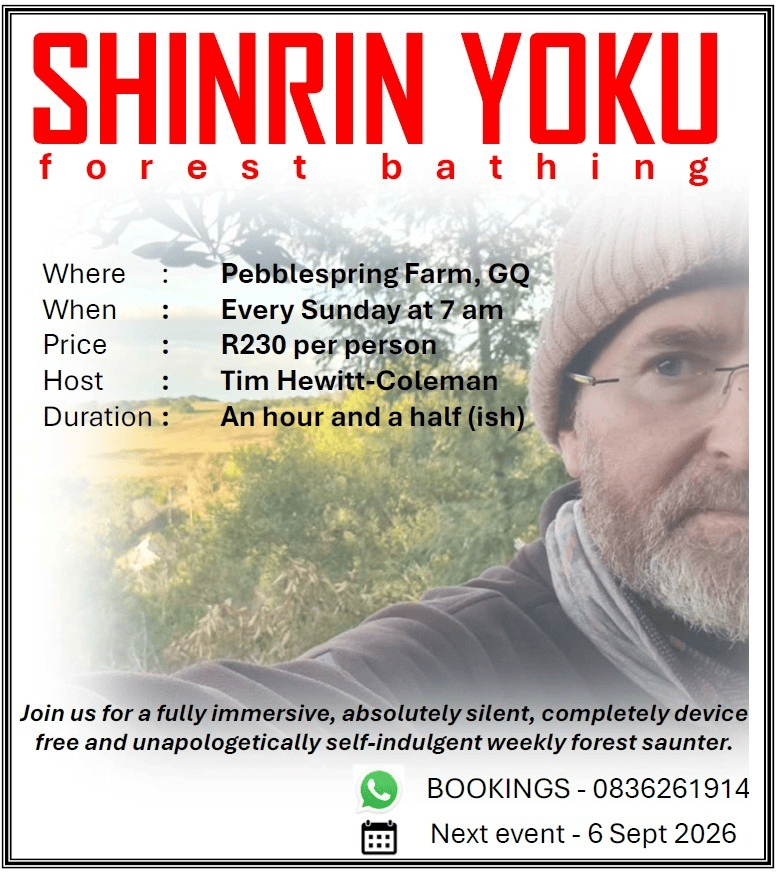
Here’s something you might not expect a forest bathing guide to say: expect nothing.
No miraculous life change. No measurable improvement in your health. No spiritual breakthrough. When you arrive at Pebblespring Farm for a forest bathing experience, please — leave your goals at the gate.
That might sound strange in a world that treats every activity as an opportunity for self-optimisation. We do yoga to get flexible. We meditate to get focused. We hike to get fit. Everything is a workout, a practice, a step toward becoming a better version of ourselves.
Forest bathing — shinrin-yoku — asks you to step off that treadmill entirely.
My very wise mother likes to remind me of something simple and profound: we are human beings, not human doings.
We are not doing forest bathing at Pebblespring. We are not doing shinrin-yoku to get better. We are just being — in the forest, with the forest, as the forest.
We are being with the sounds that drift through the trees around us.
We are being with the smell of moisture settling in our nostrils.
We are being with the soft, shifting light as it filters through the blue gums just after sunrise.
We are even being with the distant sound of a chainsaw — because being present means being present to all of it, not just the parts that feel poetic.
Life doesn’t stop when you walk into the forest. The stressful thing happening next week is still happening. Your responsibilities to your children, your partner, your work, your own long list of life goals — none of that disappears.
But for 90 minutes, you have permission to delay it all.
Not forever. Just for now. Stress when you get back. Strive when you get back. The to-do list will be waiting. For these 90 minutes, you simply don’t have to do any of it.
That kind of rest — the rest of not trying — is rarer than we think, and more nourishing than we realise.
Here’s the quiet irony: when you stop trying to get results, results have a way of finding you anyway. A sense of calm you didn’t chase. A thought that untangles itself without effort. A body that breathes more deeply, almost without noticing.
But — and this matters — your expectation shouldn’t be to receive those things. The moment you arrive with an agenda, you’ve started doing again.
Come to Pebblespring. Walk slowly. Breathe. Look up at the light. Just be.
That’s the whole practice. That’s enough.
Forest bathing experiences at Pebblespring Farm are offered as open, unhurried invitations into nature. No experience or fitness level required — only a willingness to arrive as you are.
There aren’t many of them. But the ones there are, matter.
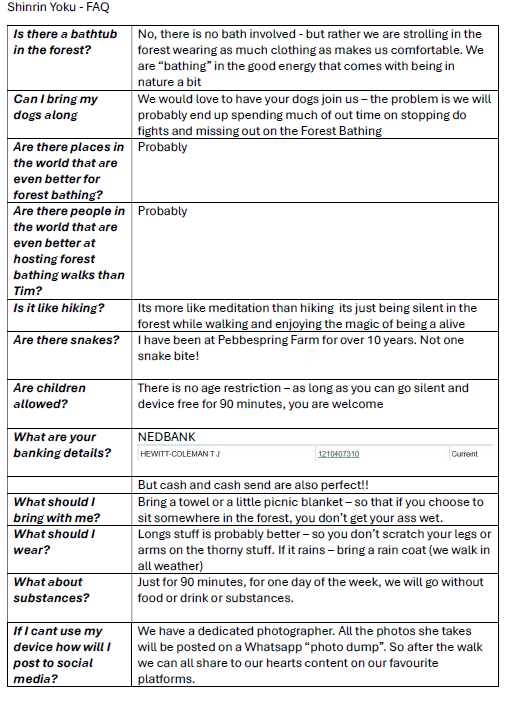
Shinrin-yoku at Pebblespring Farm is a specific thing — not the only way to practice forest bathing, not the “correct” way, simply our way. If that way calls to you, here’s what you’re signing up for.
Not 7:05. Not “around seven.” Seven.
It doesn’t matter if it’s raining. It doesn’t matter if your car gave you trouble on the way. It doesn’t matter if you sent a WhatsApp to say you’re running late. We start walking at 7:00 a.m., and the forest doesn’t wait.
The hour matters. The day matters. The commitment matters — because showing up, fully, is already part of the practice.
Before we set off there may be a word or two, a greeting, a breath. But once we begin walking, we walk in silence.
No conversation. No pointing things out. No nudging each other when a bird calls or a spider web catches the light. We notice those things — of course we do — but we hold them privately, inside ourselves, rather than reaching out to share them.
We are in a group. We carry warmth and care for one another. We simply don’t express it with words or signals while we walk.
No phones. No earphones. No cameras.
The analytical mind — the part of us that wants to name the tree species, identify the bird call, photograph the mushroom — gets a rest. That part of us is brilliant and useful and has its time. This is not its time.
During shinrin-yoku, we observe. We breathe. We notice what we’re walking past, what we’re walking through, and — perhaps most interestingly — what is happening inside our own heads as we move through the forest.
I’ll show you where to walk. When I find a place for us to sit and be still, you’ll know — because I’ll be sitting and being still. When it’s time to move again, I’ll simply begin walking. No whistle. No alarm. No announcement.
You won’t need to ask questions. I won’t be explaining the centipedes or the trees or the birds. That’s not what we’re here for.
At the end of the walk, there’s space — if people want it — to share what each of us noticed. What arose. What surprised us. What settled.
But that conversation happens after the shinrin-yoku is done. Not during.
Pebblespring’s version of shinrin-yoku is one version among thousands practiced around the world. The words shinrin-yoku point toward something true, but they are not the truth itself. Every practice, every forest, every guide shapes the experience differently.
What we are not doing here is competing. We are not trying to be the best at forest bathing, or more enlightened than the person walking beside us, or more attuned to nature than we were last week. Those ideas — of striving, of comparison, of improvement — are precisely what we are setting down for the duration of the walk.
They are also, not coincidentally, exhausting.
So if you’d like to join us — Sundays, 7:00 a.m., Pebblespring Farm — that’s what you’re joining. The silence. The forest. The stillness of just walking, without agenda, without performance.
It’s a simple thing. And it’s a beautiful thing.
Have you heard the term shinrin-yoku?
It’s Japanese. It translates, roughly, as forest bathing. And the moment I say that, I can already feel people picturing something they’ve probably done — a long hike, binoculars around the neck, ticking off bird species. That’s not what this is.
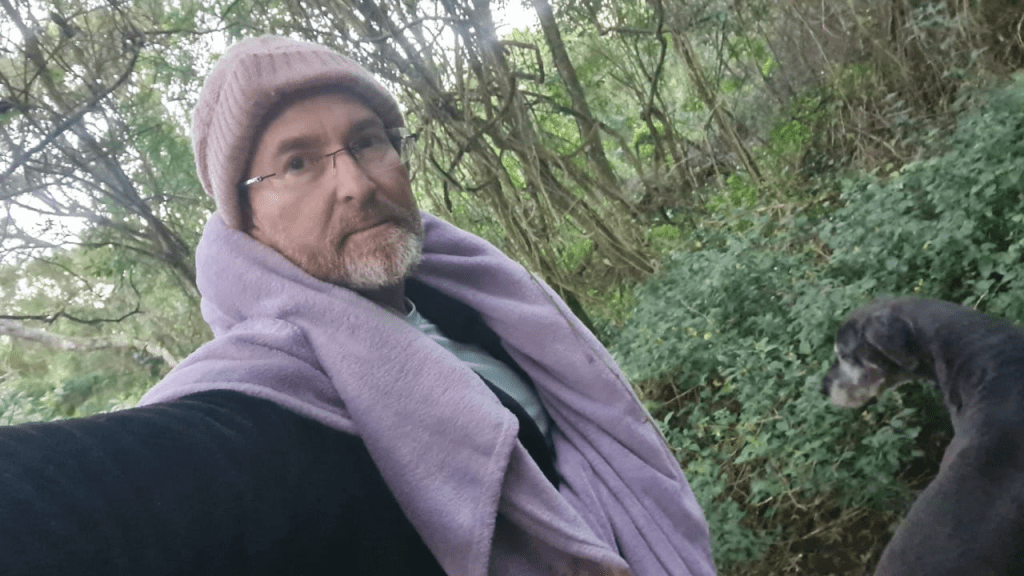
Let me tell you what forest bathing is not, because I think that’s the clearest way in.
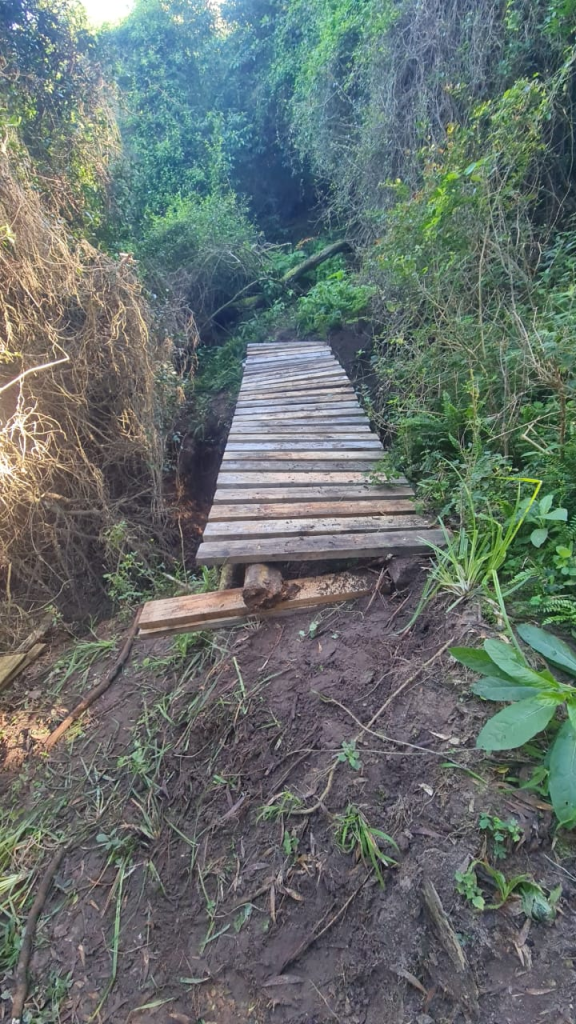
It’s not hiking. Hiking is about getting somewhere — covering ground, reaching a summit, experiencing new terrain. I walk the same route almost every morning. The path doesn’t change. What changes, subtly, is everything else. The angle of the light. The quality of the silence. The way the sunrise sits differently on the horizon than it did the day before.
It’s also not naturalism. I’m not cataloguing tree species the way a dendrologist would, or straining to identify birdsong the way an ornithologist might. When I hear a sound in the distance, I try not to name it. I just hear it — and notice, somewhere inside me, what it does.
That’s closer to it. Noticing.
I observe the trees, but not in the way you’d observe something you’re trying to understand. It’s more like appreciating light, or beauty — and then laughing at myself for trying to describe what that even means. I notice the smell of coolness. Does coolness have a smell? I don’t think so. But I try to notice it anyway. I let myself feel something when I come across a tree, or a bug, or a mushroom pushing up through the ground.
And I don’t time myself.
What I also notice — and this is perhaps the most useful part — are the thoughts. The anxieties that surface. Will there be enough money for salaries this month? What does the day in the office hold? They arrive uninvited, as thoughts do. But I try not to fight them. I let them pass the way I let a tree pass through my field of vision as I walk. I don’t beat myself up for having the thought. I just observe it. Ah. There it is.
A Japanese professor — I can never remember his name — didn’t invent this idea. People have walked in forests and felt better for it for as long as there have been forests. What he did was document it. He gathered scientific evidence showing that shinrin-yoku has measurable biophysical benefits — reduced cortisol, lower blood pressure, improved immune function. He made the case so compellingly that health insurers in Japan now cover it when a doctor prescribes a certain number of hours of forest bathing.
That’s remarkable. But here’s the thing: that’s not why I do it.
I don’t walk in the forest because it’s good for me. I don’t think of it as a wellness practice, or a prescription, or something I’m optimising. For me, it’s more like flying a kite. Or swimming in the ocean. Or dancing. You don’t do those things because of the cardiovascular benefits. You do them because they’re beautiful things to do.
The fact that there are health benefits is good. But it’s not the reason.
The reason is simpler than that: it’s a beautiful thing to do.
And some mornings, that’s enough.
Thank you Dean McCleland for this very interesting History of Lake Kragga Kamma and the region.
No they wont. But I have a lot of fun making them : )
Though it really seemed impossible to me at times, I have eventually settled in back at the cottage at Pebblespring Farm. I had set for myself the clear intention of having Christmas lunch with my family at the cottage. I am happy to say, we achieved this objective.
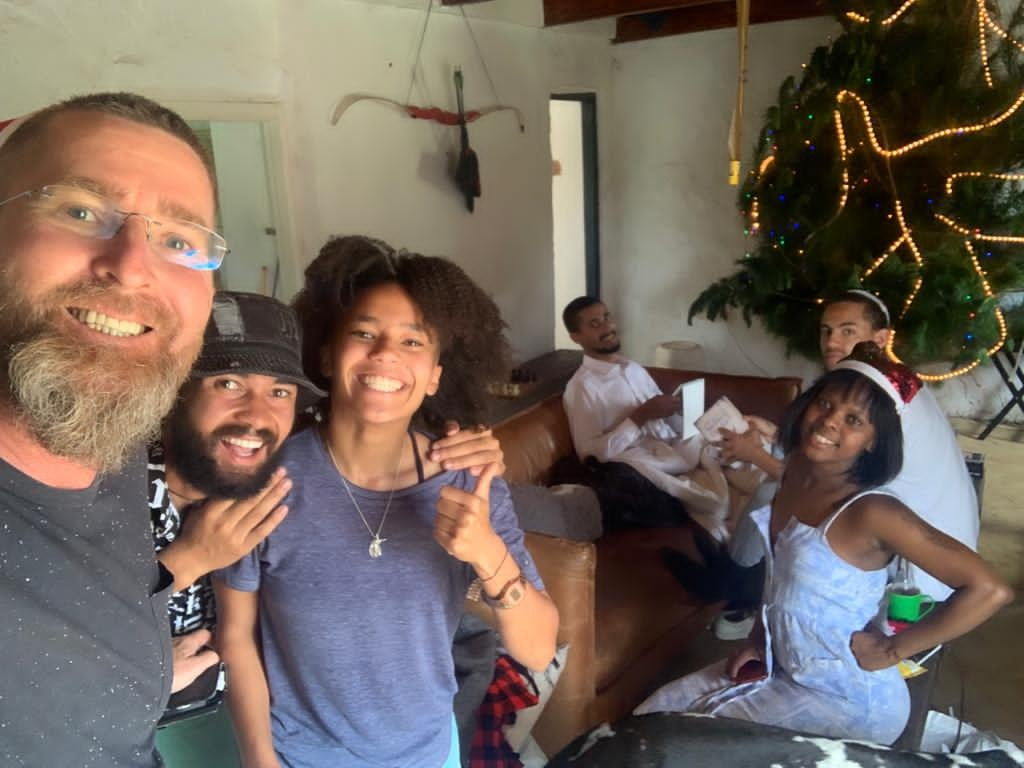
Its been a lot of work getting the cottage into a semi-livable state again . I am not at all happy at all with the way in which the tenant I had treated the place. But I get the sense now that we will chip away at this project in our own time for as long as it takes.
There is something deeply satisfying about being here. Committing my energy to projects that feel that I “own” in someway. I am not exactly sure about why it feels so good, but the “why” of theses things is never really as important as just observing and taking note of the energy as it presents itself in my body and in my sense of well being.
I have been resting as much as I can in between the various cottage and farm projects. In my resting time at the dam in the morning, with my coffee, I have time to think a little. This morning I spent some time thinking about the work I love doing on the farm and in the forest. I notice that this work, over the last few years, has largely to do with taking away what I don’t want. It has largely to do with “subtracting” and not to do with adding. When I am working with the chainsaw removing the alien invasive Inkberry (Cestrum laevigatum) or the Long Leaved Wattle (Acacia longifolia), my strategy has been to remove what I don’t want, quite surgically, then sitting back and watching as the new forest, new life and new beauty emerges. In the forest, I do not plant the new trees. I do not introduce the new life or the new beauty. It simply rises up, as if by magic, after my work of removing and subtracting what it is that I did not want.
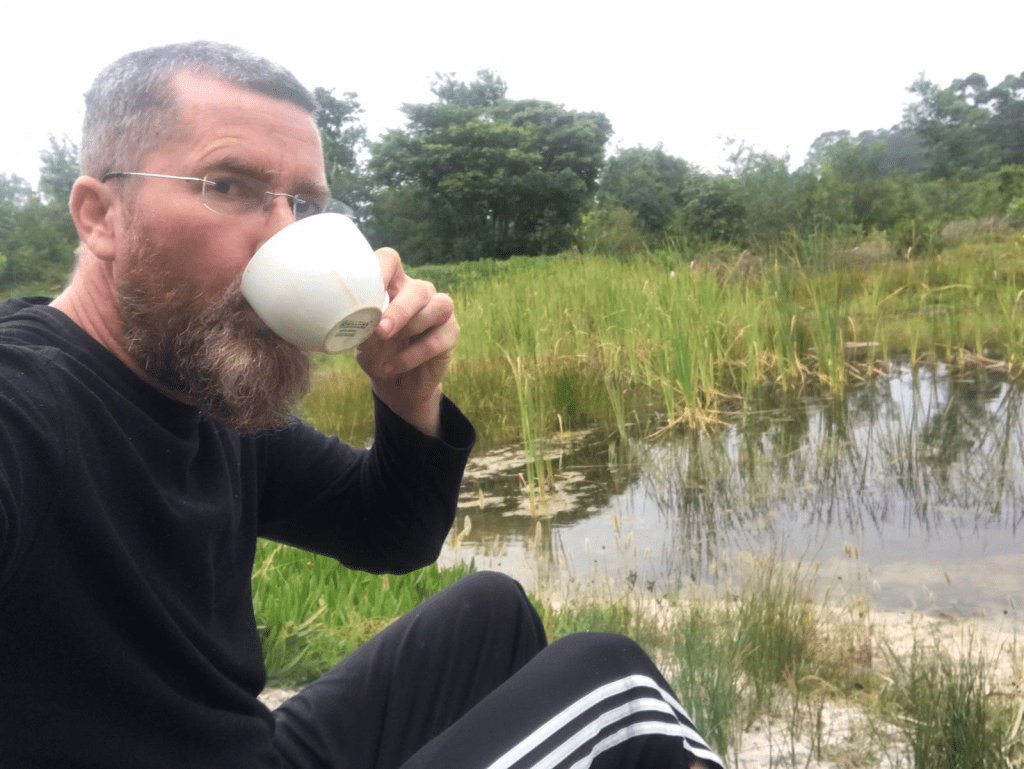
When I take the time to sit and think, I notice how so much of what is going on in my life, with Pebblespring Farm for example , is some kind of metaphor, as if though,(in ways I can not possibly understand) my life is “fractal”, where the part reflects the whole and the whole reflects the part. Let me explain what it is that I think I mean. I can see that in my life my task becomes to remove those elements that do not suite me, that are not beautiful to me. Because my life, this existence, what I experience as reality is a living dynamic organism. The forest has a life of its own. It creates new and beautiful things all the time, especially if I can just help it along be subtracting that which is not good and which is not pleasing. (if the forest were pristine, and not infested and invaded by unnaturally introduced alien species, I would of course not need to intervene at all!) The forest is not inanimate. I must do my part, but the forest responds by making making beautiful spaces and views and habitats. I did not make these beautiful things, but here they are, clear as the light of day. And so perhaps in my life, I must be less anxious about what new stuff I feel I should build for myself, but rather spend time focusing on what it is that I must subtract.
I have seen that there are people that have followed a path of “spiritual” discovery that took the dramatic step to remove all the things from their lives. In the ancient way of the Sharman or the Monk, they give up all of their possessions, their loved ones, everything that they may have valued. But is this not perhaps the equivalent of bringing bulldozers to Pebblespring farm and flattening everything down to barren sand and rock. (Incidentally this is exactly what my late neighbor, Richard Hall, did next-door about five years ago at his place and I can tell you the land is lifeless and dead to this day.)
That is not the path I have chosen for Pebblespring Farm and that is not the path I have chosen for my life. Rather than flattening everything I have chosen rather to specifically and surgically remove those parts that do not work for me. In my life and at Pebblespring Farm I have also not opted for an “anything goes” approach. I do not just let the unsightly alien invasive bush take over, I do not allow my life to be taken over by social media or booze or carbohydrates or people that abuse me me. Perhaps the way I have chosen is a “middle way”?
In spite of all of what I have already subtracted, I am acutely conscious that there is still a lot in my life that does not work for me. Commuting does not work for me. Mindless admin does not work for me. Inhuman bureaucracy does not work for me. And people who do not love me. People who do not respect me. People who I do not “vibe” with. (“Vibe” is actually quite a nice word to use in this instance. It hints a the mysterious and unfathomable vibration that is beauty and attraction.)
I have already done a lot in the last few years to make my life simpler. (COVID has been helpful in this regard actually!). There is still a lot of work for me going forward to remove these unwanted aspects from my life. I am conscious that it will take a lot of time. But I must work methodically and consistently, but not so hard that I loose myself, and that I forget what I am trying to do in the first place. I must not allow myself to become so numb and so beaten that I cannot see the beauty. Because if I cant see the beauty, I will loose the energy I need to continue in the exercise of subtraction.
Perhaps I will report back on my progress here on this blog from time to time. Who knows??

