My Mission and Purpose

I’ve heard a lot of people talk about “Mission” and about “Purpose”. Many go into loads of detail about what the difference is between the two. As if though they actually know. As if these aren’t just using words that point to a truth. As if these words are truths in themselves.

What I know, in my own life, is that there are certain activities, projects and tasks that inspire me to get off the couch and get things done.Does this mean that these activities are part of what I was “meant” to do. And anyway,  what could “meant to” even mean?

What I can tell you is that I am very sad about the fact that so much of my life has been spent doing things that I have for some reason or the other just felt that I “had to” do.

  • I “had to” go to school.
  • I “had to” go to the army.
  • I “had to” finish varsity.

Even in my married life I have done the things the I “had to” do. The business that I have built, for the most part has absorbed my time and energy (my life in fact) to do the things that I “had to” do in order to ensure that the business does not fail. For so much of my life I have done what I have done because I have feared the consequences of not doing them. This may be true of your life too. You may be reading this and saying “Well that’s just the way things are, how cant hey be any different?”

Perhaps though, the way for me to find my way out of this trap is for me to reflect back on my life. Because I know that there have been times where I have felt that I have been energised and driven not by fear by by something else. There have been times where I have been overcome by a strange passion. A energy perhaps that would motivate me to wake early in the morning or push until late at night. Where creativity would continue to sprout forth. Where I just felt that there was no stopping until I had achieved the immediate task or the project that had come to occupy my mind.

  • I feel this sometimes when I write.
  • I feel this sometimes when I build
  • I felt this when Pebblespring farm came to me
  • I felt this when I have fallen in love.

I know what I feel. I cant lie to myself at a deep level inside. I know that I want to make a difference. I know that I want to change the way things are. I want to change the reality of how things are for me and for so many people, who are caught in desperate and frustrating lives where they are living in fear. Where they are doing things every day, every week, every month only because they fear the consequences of not doing them. I feel energised when I imagine myself playing some small role in building freedom for myself and for these people who are trapped like me. No, I am not trapped in poverty nor in ignorance. I am not trapped by disease or physical ailment. I am not a slave to a cruel religious sect. In fact I am relatively free.

Perhaps this relative freedom helps me see how paths and routes to freedom can be built for those who are ready to free themselves. I don’t know. But I do know that I am drawn to do this work, I am tempted to say that Building Freedom is my purpose. I am tempted to say that my immediate mission is to do what ever I can to share tricks and tips that will help you and others reading this to build freedom in your own lives. But I have decided not to use the words “Mission” or “Purpose”. Rather I will say that I am following my heart. I am doing what I love to do and if you reading these pages are able to grow or become more free from what I have to say and to share, then that’s also great.

THC 12 November 2016

#Feesmustfall, brass bells and the pain of the taxpayer

 (This piece first appeared in The Herald on 19 October 2016)
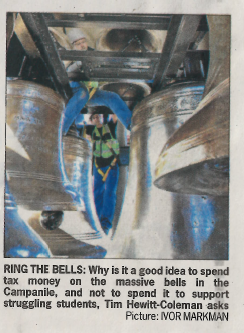
A few days back, I made a short presentation on some of my recent work to a, polite audience at the newly renovated Tramways building. To be honest though, the small group of architects, historians and academics had mainly come out to hear from my colleague, Professor Albrecht Herholdt, with whom I shared the stage that evening. You see,  Professor Herholdt, is one of our region’s finest architects and he spoke that evening on the fantastic work that he and his team is doing with the MBDA to bring the historic 1820 Settler Campanile  back to life as a working tourist curiosity. The work being done there is really impressive. The bells are going to chime once again, the crumbling brickwork will be repaired and the old clock will once again be a reliable resource for those passers-by who do not wear a watch.

I was pondering this lovely presentation as I dreamily cast my eyes from the third floor window of my Clyde Street office the next morning. From my desk, I have an unsurpassed view of Algoa Bay. On a clear day I can see all the way to the Port of Nqura.  But it was not a clear day. It was not even a quiet day. In fact, I was startled out of my dreaminess by the sound of chanting and toyi-toying coming past my building. A noisy protest was making its way from Cape Road to Town. Hundreds of angry students in #Feesmustfall regalia, escorted by a massive police contingent, including a huge big water cannon truck, which had just been decorated in dripping turquoise by a protestor’s “paint bomb”. The students passed without incident. The chatter in the office was all about “Well the ANC promised free education…” and “Why don’t they just stop burning down the Libraries?”.
But I’ve been thinking about these protests a little. And the more I think of it, the more I see that these students are raising an important question that we have not yet fully debated as a country. If I am able for a moment to look past the arson, the intimidation and the thuggery, I can just see the beginnings of a meaningful inquiry into what we as a community feel is reasonable or unreasonable to expect our tax payers to pay for. I ponder this question now as I sit writing this piece in the Wimpy Bar in Port Alfred. I have stopped to rest a little from my drive back from a project meeting, coordinating the spending of hundreds of millions of tax payers Rands in new buildings to accommodate various government departments’ administration and management needs.  The driving was tough as I navigated the “stop and gos” caused by the hundreds of millions of Rands invested in widening and generally improving the coastal road from East London the Port Elizabeth.
The thing is, I have been in business for the last twenty years or so. I have paid a lot of tax in that time. I have paid Vat, PAYE, Transfer Duty, Import Duty, Capital Gains Tax, Municipal Rates, RSC levies and those taxes you pay on alcohol and fuel that I can remember the names of. Though I feel good about the fact that, through my taxes, I have been able to make some contribution to the effort to improve our country, I am also deeply conscious that every time I fork out tax money, I am not doing so voluntarily. You and I are compelled to pay tax by force and by the full might of the state. If I don’t pay, I will be jailed. If resist my captors, I will be shot. It is not overly dramatic for me to say therefor, that you and I pay our taxes at the threat of death.  It’s just a fact.

Today though, I am not making an argument for or against taxation. I am rather arguing that this money, which has been extorted from us, must be treated with a far greater measure of respect. If we are to accept taxation as a necessary evil, there must be some understanding that tax money can only be used to deliver something that the private sector would not otherwise be able to deliver.  So, I would like us all to begin to ask of each other: Why is it not a good idea to spend tax payers money to support struggling students? Why is it a good idea to spend taxpayers’ money to make it easier for lorries to drive from PE to East London, or for container ships to dock at Nqura or for for SAA so compete with Kalula.com? Can the huge industries and corporations that run these transport and logistics operations not pay for this? Why is it a good idea to spend tax money on massive brass bells in the 1820 Settlers Campanile? Can the lovers of bell chime music not pay for this? I am asking the question not because I claim to know the answer, but because I believe we have allowed ourselves to be side tracked by fear mongers and haters. We have been side-tracked to such an extent that we have not been able to hear the valid questions the students are clumsily asking…”What projects, should we as a community, invest taxpayers money in?”  “What investments will ensure the best of possible futures for our people?” “What investments can wait a little longer until we have helped each other emerge from the scourge of poverty and desperation?”

Beyond Tolerance

(This piece first appeared in The Herald on 24 December 2015)
I don’t really give too much thought to the war in Syria. There’s just too much else to think about all the time. I mean right now I am facing a real dilemma: do I buy the silver baubles  for the Christmas tree or do I get those shiny red ones with a picture of a snow man on them? …..And what about the Christmas lights? Do I get the white flickering ones my wife wants to match the candles she bought for the table or do I get the brightly coloured blinky lights that remind me of my child hood?

As children we’re taught  to tolerate nonsense  for the “sake of peace”

What I can say about the war in Syria though is that Isis has given intolerance a bad name. Realistically, Isis are just the last in a series of zealots, warlords and dictators that have left most thinking people rejecting any and all tendencies toward intolerance. The Spanish Inquisition, Robben Island and Stalin’s Gulags are all recorded testimony of murderous path down which unchecked intolerance leads. Nixon could not tolerate the idea of the Vietnamese choosing to live under communism so he bombed Hanoi back into the dark ages. Bush could not tolerate Saddam, so he bombed Bagdad.
So I completely understand how it is that the mindful and well-mannered people spend much of their time advocating “tolerance”. For much of my life too, I have argued for “tolerance”, but I have now begun to re-think
You see, in a very real way “tolerance” means putting up with what I know is wrong “for the sake of peace”. But I have come to see that this is really a very short term solution. In fact, what I am calling for now, on this Christmas Eve, is a healthy dollop of “Intolerance”. Let me explain. I am making this call to all good people, all patriots and all lovers of this beautiful ecosystem of which we are an indivisible part.  I encourage you all to take inspiration from the students who this year said: “We will not tolerate Universities being for rich people only” or from the banks and unions who forced our president to backtrack when they said: ”We will not tolerate you destroying our economy”. I encourage you to become intolerant in your home, in the street in which you live, in your shopping centre parking lot.  Because it is the poor and defenceless that carry most of the cost when our society tolerates lawlessness. It is the poor and defenceless that cannot afford short term insurance, it is the poor and defenceless who must tolerate starvation because their chickens are stolen from their back yard. It is the poor and defenceless who can’t get the time off their dead-end jobs to tolerate being sent from pillar to post by brutally mindless corporations and institutions.
So, where you witness drunkenness, littering, late coming, rudeness, cold cappuccino or institutional nonsense; don’t tolerate it. Make a scene. Find the courage to speak out. If each of us does this every day, we will be victorious.  Mayor Giuliani proved in New York, that by becoming intolerant of little “crimes” we create environment where the bigger, more serious crimes begin to dwindle. We can’t expect our overstretched Police to deal with the small stuff. There is just too much really serious crime going on. So it’s up to you and I to become intolerant today.

Go now and rest; but rest with one eye open for that drunk uncle that may be thinking of stepping out of line. And when you put him in his place and correct his behaviour know that it is no less than your patriotic duty to have done so.

Help Little guy with Direct Action

(This piece first appeared in the Weekend Post on 31 October 2015)
I drive a 1997 Toyota. It has 476 000 kilometres on the clock. I drive this old car mainly to embarrass my children, but also because I know that renewing my car every two or three years has a hugely destructive impact on our planet. In fact, a recent report in the Guardian  points out that the amount of carbon that it takes to make a car (its “embodied emissions”) is very likely to be greater that the total exhaust pipe emissions over its lifetime. What the Guardian is trying to say is that my clapped out old rust bucket is better for the planet than a brand new super-efficient, high tech Hybrid!
My 1997 Toyota, when it was still young

I take the health of our planet very seriously. You and I know however that the truth about our country, and many others like it, is that the most pressing threat is not the levels of carbon in the atmosphere, not the depletion of the ozone layer, not even the desperate and sad story of the Rhino. No, the most pressing threat to our society is poverty and exploitation. Poverty is a breeding ground for disease, ignorance, corruption and crime. Quite simply, we are all doomed if we are not able to build a stable economy where each and every one of us feels that it is worthwhile to make our best effort every day to improve the health and welfare of ourselves and of our families. What I want to talk about today though, is what it is we do about this situation. You see, I am inspired and impressed by the direct action students across the country have taken in dealing with tuition fees. Inspired; because students are showing us that it is far more effective to take direct action than it is to put our trust in party politics. The students of 2015 have shown us, that if we want to get something done, we must get off our backsides and take direct action. The students of 2015 focussed on the issue. They set aside party politics; they set aside complexion and economic status. They focused on one issue and they were very effective.

But, “Direct Action” is not only about blocking traffic and singing songs. “Direct Action” is about our choices. It’s about what I produce and about what I consume. It’s about how I choose to act. So, it was no less that an act of revolutionary defiance that I had my car repaired on my front lawn this Saturday while my neighbours were indoors watching the rugby. (Yes, the old crock breaks down from time to time!) You see, I could have opted to have the work done by the recommended, massive Japanese owned multinational corporation, but instead I opted for “Direct Action” and chose to employ a trusted, loyal and brilliant small time mechanic to repair the broken starter motor. It cost me a lot less. He earned very good money. It’s a “win-win” situation. No massive corporation, no CEO salary, no marketing budget and TV ads, just a small time “guy” with his box of tools on my lawn. I do the same when I need bicycle repairs, carpenter, plumber, electrician, tailor or plumber. It’s the right thing to do.
You may be surprised to hear of the good work that the Metro is doing to support small business.  In fact, all municipal construction projects now require that 25% of the work is done by Small Medium and Micro Enterprises. Believe me, this is really painful to people like me, who are called upon from time to time to design and manage these projects. There is a heap of complicated paperwork involved and it really is a lot easier to get the work done where your contractor is listed on the JSE. The point is though, that the Metro is being responsible and is leading the way in this action. My appeal is that each of us follows this lead. That each of us, in our businesses and families make a commitment to allocate a portion of our annual spend to emerging businesses. (Perhaps 10% may be easier to achieve initially.) But even at those levels, by direct action, we will be able to make a massive and lasting dent on poverty.
What I am proposing is that each of us builds “bridges” between those of us who have emerged from poverty and those of us that are making the effort to do so. It really is a two way street. If you are working to emerge from poverty, make it easy for those that want to trade with you. Answer your phone. Arrive on time. Do what you promise. For those of you that are trading with those emerging from poverty; yes, it does take more effort. You will need to search a little harder to find the service you are looking for. You will need to check the references. You will need to pay promptly. But that is the Direct Action that we can take. Consumers may complain that there are not enough emerging businesses to address the most pressing needs, but we must trust that these will emerge if there is good money on offer. Emerging businesses may complain that there are not enough customers, but we must trust that these will emerge when we have good product to offer.
Political parties cannot do it for us. The future is in our hands and direct action is the tool we will use to build that future. Start today!

Tao of the Farm – Principle number 16: ”When it’s hot, work in the shade”

February 2015

I did not get as much work done over the weekend as I would have liked. I did make good progress with a small hen house that has become an urgent need. The chickens are now roaming free in the paddock near the cottage. They are behaving very well and have not been eaten yet. Perhaps they are trying to reassure me that they don’t need to be locked up at all. My intention though is just to make sure they are locked up at night, primarily to protect them from predators and secondarily to make it possible for me to find the eggs that would otherwise be laid all over the show. But just watching these beautiful chickens roaming around through the grass and shrub over the weekend had convinced me that that is how they should be allowed to go about their lives.
Gary – using his head on a hot day!

I enjoy the physical task of putting together a chicken coop from scrap wood, or clearing the forest with the chainsaw or building fences or clearing the dam of reeds. Solitary work for me is very satisfying. It’s a kind of meditation. I allow myself to be completely in the present moment. Yes, I have a plan of what I would like to do, but I allow most of my mind to focus only on what I am doing right now, and then the very next step. In this way my work sometimes becomes “meandering. As the next step may be to cut a board, I would power up the generator, only to find that I need to fill up with fuel. I would fill up with fuel only to find that the extension lead that I need to run from the generator to the cross cut saw is hopelessly tangled and I would spend time untangling it. I would cut the board then realise then match it to another, realising that in fact the structure will need to be a bit narrower than I thought; to match an ideal board that I have that would work well as a hen house floor. And so on. I let each step guide me to the next and I make peace with each step and am fully involved and present to each step.

I was able to do most of the cutting work indoors, bet the assembly work had to be done outside or I would not be able to get the structure outside once it was fully built. It was damn hot on Saturday and I could feel the sun beating down on me. When I felt the heat was too much, I would step inside, sweep up the saw dust. Or make some tea. Or repack the tool box. This is the way I prefer to work. Not as a slave who is driven to work at a task regardless of where our energy is. I have come to see work as being something I must have “energy” for. I am sure that “energy” is not the right word. It’s more like I must “feel” the task, I must have an appetite for it I must “desire” the task. If I can work when I am in this task, I find that I am super creative; I am energetic and can keep going for very long periods of time. Perhaps this is why I prefer solitary work? Often the people I would be working with would drain my energy somehow. Especially if have employed cheap casual labour. Often I would find that the fact that they are in my space, make me not want to work myself. Its illogical, it’s irrational I know, but I am just telling you how it is with me.
So when it is hot, I work in the shade. Or I work wherever I feel that the “energy” is where I have an appetite to work, where I have desire. Sometimes when it is hot I will find a task in the shade that I have desire for. Sometimes I don’t find energy for anything and all I want to do it sip my tea and stroll through Facebook. I have stopped whipping myself for that. Sometimes the only thing I feel like doing is having a short nap under the oak tree. I have come to trust that my desire for the tasks that need doing will return.
The problem is that the modern urban world that we have built does not very much like law of the farm number 16. In fact the modern urban world says. “when it is hot, just keep on slogging because if you don’t we are gonna fire your ass” the modern urban world causes you and I to believe that physical and mental work is meant to be un pleasant and it is just something that we have to endure in order to by the privilege of having somewhere dry and warm to sleep at night and to send our children to school. The modern urban world tell us to distrust any “feeling” and “energy” any desire or appetite that you may have to slow down with the task you are busy with or any inclination you may have to rather do some other task for an hour or two. The modern urban world tells us that you and I are not best placed to decide how to spend our time, our energy and our lives. These decisions are best left to people who give us “jobs”. In fact we begin to believe ourselves that we cannot be trusted with our own energy, because when our jobs give us “leave” or a weekend off, all we do is crash on the couch and play Xbox. The truth is that these jobs have exhausted us physically and mentally to such an extent that we probably need some time to recover, given time, we would get off the couch, begin to feel our own energy, beginning to trust our own desire. But in most cases, just as this sense begins to return, we are summoned back to the office, for another week, another 11 months of being told what to do with every waking hour.
No, I say this is not the way. This way of living is contradiction of a fundamental law of how things are. This modern urban way of life is a direct contravention of law of the farm number 16 “When it is hot work in the shade” But no, don’t go off and resign your job today. Small steps first. Begin today, right now to “feel” what it is that you want to do with the next hour of your life. You may be so tired that all you want to do is sleep. Even if you can’t take a nap, the very step of being conscious of what you want to do with your time is a step in the right direction. Take 10 minutes quite time every morning your tea break. Switch off your office mind of deadlines, payments and reviews. Become silent in your mind. Don’t think. Just feel what you are feeling. At first name the emotions that you are feeling. Don’t judge them, just name them, acknowledge them, and preferably write down the name of what you are feeling. Then as a second step, feel what it is that you need to be doing with your time, where your energy is. Preferably write it down. It may take a long time before you are able to act on these desires, but that time will come.

Tao of the Farm – Principle Number 12: “The Porcupine does not consider digging up bulbs as work”

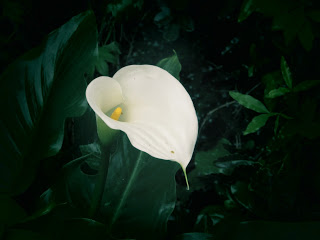
Of course I don’t know what goes through the porcupine’s mind when it digs up the bulbs of our arum lilies. In fact I don’t even know for sure that it’s is a porcupine that is destroying these beautiful plants with their distinctive white cone shaped flowers with the bright yellow poker protruding from the centre. I am assuming it is a porcupine because when I post pictures of the damage on Facebook, my clever friends tell me that it is only a porcupine that makes that kind of damage and that porcupines absolutely love arum lilies. I was actually secretly holding out for the hope that we had bush pigs on the farm. That would be exciting. Perhaps we have porcupines and bush pigs? It’s very hard to say because these animals move around in the dead of night and are very shy. But whether it is a porcupine or bush pig destroying my prized plants, I strongly suspect, that when they are digging the deep holes in the soil required to access the tasty bulbs, that they do not for a second think that they are “working” in the way that you and I may think we are working when we report to the office and begin to wade through our inbox or finish the report or sit through the meeting or return phone calls. When I see pigs digging for roots or rolling for the mud they look to me as if though they are having a huge party. In fact many clever farmers have now taken to sprinkling a few kernels on grain into massive compost heaps that need to be turned. The pigs go crazy having a great time turning over the mountains of compost at the cost to the farmer of a few handfuls of grain.

But you and I have been conditioned differently. It’s not that we are afraid to exert ourselves mentally or physically. We are quite happy to exert ourselves on the soccer pitch to the point where our legs burn and we spit blood. We are quite happy to put our brains to the test playing scrabble or Grand Theft Auto. We have come to buy into the idea that these are “leisure time” activities and that it would be crazy to build up a sweat (or a headache) doing any productive work outside of office hours or school hours. Well, call me crazy, but I love to do physical work. I love the feeling of using my muscles, my arms and my legs. I love the rhythm of thinking and doing. I love the feeling of physical exhaustion in the evening.  I love the supper time retelling of the achievements of the day and I love the deep satisfied sleep that follows it. (I especially remember the very satisfying time working with my late father on his wooden house in the forest)

 It seems strange to me therefore, that I have put so much time and effort in my life to ensure that I don’t have to do any physical work at all. My twelve years of schooling in maths, literature, history and science required no “doing”, no lifting or pushing. It did though; prepare me for another five years of study at University which would eventually deliver to me the degrees I required to become an Architect and be guaranteed of never having to push a wheel barrow, thrust a spade into the ground or cut firewood.

On leaving University, life as a young professional was clear, nobody ever handed out a rulebook, but the understanding was that we must put in time at the office to earn our money, but if we put in too much time we will break down, so we must take some of that money to buy “leisure”. That leisure must not involve doing anything productive or meaningful.  We may choose from a vast array on mindless sporting or cultural pursuits. We may participate or spectate. If the mindlessness of the leisure becomes unbearable, we may numb ourselves with alcohol, sugar or nicotine. This is just how it is.

I can see how in the headlong rush to get to the ‘top of my game” I have moved further and further in my career, away from actually doing any work. Like lifting a pencil, to sketch a chimney detail or calculating the fall and cover of a drainage installation. All of that is “outsourced”, because that is the law of competition and the law of competition says that, if I am an expert at running an architectural practice, I can’t be “wasting” my time actually being an Architect. I must spend my time delegating, checking what others have done, motivating, admonishing, fighting with debtors, apologising to creditors because that’s what we do when we get to the top of our game.

Does any of this ring true for you in your life? Perhaps, what each of us needs to do is sit back and look at the route we have walked to get where we are in our careers. Each of us needs to get down and do the dirty work of thinking through how we have been conditioned to look down on anyone doing physical work. Even in our homes, when we can’t resist the instinct to get our hands in the soil that we are married to, we make every attempt to dress up our gardening activities as “leisure”. We call gardening a “hobby”; we don’t call it “work”. When we can absolutely not resist the instinct to grow fruit and vegetables, a productive pursuit, we hide these away in the back yard.

So, what I am doing in my life about my dysfunctional relationship with work? I suppose, I am slowly beginning to participate, wherever I can, in actually doing stuff. I am also looking for family traditions and practices that involve real work, even if it just taking the time to cook the mother’s day meal.  Some families in our region are fortunate to belong to a tradition where work is still honoured. If you drive through the streets of New Brighton or NU 7, on any given Saturday you will find clan groups participating in “Imisibenzi” (literally translated as “works”). These traditional functions mark a range of special occasions, but what is interesting, is that everybody attending the function works. From the slaughtering of the beast, to the processing of the meat to the brewing of the beer and the peeling of the carrots. Hosts and guests work together. Honouring tradition and honouring the idea of work and how it is in fact not separate from leisure. To a lesser degree, but not entirely dissimilar, on any given Sunday in the suburban backyards of Summerstrand and Sherwood we find  family groups around the braai, spicing the meat, turning it on the flames. The hosts and the guests working together, some in the kitchen with the potato salad and toasted sandwiches and others outside with the chops and the wors. These are important traditions to hold onto, where the tendency is toward the American situation where 43% of all meals are no longer prepared at home and where work is generally regarded as something you sell in exchange for cash.
So more and more I come to see that any activity that helps me understand that work is not separate from leisure and that work is more than just a commodity for sale, is where I want to be spending my time.


Because this separation of work and leisure, is not of the natural order, it’s certainly not way of the farm, in fact it contradicts the law of the farm which states that:  “The Porcupine does not consider digging up bulbs as work”

Tao of the farm – Principle number 8: “Two Tilapia tanks are better than one, Four tanks are even better”

I have been growing Tilapia for some time. They are a fantastic fish species. I have only recently moved them to the farm, from where I kept them in the backyard in Walmer. I built a hot house for them, because they seem to do even better in warmer water. They survive in the wild in our region in the rivers and streams though; to I am not sure how much worse they would have done without the hothouse. At Pebblespring farm, I have now released the Grey Tilapia I had in to our far dam. Other I gave to my neighbour Richard who released them in his dam. Richards have been in the dam though the summer and winter and have done very well. I released them as fingerlings no larger than 5 centimetres and he has been fishing them out pan sized. My plan is to not fish any of ours out until next summer; giving them time to establish and grow our dam is a lot more alive with bulrushes, edge plants and duckweed, so I am expecting even better results that Richard has had.


Excrement filtered out of the water with an Aquaponics system
.
There are a whole lot a great things about Tilapia, once I start talking about them I tend to go on a bit. What I like most about them is that they are omnivores. In fact they can survive almost entirely of a vegetarian diet. They love to eat duckweed. Duckweed (Lemna) in itself is an amazing species. It is a flowering plant that floats in the surface of the water. Apparently it is the smallest of all the flowering plants. On a dam or pond it would look like a green carpet, but on closer inspection you will find that the carpet is not a mass at all, but rather a collection of little plants including leaves, roots and flowers. One little plant will comfortably fit on a fingertip. These fantastic plants can grow very quickly if the conditions in the water are right. It is not uncommon for them to double their population within a twenty four hour period. The best part of all is that they are a very good Tilapia feed, or chicken or pig or cattle feed. I have heard it said that duckweed has a higher protein content that Soya Beans and that it is eaten as salad of sorts in Vietnam or thereabouts. I have eaten a mouthful or two. It’s quite crunchy and fresh, but a little tasteless to my tongue.
Tilapia were harvested from local water systems


The next best thing about Tilapia is they taste great. I am a very fussy fish eater. We have caught too many great tasting fish in the ocean to be able to tolerate poor tasting fish. Tilapia is excellent, not at all muddy or mushy, but very good tasting. Other than that, they are on my favourite list because the species I grow (Orochromis Mossambicus) are indigenous to my province and because they tolerate a wide range of water quality and temperatures. Which brings me to my story here. Tilapia do well in tanks and they are easy for an amateur like myself to attempt to grow. But even Tilapia need the basics in place. They need Oxygen, then need filtration and they need food. In fact in that order of priority. I keep my Tilapia in 1kl tanks salvaged from Industry rubbish heaps in town. I have noticed that while they can go without food for some time, especially when the water temperature is low, they definitely cannot live very log without the water being oxygenated. They can survive a longer time with a filtration system broken down, but if the electricity goes down and the bubblers stop working you could have only a few hours before the fish start gulping on the surface then die. I have lost fish like this a number of times. It’s a risk that comes with keeping fish in high density tank environments. One of the ways to guard against disaster is not to have all the fish in the same tank, rather have two tanks, with two filtrations systems and two aeration systems. It then becomes less likely that disaster will befall both tanks. Even better have four tanks, or forty or four hundred. Even better have each tank with a different species or strains. Equip each tank with a separate power supply for the aeration and filtration system; because safety does not just come in numbers, it comes in variety. One hundred fish in a two kilolitre tank is not as good a two on kilolitre tanks with 50 fish each. By the extension of this logic, it is in fact much better to have the fish in a series of dams and ponds where there is a variety of temperatures, plant species, crustaceans, water depth and oxygen levels. Variety is what brings stability.
Variety is what we strive for in Pebblespring farm. We are interested in different animal species, different plant species and different varieties of species. In this way when disaster strikes not everything is destroyed. The thing about disaster of course is it always strikes. Variety is the defence against disaster. Variety allows disaster to be a sculptor instead of an executioner. Variety allows the stronger, more appropriate varieties live, thrive and reproduce. This is why we have no interest in planting the whole farm, to mielies or sweet potatoes or geraniums. While monocropping may at first seem sensible, it is in fact high risk. It seems sensible, because you only need to run one set of machinery, one set of training to grow and harvest, one supplier of seed stock, one buyer of your output, one category of staff to labour on your fields. Or course we can see though that it also just need one category of insect to get out of control, one Seed Company to hike their prices or one buyer of your goods to undermine your prices. Suddenly monocultures seem very risky, and I am not just talking about farming, what I am talking about is the way we prepare ourselves to face the world. I am talking about how we educate ourselves, becoming highly specialised, becoming a “one trick pony”. All of the advice I ever here coming out of our schooling system advises that we become more and more specialised, more and more focused. More focus less variety. When we reach the top of the education pile we so highly regard that we referred to by a different name. We are now “Dr” Smith, no longer “Bob”, no longer “Mr Smith”.  There is no similar incentive or encouragement to develop our lives in such a way as to nurture a range of skills, experience and passions. To be clear, I am not trying to introduce a new concept, I am perhaps rather trying to point out how far our modern urban system has wondered from the ideals of even classical Greece or Renaissance Europe. Leonardo da Vinci’s idea of the Renaissance Man was the idea of a life of variety spanning athleticism, scientific mindedness and artistic inclination. In our working lives, in our businesses, we are easily tempted to occupy a very small niche and to do only that thing. Bad idea! Not only is it boring to wake up every morning for the rest of your life to look forward to doing exactly the same thing, but it is counter-productive. The economy changes, it breathes in an out, sometime the economy wants beach towels, sometimes the economy wants raincoats. You and I must be flexible enough to move with this. Just because we are expert raincoat makers does not mean we “deserve” that it should rain. The universe does not understand the word “deserve” the farm does not understand the word “deserve”. The universe and the farm understand about variety though. This is the way it has always been. This is the way things are.


Variety and balance in a life, in a family and in a community is what we should hold out as a fundamental objective. It is a theme that should be non-negotiable because it is derived from an observed fundamental law of the farm which states that: “Two Tilapia tanks are better than one, four tanks are even better”

Tao of the Farm – Principle number 7: “The Sun will set at sunset – regardless of what is on TV”

(I wrote this piece earlier this year in the summer time, only getting around to posting it now though)

When I got home from the office last night, Hlubi suggested that we take a drive to the farm. She had a stressful day. Being summer, the sun goes down nice and late and the evening was pleasant after the light rain of the day. We lingered at home though.  We did not leave straight away. No big deal, but Hlubi fiddled in the kitchen, got dressed, took a few calls and spent some time waiting for an item to come up on the TV News. 

Olive Woodpecker – Photo Mandisa Hewitt-Coleman – July 2015


By the time we got to the farm it was almost dark. We missed that magic time just before sunset, when the birds go crazy, when the wind has died down and the sky is filled with a special light. That time where everything feels slightly electric, poised, pregnant. We ate our supper at the farm. We boiled the kettle on the gas burner, made a cup of tea and then we were off back home again. It was nice and it helped me remember that this too is a law of the farm. The sun goes down at sunset. There are no extensions of time. There is no appeal processes. It does not matter how big a crowd you are able to muster in political protest, it does not matter how much money you have. The sun will set at it designated time. This is a law of nature and it is the law of the farm. Why is it important to reflect on such an obvious fact? Why? Because we have moved into an era where many of us are lead to believe that there is nothing constant, anything can be negotiated, changed or postponed. We can “re-wind” television for heaven’s sake. We can get a re-mark on our test. We can return the crème bule to Woolworths if it was a little too lumpy. We can vote out our governments. We can sell our shares. We can divorce our husbands. We can enlarge our breasts and whiten our teeth. Those of us that are distracted and have little time to ponder may develop the world view that nothing is constant, that we as individuals are the centre of our universe and all can be modified to meet our desires and our feebleness. But the farm tells us that life is not like that. The sun sets at sunset. The apple ripens not when you want it to, but when it has spent the adequate amount of days on the tree sucking in the nutrients built in the leaves from the rays of the sun. The rain will fall when the clouds become too heavy for them to hold onto their moisture any more. The rain will not wait for you to have brought the goats in from the field; the rain will not wait for you to have completed the repairs on the dam. The rain will come, ready or not.
Because there is a softness that comes over those of us that think that everything is flexible and anything can be negotiated. A certain lack of urgency descends over us. Without an order or a rhythm we descend in to a timeless binge of Xbox, beer and pornography. Nothing matters, everything is the same and “what does it matter anyhow?”  We see this when casinos and malls are trying to trap us to give them our time, our money and our energy. They do all they can, they don’t want us to know when the sun rises, when the sun sets, when the rain falls or when the wind blows. The clever minds that run these awful places know that even a little contact with the absolute rhythms of the earth, like day and night, winter and summer, may jolt us back to a reality and out of the clutches of the trap that they have invested so heavily in constructing for you and me.
The farm, gives a rhythm and an everyday reminder that something’s are just not flexible. Not everyone can live on a farm, but all of us can begin to live a life that puts in place some non-negotiable. How about an half an hour of quiet reading in the morning before everybody else wakes up? How about a 30 minute run or a few pushups in the bathroom before your shower? How about 15 minutes quiet time writing in your journal with your 10 o’clock coffee? Do this every day. Make it non-negotiable, because you say so, because you insist, because you know that you come out of a line of ancestors that moved to a rhythm you have now been robbed of. Because you know that if you don’t give yourself this time, it will somehow be stolen, be wasted away to the TV, Facebook, beer, soccer and shopping. They win. You lose. They gain your life and your energy, you lose your freedom!