
The tractor at Tsitsikama Witelleibos is broken again. Sicelo has not been able to plough. The tractor is broken more often than it is fixed. I am sure that a lot more ploughing would happen if their were no tractor for people to wait around for! With no tractor people would harness their donkeys or their oxen and just get on with it. ” But we are not Peasant farmers” says the drunk and slurring Boyana. ” we are commercial farmers. How can we be seen to plough with oxen when we are commercial farmers?”
Category: All Posts
Calf check
We injected 7 2010 calves with 7 ml Hitet today.
Tstsikama free range pork
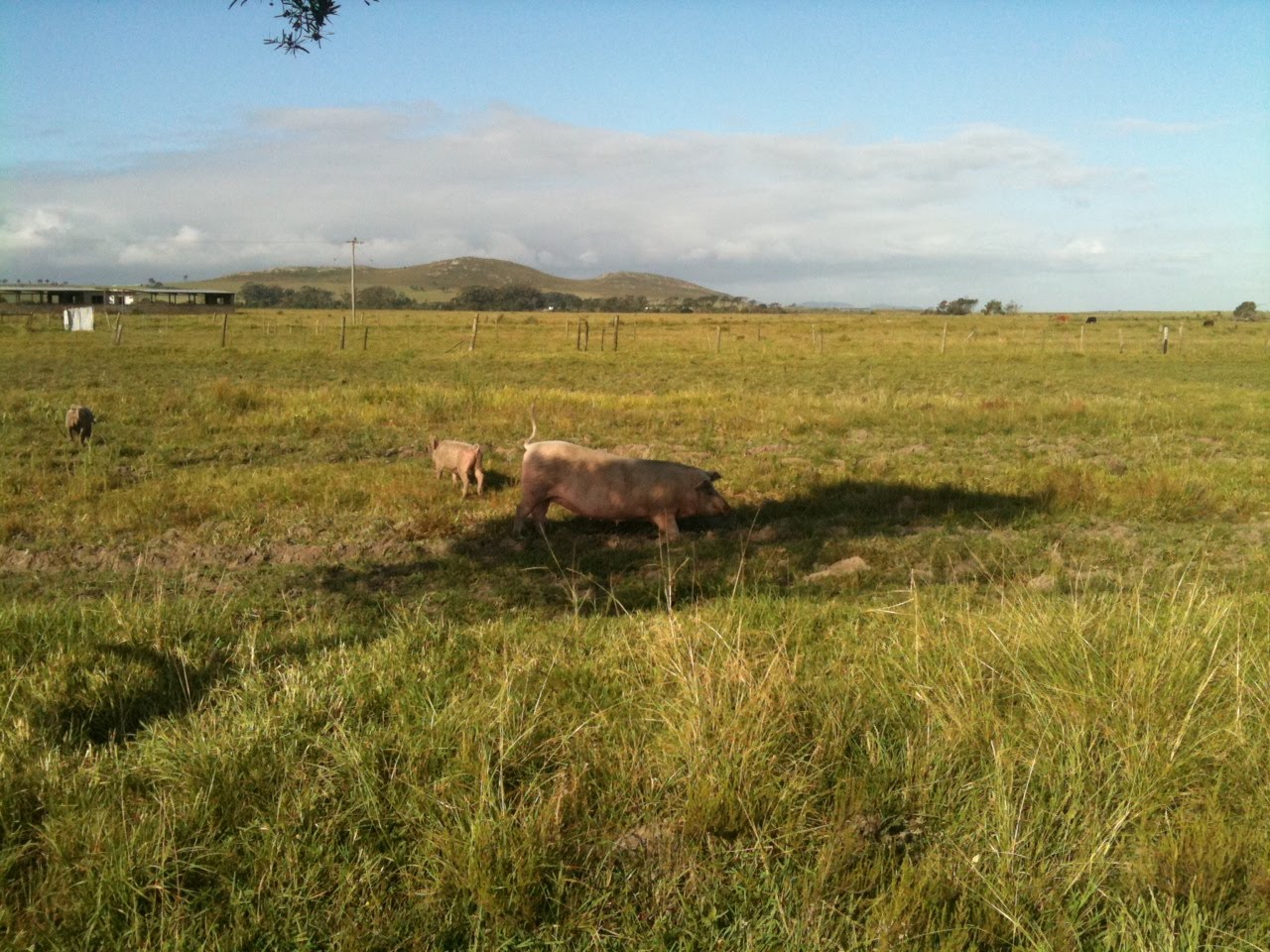
I have not been so keen on Hlubi's pork project. Pigs require a lot of care. (a lot more than cattle). I am happy though that they are able to range and snort and do what pigs do.
Tistisikama Cattle
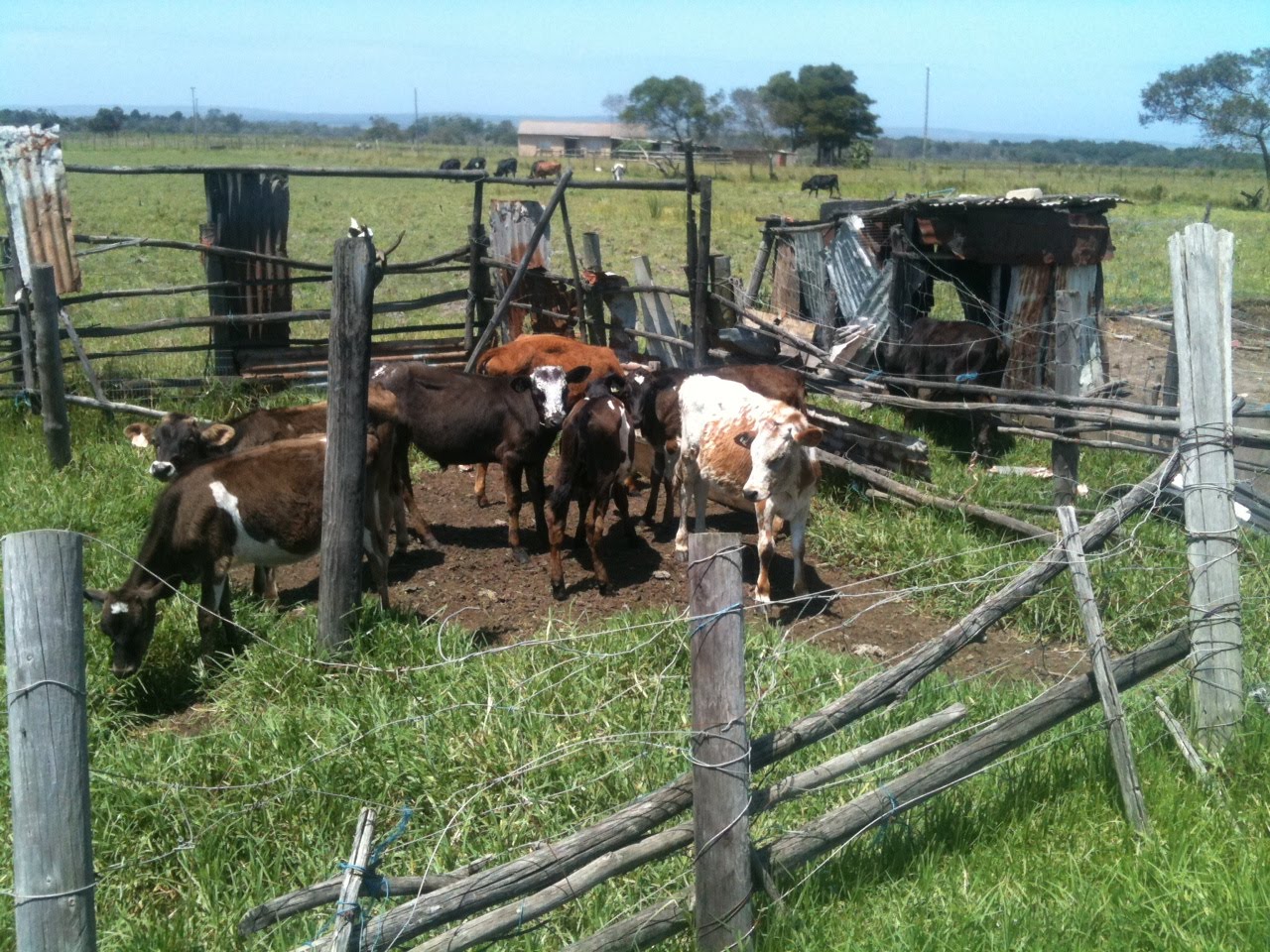
Of the second herd bought in August 2010. We have lost 2. T9 and T11. Today I see 2 cows have white eye. T10 has grafted himself onto a lactating cow.
Broilers

Broilers at 2 and a half weeks. They really like the pen. They flap their wings they do little short sprints as if testing their legs. They scratch the grass and peck for bugs and stuff.
Vicky
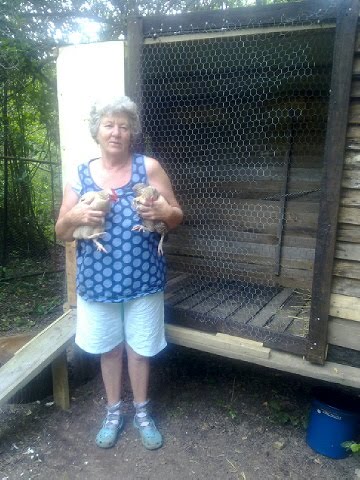
Mom sets up her chicken operation in the Wilderniss forest.
Broiler Project
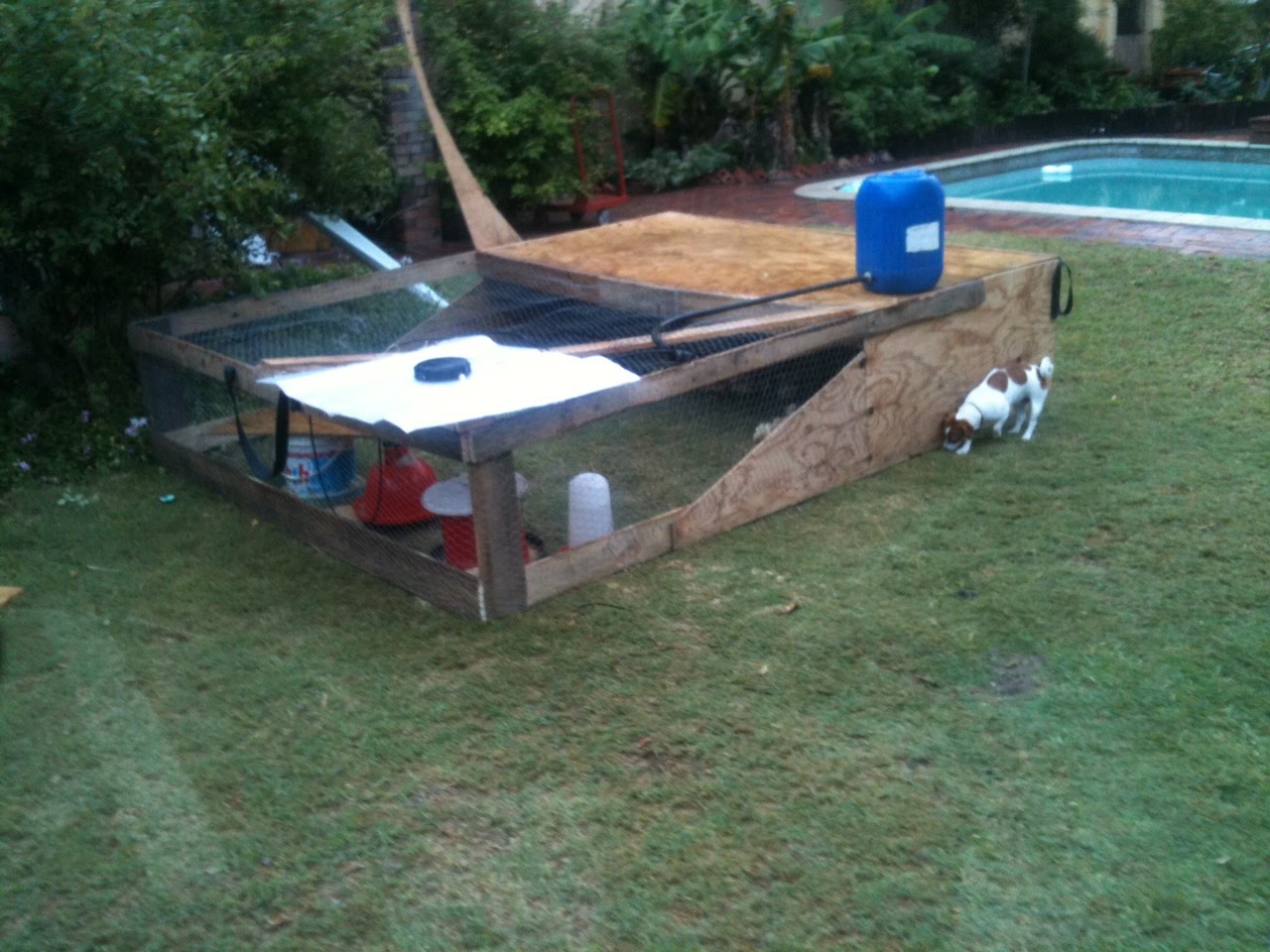
Moveable pen set up. Chicks in. 2 weeks old, Just out of brooder.
Building the Frame for the Hothouse

It is built of old packing cases from Port Elizabeth’s motor industry.
Broiler Pilot Project No 2
Our home broiler project went quite well.
There are a number of steps in the process and I know that the best way to learn is to go through it in practice.
Its the second pilot that we have done. The first started with 30 day old chicks. This on started with 200.
Other than the scale what did we do differently this time.
1. We got the day olds from a proper supplier, not the pet shop in Korsten
2. We used better waterer’s and feeders,
3. We made food available constantly and not three times a day as we did in the first pilot.
4. We had the chickens processed by a small abattoir – Christo Els near Uitehage. – He did a great Job.
5. We fed the chickens a lot of greens – especially – Duckweed, which I scooped from pond alongside.
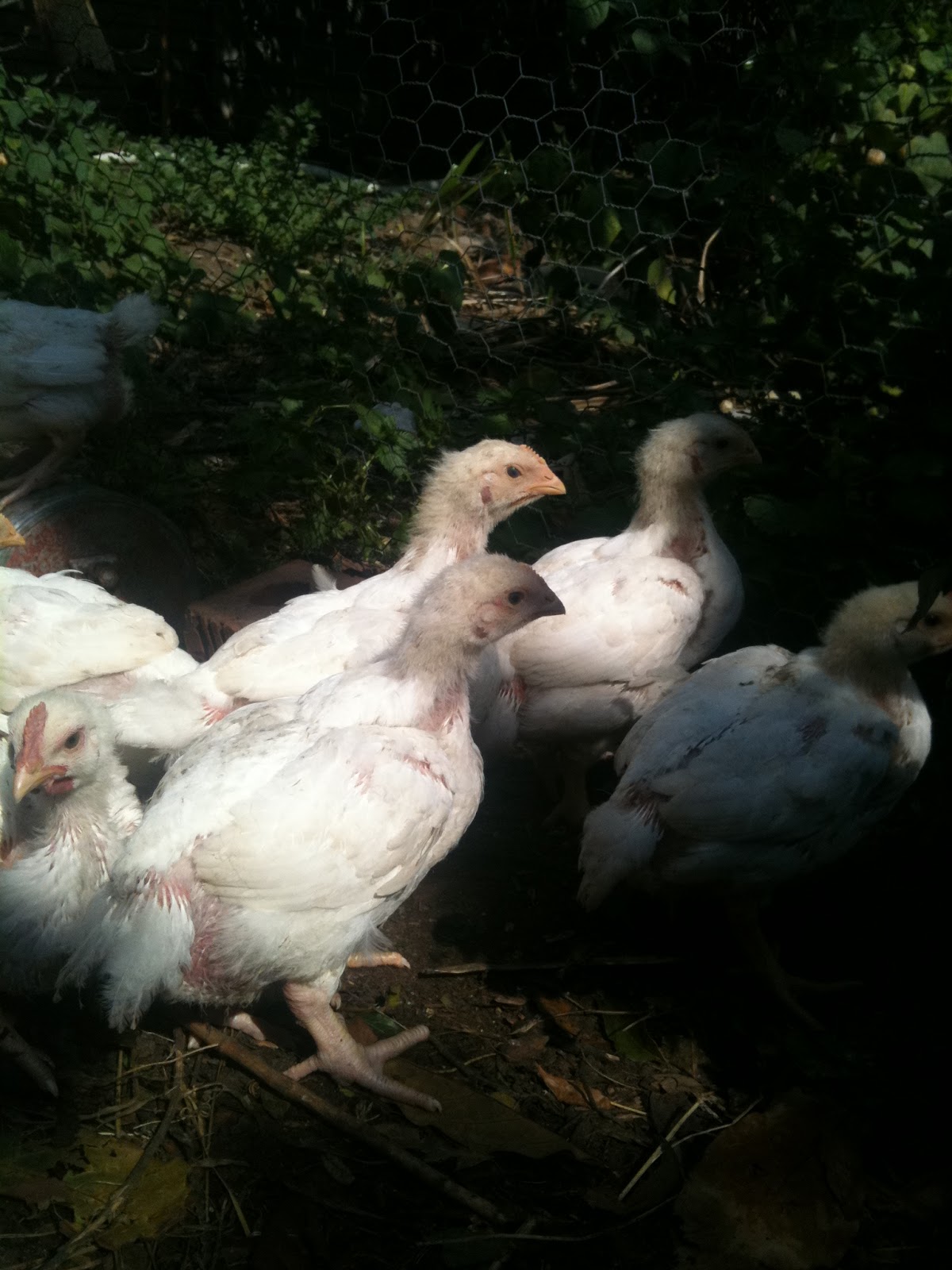
6. We sold (or ate) 125 chickens for R35.00 per kg. (higher than before)
7. We were able to pasture the birds a little with mobile pens.
I am happy about the following:
- The quality of the birds was very good. I enjoyed them and we received a lot of compliments
- The price was respectable. – about the same as a (cheaper) Woolworths chicken
We had some problems that I would like to fix next time:
- The number of chicks we lost in the brooder stage – (bad housing)
- We could not get un-medicated feed
- We could not pasture the birds as much as we would like
I am busy think about the next step. But I quite enjoyed learning from this one.
 TimHewitt-Coleman.com