March 2013 Newsletter for the Easter Cape Institute of Architects

Dear Colleagues,
March 2013 newsletter
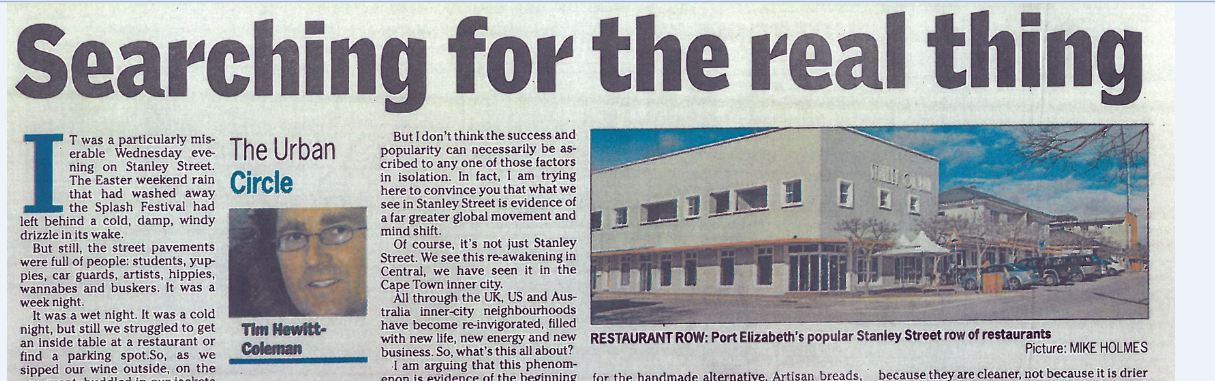
I was watching with interest how the Easter Weekend rain washed away the “Splash Festival” (again). This muddy no-show came after weeks of consternation about the budget and wringing of hands about the “Splash” brand and how to best position the Nelson Mandela Bay “brand” in the eyes of tourists and locals. But, if one can look through the hype and sales talk of events Companies and PR types, there is of course the real and on-going dilemma of how cities and regions compete for the attentions of the fickle masses of tourists and business people.
The message of how great/clean/fun/crime free/inexpensive your particular town or city is, is very difficult to get across and be heard above the noise of paid commercial advertising from Reebok, Coke or Castle Lager.
By comparison, actually, Architects have a much stronger “brand” than most, cities regions and even many countries. (I would guess that more people in the world know what an Architect is, compared to the amount of people who know where Cape Town is)
The word “Architect” (and its translation into every spoken language) has a real and specific meaning all over the world. If you say you are an Architect, there is a degree of trust that you know something about buildings and about their design. This has been the case for hundreds of years. We are custodians of a very strong brand that is likely to stay strong for hundreds more years if we look after it. But what can you and I do? I am sure we can think of a hundred ways to defend and strengthen our brand ( and I for one, would like to here from readers of this mail regarding those ideas).
But, if we think about Coca-Cola for a second. Such a simple product, but one which keeps a promise, one which maintains the trust of the consumer. When you open a can of Coke (no matter where you bought it, no matter how much you paid) you know that you are going to taste Coke. Not milk, not horse urine, not watered down Coke without fizz, but Coke. The real thing. We all trust the Coke brand and that’s why we buy it. The Coca-Cola company does not let any other drink call themselves Coke. It does not even allow them to come close to using their colors or their particular font or shape.
Architects; i suggest that this is the attitude that we must have toward our brand. If an Architect claims to be selling the services of an Architect, that is what she must deliver. Not milk, not horse urine, no watered down Coke with no fizz. To allow inferior service, not worthy of the brand “Architect”, will diminish and eventually destroy this fantastic gift that we have been given. Who must police this service? I argue to you today, that it is us as Architects that must do this work, as fearless volunteers, not government, no not SACAP or other regulated bodies. We must do it.
With our brand intact we will survive the fashions of procurement and tendering that will come and go as the economy and the public mood breathes in and out.
So what can we do? ……..Many, many things. Let’s begin by sharing with each other the good ideas that we have for strengthening our brand. As some clever Chinese chap, (whose name I have just forgotten and whom I am probably misquoting)  is once rumoured to perhaps have said.
“Everyone action taken is worth a thousand good intentions”
Yours in pursuit of Architectural Excellence,
Tim Hewitt-Coleman – Architect.

Goedmoedsfontein

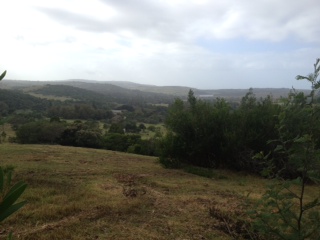
Its been at least two years now that I have been trying to buy the farm Goedmoedsfontien. Its a 10 Hectare property near Coleen Glen about 20km from Port Elizabeth. The land is on the base of a south facing hill. The remaining part of the original farm from which other parts have been subdivided over the years. Parts of the house are really old. The farm was first granted to a Mr Kok in 1816. He may have built this house shortly after that. I am still doing some research to find out with certainty.

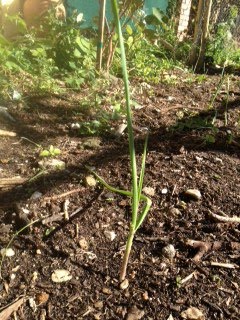
The farm has some pasture  some forest and some wet land. There are two springs and a stream running though the property. The two streams I believe feed the Kragga Kamma river after which the area is named.

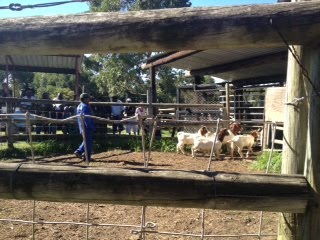
My intention is to restore the farm into a mixed farm with indigenous Nguni cattle, boerbok goats and local sheep breeds. I intend to manage the forest and perhaps run a small free range pork operation. I have some experience with pastured poultry. the farm will definitely be suited to this.

Right now the farm is overrun with invasive alien trees and I have started to work of clearing these. The farmhouse is not yet accessible by car and I am building a new route from the road about 200 m from to the house. Its is very sensitive work as the road has to cross the stream that runs from the spring. There are number of beautiful indigenous forest trees that the driveway must avoid. This too adds to the complexity.

The cottage has been abandoned for many years and needs a lot of hands on work restoring it the roof needs to be replaced along with windows doors and floor boards.

Some of th walls are of mud brick construction and need a careful and caring approach to restore them.

I have now secured an “option” to purchase the farm by September 2013.

I have had to pay for the option so I am risking quite a bit of cash.

The reason I cannot buy the farm without the option is because the banks will not offer finance on “vacant land”. The house is really in a bad state and I intend to spend the next months fixing up the house and the farm to the point where we are able to convince the banks to provide finance.

If they don’t, the sellers will proceed with their attempts to sub dived the farm into three portions and sell them off to “lifestyle” buyers. I am afraid with such small subdivisions no real farming is possible. (even 10 Ha is pushing it)

So this is my mission for the next six months.

I am going to need all the help I can get to save the farm and save me from loosing what I have put in.

I am now actively calling for volunteers to assist.

If you would like to get involved in some way, please contact me at tim@noharchitects.co.za

February 2013 – Newsletter for the Eastern Cape Institute of Architects

February 2013
Dear Colleagues,
February has been a surprisingly positive month for our city. We have “close to capacity” crowds watching our local team engaged in world class rugby at our world class stadium, we have a municipal manager appointed for the first time in three years and we have Sun International officially opening the new conference centre and five star hotel at the Boardwalk complex in Summerstrand. These are all very encouraging signs of growth, stability and revival in a city in which we all believe.


In fact, I was fortunate to be a guest at this weekend’s opening ceremony for the new and improved Boardwalk complex. But, as I sat at the glitzy, over-the-top, launch function, I could not help but notice those things that architects notice. Yes of course the design of the imposing dolls house façade of the 5 star hotel, is not to everyone’s taste. (In fact it is not to my taste at all, but I expect there are a good number of paying customers whose view is a greater consideration to South Africa’s premier hotel and leisure developer.) But as the function progressed and the mandatory speeches of the politically powerful drew on into the evening, the design issues moved further and further from the front of my mind. Rather, I began to think of the role of our local, Port Elizabeth based, professionals in the project. The project was carried out by a full team of local consultants: structural, civil, town planners, mechanical and electrical engineers. Except for the Architects, where the work was carried out by two Johannesburg based firms. (Yes, there was some “local” architectural support, but only a very small, limited appointment.)
As I contemplated the over-catered exotic foods, the scantily clad waitrons and the exuberant fireworks display that evening, I could not help but to become a little anxious of a pattern I have noticed, where any project of significance in this town requires the leadership and vision of some outside Architectural firm. We see it with the Capetonians at the new Baywest Shopping Centre, we saw it at the North End Stadium with the Germans, we see it now at the Boardwalk and even at the NMMU, where the prized commissions are snapped up by Cape Town or Johannesburg firms.
But, what to do? Can this tendency by reversed?  I, for one, have long given up on the futile idea of trying to defend “our territory” against outsiders. Why? Because this sword cuts both ways. Many architects in our region are doing good work outside of our region and outside of our country, making it insincere and contradictory to argue that we should not be open for business to Architects from outside of our region and our country. Rather, I think we must embrace the reality that the world in which we live is a world of specialisation. We have got to get good at something and to be seen to be good at that thing. There is absolutely no reason why you cannot be based in Port Elizabeth and be recognised as the world’s best in some aspect of design and construction. This, I believe, must be our focus as an Institute. We must be seen to be pushing for the conditions that would enable our members to deliver cutting edge work of the highest order. This is how we remain relevant; this is how we remain competitive. All other “protectionist” strategies are for the short term and eventually tend toward making us weak and lazy. We can’t afford to be weakened any more than we are. Its not an option.
A few years ago I visited the Cairn’s Convention Centre on the north east Australian coast. We were investigating the potential for an International Convention Centre here in Port Elizabeth and we were told we had to visit Cairns as their centre had been voted the world’s best four times in a row. Now bear in mind that Cairns has the population less than Uitenhage and airport the size of Upington’s. The sea is un-swimmable because the mud and mangroves. There is nothing really special about the town at all, but because of the commitment of the town’s leaders to provide an excellent international conference experience, the place is booked out year after year by big spending international conferences.
So, can PE become to the world of Architectural Design, what Cairns is to tourism? Well, I don’t know. But if the answer is “no”, then it is not “no” because we are too small a city, it is not “no” because our airport is too small, it is not “no” because Cape Town is hipper or Jo’burg shinier. If we decide that we want to develop our city as having a reputation for excellent design, for sustainable design, for sensitive Heritage design, for urban renewal, for people focussed “developmental” design, then we better get going with it. We had better get going with figuring out what the first step is, because it ispossible. Or we could then of course just do nothing, leave things to chance and winge to each other as our profession is eroded by “outsiders”, “experts” and hostile clients.
I think, I would prefer that we don’t do nothing. We have tried that for some years now. It’s got us where we are now.
But more importantly; what do you think?
Yours in Architectural Excellence
Tim Hewitt-Coleman
(President – East Cape Institute of Architects)

January 2013 newsletter for the Eastern Cape Institute of Architects

January 2013
Dear Colleagues

,
Welcome to the first Newsletter for the year from the Eastern Cape Institute of Architects. We will be sending out these communications monthly, in order to give a view of what is topical to our profession and to the built environment. 
If you are anything like me then you already have too much information coming to your desk and you can’t stomach the idea of another monthly mail that you wont get around to reading. I urge you please to see this Newsletter rather as a time saving device, a view of what you should look into in greater depth and what you could perhaps come back to later.
·         The ECIA has a very useful website (www.ecia.co.za) (thanks Jacques van Tonder) All important notices, memos and minutes are stored there for you to browse through at your leisure. The newsletter will not duplicate that information, but rather highlight what may be most relevant or pressing.
·         The ECIA now has an active Facebook page (thanks Jo Staats). This is an ideal forum for members to engage in debate and discussion around issues relevant to us in our work as Architects. Please “like” the page “Eastern Cape Institute of Architects”
·         You can follow the ECIA on twitter @ECIAPE (Please do). Jo Staats is in control of this feed and posts only quality information there for us.
·         The ECIA has begun to post videos of lectures you may not have been able to attend. These can be found on Youtube (thanks Tarique Abdul) at
“So what does the year have in store for us?”
January would not be complete without us pondering this question. Let me offer you my view, so we can see how different it is to yours. The truth is, I see a good year ahead.  I say this sincerely and I say it for the following reasons:
·         I see a consensus developing that the worst of the economic downturn is now behind us and that the public and private sector are starting to build buildings again. House prices are beginning to rise and there are some reports coming through of agents reporting stock shortages especially at the lower end of the market. Shortage of stock means new buildings have got to be built and that means business for Architects.
·         I also see that we are heading for national elections next year, and when I look back at the last three national, there was a definite spike in urgency from the public sector developers in the year or so before. I predict we will see the same this time around and have already begun to see evidence of renewed vigour in stalled or sluggish projects.
·         I predict that the political impasse that has crippled Nelson Mandela Bay’s administration of the last few years, will in the coming months find resolution. I see this as an unexpected by-product of the Manguang conference, where our Mayor, Zanuxolo Wayile, visibly supported the winning  “Zuma” faction and his arch rival, regional political boss Nceba Faku, vociferously backed the Monlante  “loosing horse”. Why is this important for Architects to watch? Because it now becomes more likely that the ANC in the region will rally behind our mayor knowing that he is on a winning wicket; and a Mayor with strong support in his own party is a mayor who can be decisive and effective. And we all know that getting buildings built requires decisive and effective leadership. We will watch this space eagerly.
·         The other dynamic I am watching carefully is the tragedy of dramatically low fee tenders that are being accepted by many of our clients. In the past year the MBDA and National Department of Public Works accepting tenders with 40 and 50 percent fee discounts. There are only two possible outcome of this trend:
o    the first outcome sees firms continue to offer the service that we have traditionally expected the architect to provide, but find their expenses outstripping their income leading to inevitable business collapse.
o    The second outcome sees firms compromise dramatically on quality of service. Working ‘to rule’ but in the process damaging the built environment and the long standing good reputation of the Architect as a professional.
Controversially, perhaps, I would argue that both of these outcomes will lead to corrections that would improve prospects for Architects in the longer term. The first outcome will see Architects tendering too low punished with business failure, leaving those that survive to continue, but at more realistic rates.  The second outcome, will see client organisations looking more carefully at their procurement systems to protect themselves against the inevitable poor service that emanates from a tender process that emphasises lowest price above all else.
Whatever happens, 2013 promises to be full of excitement? We have an excellent committee elected at the AGM toward the end of last year. This new team will build on the success and the momentum of Professor Albrecht Herholdt’s 2011/2012 committee. This committee is made up of: Albrecht Herholdt, Andrew Palframan, Bandile Boyana, Debbie Wintermeyer, Jacques van Tonder, Johann Staats, Mary Mangan, Neill Kievit, Nicola Darke, Tim Hewitt-Coleman
These people have all volunteered their time and energy to the cause of the Architectural Profession in the region. Please support them in their task by taking them into your confidence by sharing your frustrations, dreams and ideas.
Colleagues, lastly, please remember that we run the Merit awards programme this year. (thanks Andrew Palfarman and Debbie Wintermeyer) You will be called upon later in the year to submit your best work for a panel of expert judges to assess. Yes, it’s scary, but please participate. This process of peer review and peer recognition is part of what makes our profession great.
Thank you.
Yours in Architectural Excellence
Tim Hewitt-Coleman
(President – East Cape Institute of Architects)