Moving the Chickens

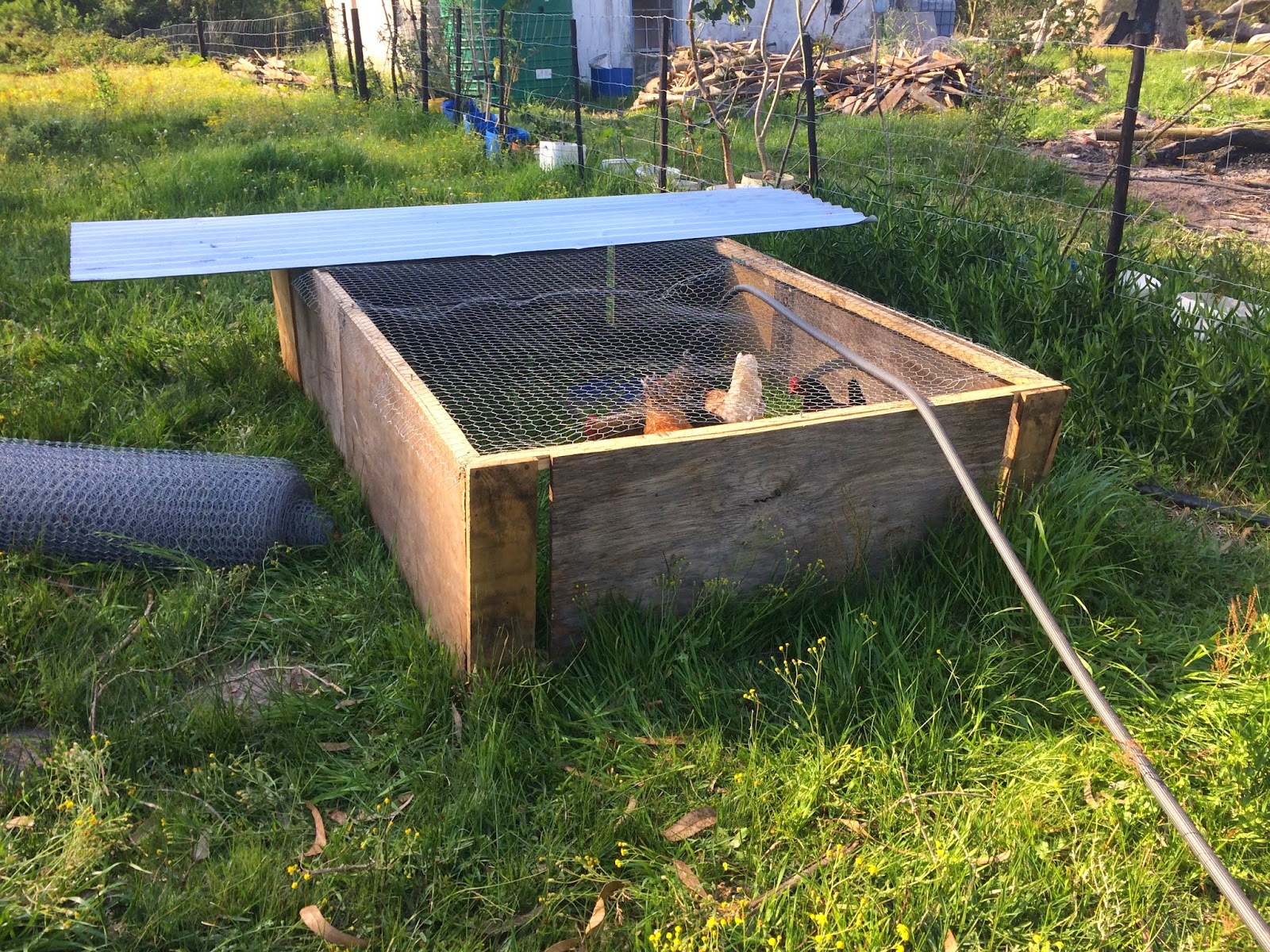
I am not entirely sure that I am ready to move the chickens to the farm, but its done, I moved them today on the back of a hired trailer, with a whole lot of potted trees from my hothouse which I am busy dismantling. All but the one hen that is broody and sitting on eggs.

I am sure I could have built a  better shelter for them. In fact I have a much better one planned, drawings and everything, but like with so much in my life, this is what I am able to do now, with the time and resource that I have. I console myself by saying it is a temporary solution. But I say this as I look around my study on the Sunday evening with all many of the temporary shelves, piles of books, heaps of tools un-carpeted floors and skew hung posters, which were all “temporary ” solutions.

How much too in my business is the result of pragmatic thinking. “This is the best that we can do, let it out the door, or run the risk of missing the deadline”.* But is it not in this way that my life becomes a sequence of compromises.  Is it not in this way that I miss on the opportunity to do great work, lovely chicken sheds, great articles, beautiful buildings? But perhaps its better this way. Rather a life of compromises than a life of waiting for the time to be right. Waiting for the movement to strike. But never taking action, Never doing stuff, because the circumstance is just not right.  I don’t know!

But I do know that we have 5 fowl in the new pen. One hen got out when I was moving them out of the transport cage. I hope we can somehow get it back. I will ask Mandoza if he can think of a way to catch it tomorrow. The danger of course is that unknown predators roaming the farm kill all the chickens tonight. I have not yet taken the time to make the shelter “dig under proof”.

I will keep you posted. Lets see how it goes tonight.

* In a way too, this blog is a battle between getting something out and getting something right. I would like the blog to have more meaningful articles. I would like there to be thorough videos explaining some of the things we do. I would like the photograph to be of better quality. But I suppose if I waited for all those things to happen, I would never put a blog out at all!

update – 8 9 14

Chickens all still alive this morning and I managed to catch the one that got out. (I popped into the farm on the way back from a meeting nearby.

update 11 9 14

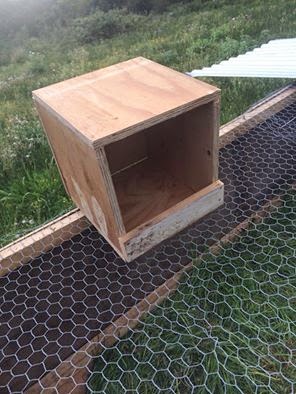
Added a nest box this afternoon.

A simple design of 300 X 300 boards cut from a 19 mm Shutterboard sheet. A little plank across the front to keep the eggs and nesting material in. Then simply screwed into the side wall of the Chicken Tractor.

The chickens seem happy. The peck at the grass all the time and scratch in it. Mandoza is moving them to new grass every day. So far so good. No predator attacks. I put a bunch of Bluegum leaves in for them to nest in. I heard somewhere that Bluegum leaves are some sort of natural bug repellent.

We’ll see!

A Place of Power

I have been cleaning up the yard a bit at home. I suppose now that we have the farm, I have little excuse left for turning our sub-urban backyard into an ongoing agricultural experiment. We have veggies, fruit trees, grape vines, Tilapia, a duckweed pond and a chicken run. I am under pressure to move the chickens, the grape vine, the tree nursery and the Tilapia hot house out of the back yard and on to the farm.

But its kind of sad. I know I am making space for bigger and better things, but I still have a vision for this backyard, that will now remain unfulfilled. I would have like to have completely taken out the lawn and replaces it with a tree nursery or chicken forage. I would like to have drained the pool, roofed it into a Tilapia aquaponic garden hothouse. I would have liked to have gone further with rainwater harvesting, composting and grey water systems.

But in clearing out the yard, I am also taking stock. I am clearing out the rubbish that has accumulated. Burning those short bits of timber I thought I would use here and there. Its funny, its almost as if all this stuff grows to have some power over me. And as I burn it I feel the power return to me. Too much stuff! That’s the real problem. We get more and more of it and it begins to mess with our minds. It begins to take my personal power.

I am not sure that I know what I mean by “personal power”, but I have come to see that inside me there is a personal energy or “power”. Some days it is stronger, some days it is weaker. I can feel it change sometimes. If, maybe somebody close to me says something hurtful. I feel my power diminish. If I am doing physical work, I may feel tired, as if though I cannot go on. And piles and piles of disorganised stuff has a similar effect on the energy. This “power”. It makes me feel weak and discouraged.

This realisation is behind my drive to simplify, to live with less. I can see that living with less will give me greater vitality and greater strength. I have go no idea why, of course. But, the mechanics of this phenomenon are not as important to me as the absolute knowledge, that for me, in my life, the less clutter there is, the less noise there is, the less stuff there is, the stronger I feel. And, what’s more, I notice that its like some sort of spiral effect, because the stronger I feel, the more I am able to do to rid myself of those things that are making me feel weak, so I, in turn become stronger again.

My quest , and I suppose, many of yours to, is to find my strongest self, my fullest self. All else flows from there. My ability to love and give. My ability to lead and contribute, all of these are by products of a strong self.

So, as I step back into the work week tomorrow, let me remember the feeling of power and strength I hold today. Let me carry it with me to the meetings, in the proposal and the reports. Let me remember that the place from where I come is a place of power.

Some Perspective

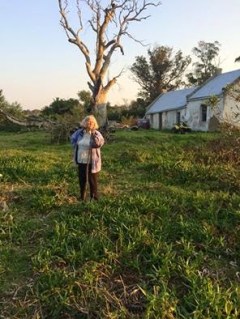
I went out to the farm with my mother on Sunday. She helped me identify some of the trees that I don’t yet know. But also by her just being there with me it helped me gain some “lifetime perspective”.

My Mom

A perspective that helps me see that its OK if things take the time that they need to take. Its going to take a lifetime sculpting this land, this giant garden. The task will never end. My learning, I am sure will never end. I see this time now as just the beginning of the relationship. The “getting to know each other” stage.

I wish I could tell you more about what has been done, since last I checked in, but to be honest, I have been really busy in business. I have been toiling, mostly mindless toiling, the kind that I just have to do to keep afloat. The kind of toil that makes me wonder if there is a different way, a simpler way, perhaps a more beautiful way for me to live out my life. A direct way. A way that cuts straight to the chase. A way that does not see everything as a means to and end. A way that is the end in itself. 

I spend so much of my time doing stuff, not that I want to do, but what I am required to do in order to achieve an objective and so much of the time even the objective that I am trying to achieve is not actually what I want but rather just something that helps me achieve another objective which is not what I want but helps me achieve the next objective. Yes I can see the insanity in this cycle and you can see the insanity in your own life, but just because I know the question does not mean I have the answer. I can see the treadmill that I am on, but that does not mean I know how to get off. And without wanting to push the metaphor too far, I can see that it really is possible to fall quite hard once you realise you are on a treadmill and look around, take your eye off where it should be and loose a footing, tumbling face forward and head over heals.

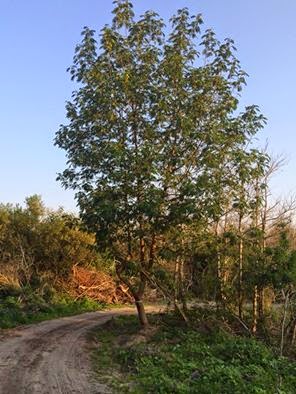
I tried not to think of these matters while I was out in the forest with the trees and my mom, where we found a tree that I very much hope is indigenous, but looks very much like

What tree is this?

the Australian invasive Acacia Mearnsii (known here as Black Wattle). As far as I can see its an Acacia Caffra, but some of my clever friends think is could be Peltophorum Africana. 

Its not that I have a facination with latin sounding names or the classification of each plant and tree, but rather just that I would like to know if they should be chopped down or not. If they are invasive, then they are just going to cause me more work over the years as I have to keep them out of areas I don’t want them to be in.So if anyone reading this blog can identify this tree or perhaps knows a internet group or forum that is likely to be able to, please let me know.

My mission in the next few weeks is to get going with planting potted trees that I have been moving from my house in Walmer. My mom tells me its late I should have planted in autumn already. Here I was holding on until spring, but I will plant anyway. 

The other project that is becoming urgent, is for me to move the chickens to the farm. Two of the chickens have turned out to be roosters and have taken to crowing early in the morning, I am sure upsetting the same neighbours who complained last time I had a rooster. So watch this space for chicken coop progress.

The Mystree tree

The Crisis in South African Cities within the context of the entrenched dysfunctional relationship between Urbanists in the Public, Private and Academic Sectors

(This Paper was first presented on 5 August 2014 at the International Union of Architects – World Congress in Durban. – It was presented at the “Parallel Academic Sessions” after a lengthy process of abstract approvals and double blind reviews.)

Close to half of South Africans now live in towns and cities. There is no evidence of the slowing of this trend. The 2011 Census shows us that rural provinces like the Eastern Cape have a declining population while urban centres like Gauteng show massive growth in population at rates very difficult to plan or develop for.
The growth pressure on South African cities in the last 20 years has of course been the engine driving change in the country, because where there is growth there is a drive for transformation. This has necessitated a profound “re-visioning “and re-imagining of what were old colonial and apartheid cities. This urbanization pressure has created the perfect opportunity for change. Nowhere else on the globe since the rebuilding of Europe after World War 2 has there been a need for urban spatial transformation as here, in post-apartheid South Africa.  There are great obstacles to change including our limited resources, our old paradigms and our vested interests. Not surprisingly the process of spatial and physical transformation has been a flawed process.  No matter how you look at the current reality in South African cities, twenty years into democracy, all can still, without exception, be described using the terms “Town” and “Township”. (Those of you from outside the country are reminded of Apartheid spatial planning’s dictate that black residents be located outside of “town” in dormitory “townships”.)

All of our cities are currently characterised by:
• Inner City areas facing decline, degradation, increased vacancies and deflated rentals.
• Middle class suburbs remain crime affected and under siege from roaming criminal gangs.
• Government subsidised housing is very poorly located, very poorly serviced and of very poor quality.
• A lack of spatial integration (denying, particularly the poor and new urban immigrant’s access to critical urban resources and the urban economy).
In spite good policy documents, South African cities have continued to become massive sprawling, polluting, fossil fuel dependent, urban regions that experience high levels of crime because of shortcomings in the urban economy and the weak social infra-structure. These cities are in many ways monuments to inefficiency, social dislocation and environmental degradation.
To this day, our cities remain memorials to apartheid’s most visible and viscous social engineering projects; divided between rich and poor, black and white and well serviced and poorly serviced. But what is perhaps worse, is that far from turning around this inherited pattern, the forces acting on our model of development since 1994 have rather perpetuated and reinforced the failed pattern.
As we speak, this pattern is playing itself out in the city that has been home to my family and to my architectural career. The Nelson Mandela Bay metropolitan area will, in the coming months see massive new sprawling developments beyond Motherwell to the east and outside Sherwood to the west of the metro. The process is now well underway to obtain approval for a new R6 Billion “mixed residential” development beyond Motherwell, along the road to Addo and construction has already commenced on massive new regional shopping centre to the west along the N2.
Curiously this crisis in South African Cities continues at a time when there are skills and resources available in the public, private and academic sectors to address these challenges and in fact to transform our cities into vibrant models of  balance, harmony and sustainability.
It is therefore the position of this paper that the most significant obstacle to meaningful urban transformation in South Africa lies not in a shortage of academic “know how”, not in a shortage on public sector investment, not in a shortage of private sector mobilisation but rather in the entrenched dysfunctional relationship between these three sectors.
Each of these sectors operates increasingly as a “silo”, separate from each other with no mechanisms available for true collaboration. The public sector has become driven by a number of imperatives that require it to “procure” the “services” offered by the private sector in a standardised mechanism designed to “procure” other “goods and services”. The obvious fact that public and private sectors can best serve the urban crisis by contributing the best from their ranks to collaborate in providing, vision, leadership and direction is of no concern to the faceless authors of our public sector’s “supply chain management” procedure. The unavoidable nett result of this strategy is a contested, completely unproductive standoff between the public sector “urban silo” and the private sector “urban silo”.  No vision emerges from this standoff; no leadership emerges from this standoff.  Only “safe”, “compliant”, “cost effective” implementation.
In a similar way urbanists in the “academic silo” come under increasing pressure to focus not on the South African urban crisis, but rather on “purer” academic pursuits. A youngster with a Phd that deals with some arcane branch of architectural theory is much more likely to assume a professorship in Architecture than a practitioner with 20 years’ experience in city building. This trend seems unstoppable with a momentum developed from very high up in the South Africa’s higher education community.  Architects who teach are now actively discouraged from participating in private practice. Those from private practice, who give of their time to the university and share their experience generally, do so as volunteers. Academics offering to serve the public sector are treated the same as their private sector counterparts, as a commodity to be bought through a “procurement system” with the same resultant frustration.
While in architectural practices everywhere we find that the energies of the brightest minds are committed to pure commercial pursuits. Top Architects, in top firms dedicate a disproportionate amount of their time on bids, tenders and RFP’s. When the projects are moving, architects at the top of their game commit most of their valuable time and energy in “managing risk”, resolving conflict and ensuring cash flow. Very little time here for reading, studying, engaging or developing the perspective that we know is required to see the bigger urban picture.
In this way the silos grow more and more isolated and positions within them become more and more entrenched. Urbanists of otherwise impeccable credentials begin to withdraw into cynicism and isolation. Great ideas are shelved. Big visions parked. Energy diverted.
Is there any solution? Is there any alternative to these dysfunctional relationships? Is there any way out of this urban crisis? Of course there is. These challenges were made by people like you and I and they can be overcome by people like you and I.

In light of the above, we put it to this conference that the following are now accepted as “common cause” by the three “sectors”; academic, public sector and private.
• Firstly, progress in addressing the crisis in South African cities is significantly dependent on the effective collaboration between “Urbanists” located in the public, private and academic sectors.
• Secondly, effective collaboration is substantially obstructed by current public “Supply Chain Management” procedures.
• Thirdly, effective collaboration is significantly obstructed by current Higher Education human resource management practices.
• Fourthly, the burden of Research and Development required to address the Urban Crisis is not shared in any helpful way by the Architects located in the private sector.
If the above can be taken as consensus, then this paper then makes the following propositions which it calls on the conference to debate:
Proposition Number 1
This paper argues that Architects in private practice have a meaningful role to play in developing vision and solutions to many of the challenges that face our rapidly growing cities. It is further argued that practicing architects are, as a by-product of their professional practice, daily exposed to up to date, complex data that informs and frames the questions and challenges that make up the urban crisis.
The limiting challenge however is that a formalised structure to support and facilitate the assimilation, processing and sharing of this data does not exist to the same extent as this exists in South Africa’s Universities. Universities all have a long established, structured set of incentives that promote research and debate.
Architects in South Africa are organised, primarily though the South African Institute of Architects. A number of programmes are run by this voluntary association to ensure the “Continuing Professional Development” of its members. In its turn, the regulating authority, South African Council for the Architectural Profession (SACAP) determines what is deemed to be an adequate amount of “Continuing Professional Development” in any given 5 year cycle. Within this environment, very little emphasis is placed on ensuring that research outputs of the profession are captured in any meaningful way.
The proposition put forward in this paper is therefore that:
The South African Institute of Architects is best placed of all institutions to formulate a systematic research process that captures the collective wisdom emanating from the work of practicing architects in the rebuilding of South Africa’s cities and that it will be failing in its mandate toward “Architects and Architecture” if it does not develop programmes to address this challenge.
Proposition Number 2
This paper points to the uncontested fact that University Architecture departments through the country have displayed a “drift” away from professional emphasis toward a greater academic emphasis. This is evidenced by the growing proportion of junior and senior teaching staff at Architecture departments with little or no professional exposure or credibility. This weakness arises from the fact that Architecture departments are located within universities where they experience significant pressure to conform to “uniform standards” which align the seniority of teaching posts with equivalent academic achievement. There exists no framework at any South African University to equate professional achievement with appropriate post-graduate qualifications meaningful to selection panels considering applications for teaching posts in Architecture departments around the country. While the South African Council for the Architectural Profession is mandated to accredit schools of architecture, no part of its directives to schools of architecture include the need for teaching staff to have has any contact or exposure to the profession of architecture.
The proposition therefore put forward in the paper is that:
The South African Institute of Architects is best placed to ensure that The South African Council for the Architectural Profession, develops expands its guidelines for the accreditation schools of Architecture to include minimum levels of professional experience for various categories of teaching positions.
Proposition no 3
While some architectural services procured by the public sector are of a routine and basic nature, others call for the Architect to provide significant leadership and vision. No evidence or research has been presented by the public sector at any conference or in any publication to suggest that leadership and vision can best be obtained from private sector architects using the current supply chain mechanisms uniformly adopted by Local, Provincial and National government departments. In fact, the documented evidence of Architects failing to provide adequate leadership in public sector projects grows as procurement process dictated by National Treasury become more uniformly employed.
This “supply chain” practice continues in spite of a number of workable examples where leadership and vision is procured by the public sector using free, fair and transparent processes. These examples include the long list of Director’s General, Municipal Managers, Chief Financial Officers and CEO’s of development agencies who are all procured in interview and shortlisting procedures without the need to submit a competitive financial offer.
The proposition therefore put forward in the paper is that:
There is no institution better placed than the South African Institute of Architects to commit to a comprehensive research project to test the hypothesis put forward in this paper that:
“Current South African public sector supply chain management processes, do not match the best Architectural skill and talent with the tasks that most require these skill and talents.”

Conclusion
This paper calls on this conference to debate the above three propositions with a view to accepting, rejecting or refining the position. The intention is then that this paper, in its refined form, becomes a call to action for South African Institute of Architects, to step into a leadership position in the task of ensuring that the energies of South Africa’s architects are best directed to the growing Urban Challenge facing this country and this continent

Is it fair?

The Brown Cow, that the kids have named Daisy, had a still born calf on Friday. I am not sure if I should worry about this. It is her first calf, perhaps she took the bull a bit too soon, perhaps she is not getting all the nutrients she needs. Its sad. It would have been nice to have a calf on the farm.

Each window of the old cottage is different.

I really did not get much time to get out to the farm in the week. (I speak a little more about the frustration and joys of what I deal with in the week on another blog of mine). I popped in on Wednesday afternoon and took some measurements for the new casements for the timber windows. Over the weekend, today and yesterday, my time was also quite limited. Yesterday I had to fetch and carry kids to drama practice and had to get some work done at home in the morning first. Today may daughter came out to the farm with me in the morning. We had great fun, but got only a few things done before she was bored and desperately needing to go to McDonalds for lunch. I love spending time with her. I love spending time with my family and being available to them for the things that they need my help with. So I am stretched. So little time. There is a mountain of work that needs to be done on the farm, if I can ever dream of moving my family there, but to get to that mountain is a real challenge. Work on the Cottage is an urgent priority for us.  I really want to spend time myself getting it done. I am not afraid to hire people to help me, but only to the point where I trust that they will not do more damage than good.

Is climbing a tree more fun than watching someone climb a tree on TV?

Is it fair on my family for me to take on this project? Is it fair of my family to expect me to be available all the time for their projects (at the expense of mine) ? I don’t know. Right now my family is sitting in the lounge, by the fire watching “Idols” (I don’t know if you can call it a project, but it seems to be quite and important weekly event a least). But I am here, in my study cleaning my chainsaw, or planning the house or scheduling the tasks on the cottage of the week, or talking to you guys. Is that fair of me? Or should I be watching TV?

And another thing. Is it fair on my family for me to develop an attitude toward my office and the business I have built, that may see me being less inclined to see myself as its slave? What if this attitude results in me bringing home less money? What if child number three can not have as much money spent on her as child number one? Would the family understand? Would I not regret this?

The farm is not just a property deal. We have bought a few properties over the years and those have always been about the spreadsheet. What rental can it generate? What can I re-sell it for?  And while I can see that Pebblespring is a good investment, its more complicated than that, because I see Pebblespring as part of strategy to simplify, to spend less and to live more fully. But this is a family project. It is a project for all of us. The reality of course is that we all see things differently. We all love the farm, but are not all equally on the same page about simplifying and spending less. While I am quite comfortable to lead this process, I am very concious of not leaving anybody behind. Not creating a gap between me and the others in my family. I am not separate from them. We are a whole. But we are all our own people, with our own minds.

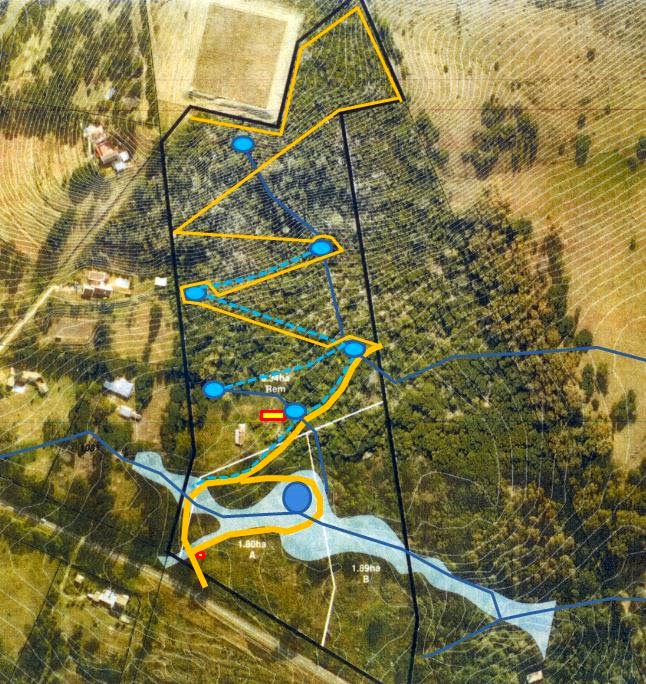
Yellow rectangle is new house position. Yellow lines access. Blue lines water

In other news, I have been thinking a little more about the new house we plan to build after finishing with the renovations of the cottage.  The new plan is to have it a little closer to the cottage, so as to form the second edge of a farm yard, (with the existing cottage being the first edge).

The way I prefer to think is to sit with an idea for a while and see if it “resonates” If it still feels good in week or two or is not replaced by a better one, then perhaps we move to the next level. Slow moving, but solid.

So I will let you know if the thinking stays stuck.

The End of Excellence?

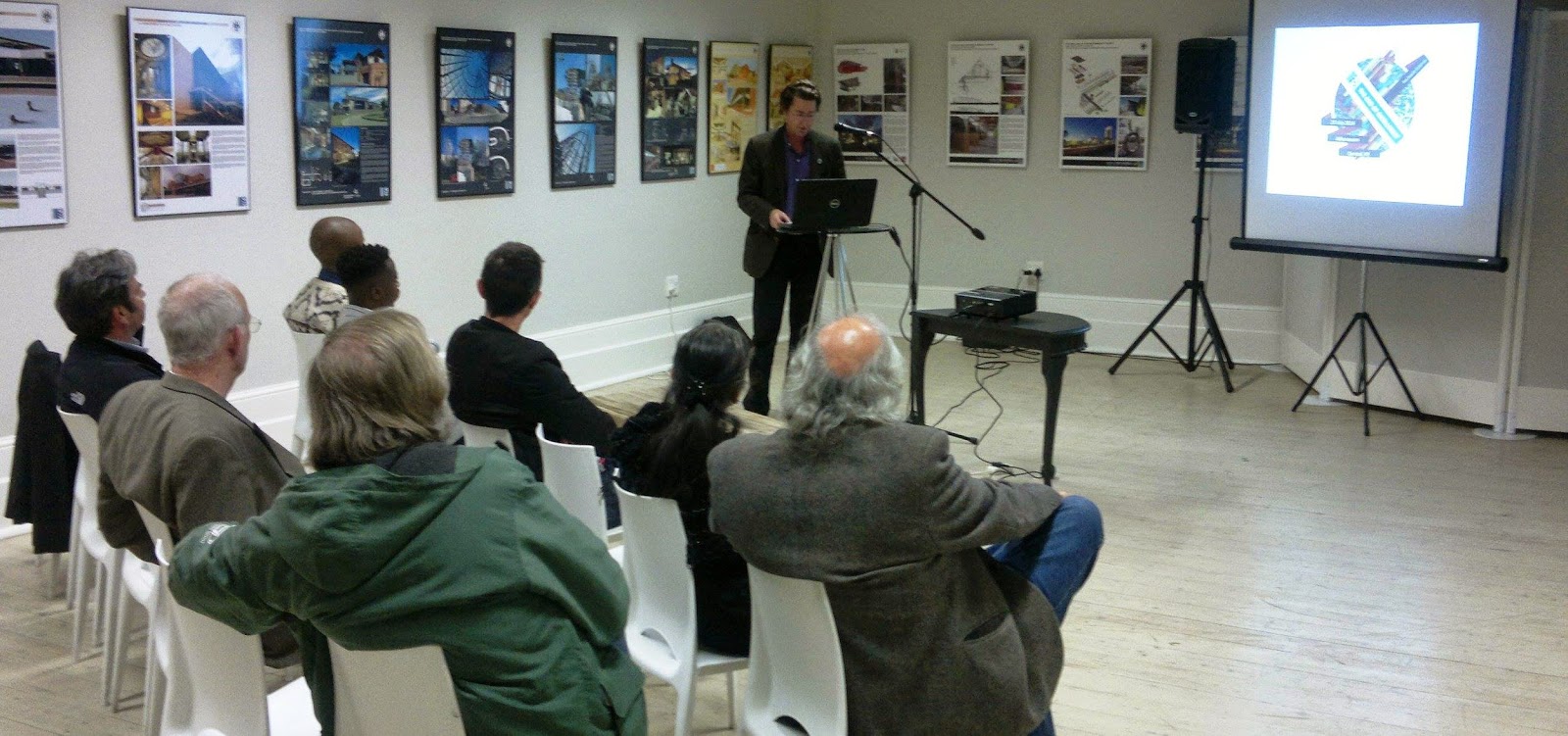
(This Piece first appeared in The Herald on 25 July 2014 and is based on a talk I gave at the Athenaeum that week)

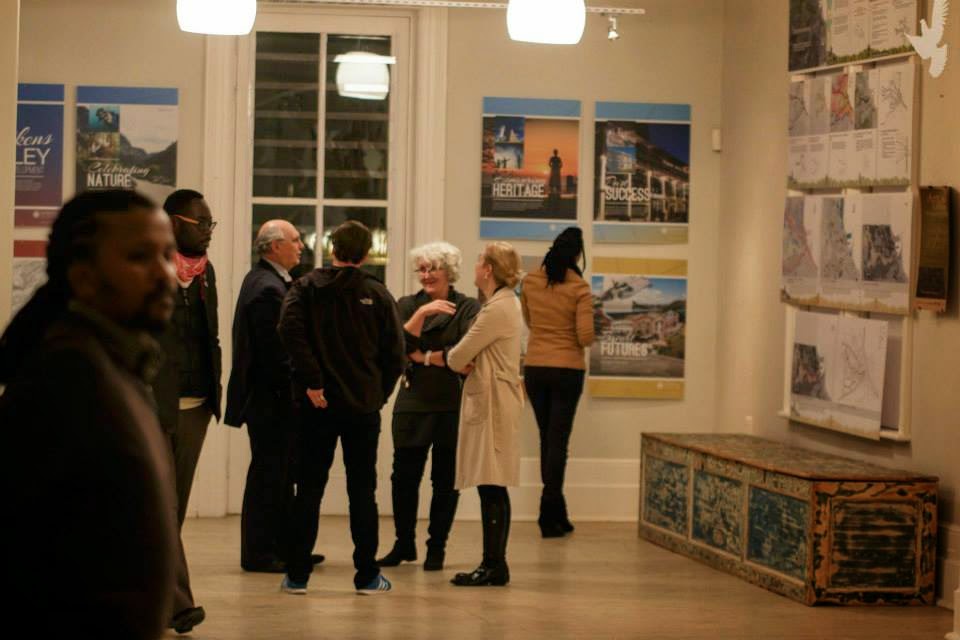
I have never visited Paris, but I have, just last night, visited a fantastic exhibition of excellent buildings and spaces at the grand old Athenaeum, in Central Port Elizabeth, entitled; “100% Paris”. You can still catch it. It runs until 25 July 2014. The exhibition is part of a collaborative between the Alliance Francaise, The ECIA, the NMMU School of Architecture and the MBDA. The ECIA’s Regional Awards programme is on Exhibition and so is some very interesting work by the MBDA and NMMU on the Baakens River Valley.


Visiting exhibitions and events of this sort always gets me thinking and this time was no exception. I gave a small talk on behalf of the ECIA and there was some very stimulating discussion that followed. The event got me thinking about “Excellence” and especially excellence in the built environment. What is it? What is its purpose? Has its time passed? Is excellence and means to an end? Or is excellence an end in itself? It got me thinking about “The End of Excellence”.

Because, as I said at the talk last night, I am quite sure, if you were to ask anyone who ever visited, Paris, or London or any other beautiful city, to speak of what was most memorable of their visit, they would speak of the built environment. They would speak of the bridges, the steeples and the spires. They would speak of the parks, the walkways and the avenues.

I am pretty confident, that after having returned from London or Paris,  you would not speak of how neatly the accountants prepare their balance sheets, or with what precision the doctors sew up their stitches after an appendectomy.  Yes, of course these disciplines are indispensable to our civilisation, but we must confront the truth that there is something very significant and lasting about the impression that the built environment makes on us.
So, what about Port Elizabeth? Yes, we have some beautiful places. We have the Donkin Memorial, City Hall and Feather Market Centre. We have an extraordinary collection of buildings, parks and spaces in Central. There are some parts of our city that are truly excellent, but  many of these are all very old buildings and places.  So, I ask: are we still able to create excellent spaces? Or, have we moved into and era beyond “ The End of Excellence”?

I ask this because, excellence is under threat. Around the world it is being beaten up and kicked in the teeth. Excellence is being bludgeoned simultaneously by a gang of three thugs. I am not afraid to name them.


Thug number 1 – “Mediocrity”

“Mediocrity” is a politically correct thug. “Mediocrity” says that perusing excellence is unfair because then not everyone gets a chance. “Why should people that are un-talented, unmotivated and generally useless not also get a chance?”

Thug Number 2 – “Competition”

“Competition” is dressed like a respectable accountant, but still very much a thug. “Competition” says that “if it can’t be measured, it can’t be managed”.  “What makes Central better than Charlo? What makes the North End Stadium better than the Boet Erasmus? What makes Architect A, better than Architect B? Show me the calculation! Is it longer? Is it heavier? Does it have more light bulbs?”

Thug Number 3 – “Compliance”

“Compliance” is a mouse-like, lawyer-like, thug? Compliance says “excellence” what is this? Where in the rules does it say we have to create an excellent city? “Compliance” says, we have made rules designed for stopping corruption and thievery, “What more do you want?”.
The sad news is that these three thugs have taken over public and private sector property developers. The people that build our cities are now controlled by these thugs or have become their agents.  Where excellence still happens, it happens because of the super human efforts of isolated individuals in the public and private sectors, who, in spite of the odds being stacked against them, see to the delivery of excellent buildings and spaces. Even today. Even in our city.


 The private sector routinely deliver s mediocre buildings and spaces because it appeals only to the mediocre tastes and expectations of you and I, the people who frequent their mindless malls, rent spaces in their sterile office parks. The public sector routinely delivers a mediocre built environment, for the same reason as the public sector, but they but they are also absolutely determined to see the each and every individual participant in the long sequence of events that leads up to anything getting built, is equally as mediocre, “So that everyone can get a chance.”
The private sector explains that it has no choice, it must remain competitive. It explains that the stock market will punish it if it were to waste money on creating an excellent built environment. “So as long as our competitors can get away with building poor environments, then so will we.” The Public sector, explains that “We are dealing with tax payer’s money here. There must be competition, to show that we paid bottom dollar.”
The private sector says to the public. “I have done everything you have asked of me. I have got the EIA, the TIA and the HIA. I am exhausted. I have complied. Where does it say I have to develop excellent buildings?”  The public sector says pretty much the same, but is even more exhausted by the complex internal compliance procedures required to so much as move a pencil from one desk to another. There really is no time and energy left to champion such niceties as “excellence”.
Yes, it is sad. Yes, it is demoralising. But it is the brutal truth. Excellence everywhere is under attack and none so more as in the built environment. But, I ask:  Is it the End of Excellence?
My attempt is to convince you that it is not the end. Yes, we are under attack from these three mindless thugs. Yes we are bleeding. But there are things we can do. 

And while there are still things that can be done, it cannot be the end.

First Priority – Fix the Cottage!

I took a few days off from the office last week. I had planned to use the time to get a whole lot done on the farm. Well, I got some stuff done, but not a whole lot.

I spent a little time setting up new grazing for the cattle. The grass grows really slowly in the winter, but I count my blessings that we are able to graze our animals right through winter in our climate. No snow, no sleet, no frost, no keeping animals in a barn for warmth. I treat, the  Port Jackson weed tree, as reserve feeding, and cut a few branches down allowing the cattle to help themselves and add variety to the limited grass that there is to graze.

Brown Cow – 19 July 2014

But I also got to do some work in the cottage. The plan now is to get the cottage into a liveable condition. At least liveable enough so that the family can spend weekends there. My hope is that we all love it so much, that we will happily agree to rent out our house in Walmer and live on the farm full time. This will open up a stream of income that will see the Walmer property paying for itself. It will also put us on the farm, where we can more believably begin to get income generating projects running there like:

  • Broilers
  • Beef
  • Goats
  • Eggs
  • Tree nursery
  • Shop
So you can see that the plan that I am working on here, is not just a physical plan of how to layout the farm and the cottage, but it is a plan of how to “layout” our family finances and lifestyle in such a way that the farm does not become a burden that causes Hlubi and I to work longer and longer hours in business to support.
So work on the cottage is really important right now. The other reason the cottage needs to get sorted out really quickly is because of the strategy that we have adopted with the banks. I am sure I have told you the story before, but we had to take out a mortgage loan of around  R700 000.00 (about $70 000.00 US) The selling price for Pebblespring Farm was R1 500 000.00 (about $150 000.00 US ). I am playing open books with this blog to make it as helpful to others perhaps trying to do something similar. The only way I could get the mortgage was as “new building finance”. I went to all the major banks, none of them are interested in financing vacant land. The old cottage and shop were in such a state of disrepair that the valuers were not able to find any value in them.
The long and the short of it is that the bank would not just loan me the R700 000.00 I needed to purchase the farm they insisted rather to loan me R1 200 000.00 with the condition that I build a new house worth R500 000.00. It was a hell of a process and I spoke a little about it in a previous blog. The condition of my bond finance is that I complete the construction of the new house within 9 months of the end of March when the property was finally transferred. So the deadline for completing the new house, that I have not yet started building, is December this year. But, I would prefer not to build with more debt. Firstly, I want to see if it is not possible to live in the old cottage (once renovated) secondly, if I were to build a new house, I would love to take it on as a personal project, without the banks inspectors breathing down my neck. And I would like to build at a pace that I would be comfortable with.
So with all of this in mind, our planning is as follows:
  • Plan A: fix up the cottage, make it cosy, furnish it, have a working bathroom and kitchen and lights that switch on an off (All Off the Grid of course) and then call the bank up and say, “listen…..I have changed my mind. I don’t want to build a new house. I would prefer that you send your assessors around to look at the cottage again. I am sure that you will find value”
  • Plan B: if my bank says “no” to Plan A, is then to shop around with other banks to take over the finance
  • Plan C:  Somehow scrape together another R700 000.00 by December and go back to the bank and say “Here’s the cash I owe you. Thanks, it was fun”
I will keep you posted here on the progress with this game plan. All legal, all above board, but working the system to meet our needs and the needs of the farm.
Inside cottage – 20 July 2014

Specifically though, the work I was doing today, was with a tie beam that needs repair. You can see in the picture, the beam laying in the ground. Well it is completely rotted off at the one end where it went into the wall. I will have to construct a joint. I cant easily replace the beam with another because it is quite unique. It appears from its texture, to be hewn with an axe. It is definitely not a milled beam. I would very much like to keep it and to take the time to repair it as best I can. It could date back as far as 1820 or 1830. I cant really be sure. What I know is that it was a hell of a mission to get it down. It must weigh over 100 kgs and was almost 3 metres up. I quite enjoy the challenge of figuring our the complex manoeuvres required to move heavy and precarious objects when working completely alone. So it  was a lot of strapping and a of work with the “come-along” wrench, but it came down and it came down in one piece with out any injury to my good self. Now that its on the ground, I can work on it with saws, chisels and drills to remove the rotten end timber and carefully joint in a new end that will fit into the wall.

But all this is going to take time, and right now is a busy time in the office. I feel conflicted. I see where I need to be spending my time right now, but I struggle to re-arrange my life in order to get this right.
I knew it would be difficult.

I love Bacon and Eggs

What a luck for me to be interested in growing exactly the same things that I love to eat!

I love Rump Steak, I love bacon and eggs,  I love nuts and berries, I love cheese and tomato omelettes with fresh coriander. I love fresh cream in my coffee. I lover roast chicken, I love chicken soup. I love green bean stew with tender lamb. I love thick creamy yoghurt. I love smoked fish. Steamed spinach with feta cheese, baked sweet potato with melted butter.Cabbage fried in butter with garlic and black pepper. Biltong, Olives, Blue cheese.

Beautiful, vibrant cabbage in Hlubi’s winter garden.

And what a further luck that the scientific community is slowly catching up tot he fact that these things are actually really good for us. Thanks to Prof. Tim Noakes, I have had the confidence to eat this way for the last two an a half years. (for about two years before that already, I had given up bread because it really just messed with my gut). Noakes calls this High Fat Low Carb diet “Banting”, in reference to a fat London guy, more than a hundred years ago, who cut out carbohydrates, eating fat, veg and protein to loose a significant amount of weight and probably saving his life in the process. The way of eating has now become quite popular thanks to Noakes’ latest book: “Real Meal Revolution”. You can get a sense of the enthusiasm of those following this thinking in the very useful Facebook group called Banting (Tim Noakes Diet). Its inspiring stuff.

For me, eating this way just makes sense. I feel a lot better, Within six months of starting to eat this way, I was lighter than I had been in 10 years and was running faster than I had in 20. What is interesting to me though is that to this day I still have some reluctance or hesitance about eating the amount of fat that I have now come to understand in necessary to remain healthy. I suppose this is because I, like you reading this, was brought up with the belief that fat was bad and would give me a heart attack. What is even more interesting though is to find that idea that fat is bad is actually a recently new notion. It is an idea introduced by a scientist in the 1950’s. This scientist selected data from 6 countries that showed that in countries that ate more fat, there was a higher incidence of heart disease. He did not show that fat caused the heart disease, but that just was enough “science” to get people dreaming up new markets for the massive excesses of grain and sugar that had resulted out of the massive commercialisation of agricultural land in the US after World War 2. I mean, we had been eating bacon and eggs for ever before the Kellogs Corporation convinced us that is was a better idea to eat a bowl full of reconstituted processed maize for breakfast.

What I am interested in is where ideas come from, that end up playing a role in our lives, sometimes devastating roles in our lives. Many people have died of diabetes and cardio-vascular disease because of ideas that have caught on and spread through our society. Very often these ideas are based on the flimsiest of science. Looking back its so easy to see that it really stupid to smoke, that slavery is not an option and that women are actually just as good as voting as men are (or aren’t) The point though is that at the time when these (now unpopular) practices were widespread, all kinds of science was hauled out to defend them.

That’s in the past and I am not that interested to dissect all of that, but what about now? What about today?what beliefs do we hold that may be dangerous? What beliefs do we hold that are not supported by the facts? Let me make an example of some of my beliefs:

  • I hold a belief that I need to earn big money every month to keep my family happy.
  • I hold the belief that my life will not change either way whether Germany or Argentina win the World Cup.
  • I hold the belief that I must remain faithful to my wife in order for me to remain happy
  • I hold the belief that if I keep working hard, it will all work out.
  • I hold the belief that bribery and corruption can not form part of a sustainable business.
  • I hold the belief that this country is the best place for me to be and that it will all be ok

But which of these beliefs will be blown out of the water as clear facts emerge in the next five or ten years? So I say to myself, “be wary of belief” and  in the absence of belief, I keep an open mind and while having an open mind, I know that my path is to  pass the days doing what I love. I choose not to wait for the scientists to catch up to me in five years time with confirmation of  what I knew was right for me all along. We don’t have enough time to wait for them. But we do have the time, every day, to be silent with ourselves to hear what we have to say. We speak to ourselves through our preferences, our tastes, our likes, our dislikes our arousals and our cravings. These voices cannot lie to us if we take the time to listen out for them. If we take the time to cancel out the noise and the clutter, we will hear our own voice.

About this there can be no doubt.