Everything’s Gonna Be Ok

We spend three days last week in Cape Town (Bruce Springsteen concert) This forced me to make arrangements to be sure that the cattle could be watered and cared for while we were not there.
We drove back from Cape Town on Saturday (is about eight hours drive) we drove in past the farm, just checked the cattle water – It was almost empty.

The grazing situation has improved a little. Last week Tuesday we installed a make ship “bushfence”. I took a 50 m length of 1.2m Field Fence and strung it between tees and vegetation on the edge of the camp. I tensioned with with tiedown straps. The types we use to tie our fishing skis on to the roofracks. We added droppers we had saved from clearing the driveway. Well the fence has held. The cattle have not challenged it.

So the routine has become to graze the cattle in the larger camp around the cottage in the day, and then to put them back into the 50 X 50 properly fenced camp during the night with the electric fence on. Seems to work.

Next step would be to use electric fence to strip graze the cottage camp, without putting the cattle back into the 50 x 50 camp each evening. This would begin to rest the grazing and allow it to recover before it is re-grazed.

On the progress with the transfer: NHBRC eventually gave me an “assessment” – the amount I must pay in order to get the enrolment certificate. (R4700.00, once I convinced them that I could not pay a fee based on the value of the entire farm and the new cottage that is to be built. We eventually agreed that a 1000 sq m plot could be assumed for calculation purposes) So they promised the enrolment certificate by tomorrow, which will then allow the bond registration attorneys to continue and then we should expect transfer in 3 weeks.

Grazing challenges

I am going to have figure out how to get the cattle onto the good grazing that we have available. The obvious mistake that I have made is to bring the cattle onto the farm before I have proper fences in place and before I have proper water infrastructure in place. But of course it was not so much a mistake as me forcing my own hand. With the cattle here, I have been forced into some learning and some hands on experience that is informing and will continue to inform the decisions I make going forward.

I have a small paddock in which I have been confining the cattle. It measures probably 50 X 50m
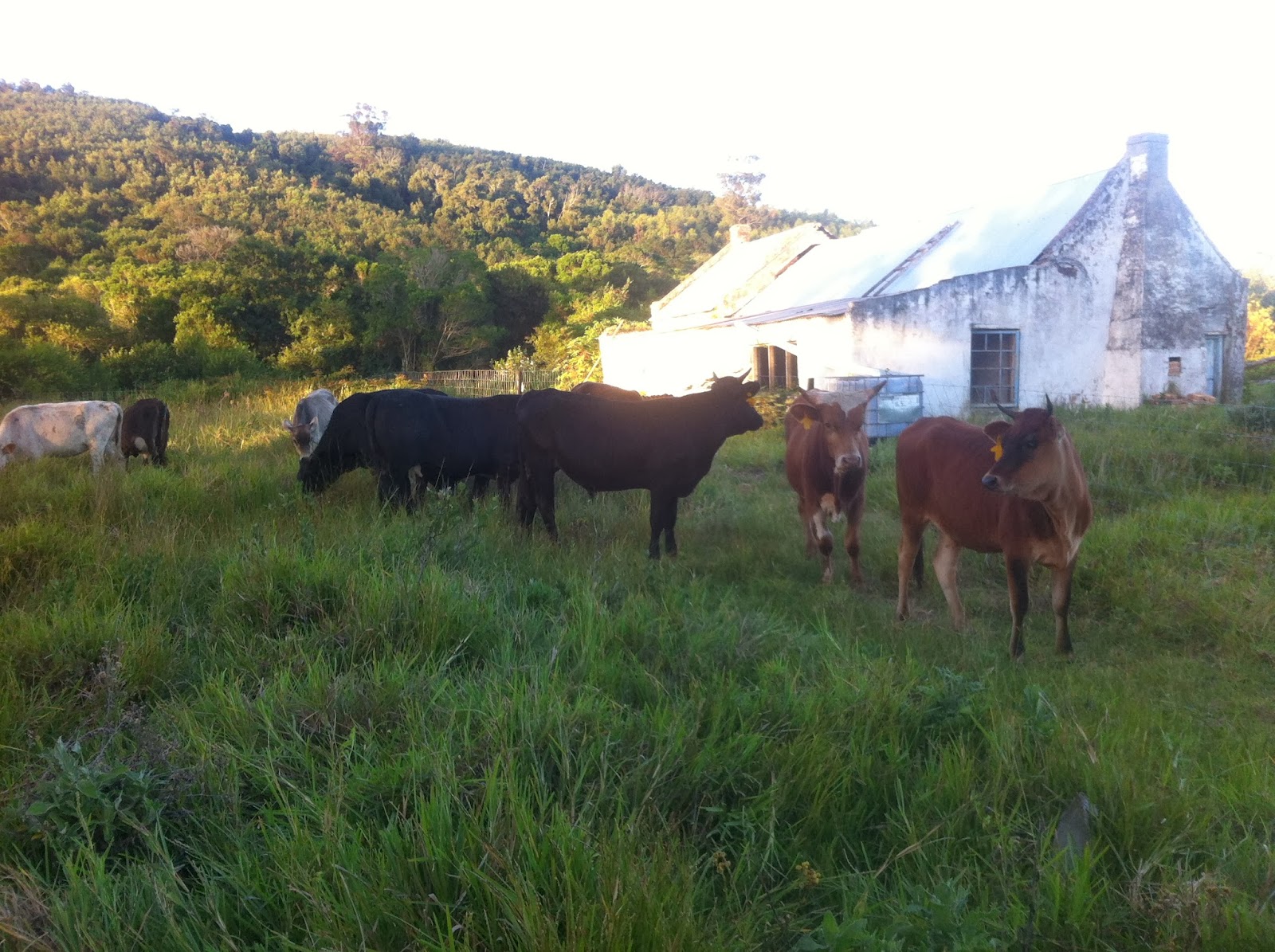
I have been using this to get the cattle trained to the electric fence, the objective then being to be able to direct them around the farm to begin with the clearing work that is required. We have now been experimenting with letting them out of the permanent paddock. We are having limited success but will have to get things working much better, much quicker, if I am not to do significant damage to the pasture
And its really dry now. Veld fires starring up all over the show and very hot. We need rain.
Condition of grazing on 11 January 2014
Condition of grazing on 27 January 2014

The other problem I see is that taking care of the cattle is using the lettle time and energy I have availble. I need to begin focussing on getting the cottage habitable. The basic plan now is to get the cottage habitable to the point where we can get tenants or a caretaker, giving a permanent presence on the site.

  • So toilet is important,
  • running water (from rainwater)
  • electricity (solar)
  • perimeter fencing
On the “paperwork” front, we signed the last documents at the bond registration attorneys this afternoon. The documents can now be sent to Cape Town (as soon as the attorneys receive the “Enrolment Certificate ” from the NHBRC. The woman at the NHBRC said it should take about three days when I dropped the forms on Thursday last week. So, I suppose, three (working) days ends tomorrow afternoon. Lets see!

Can this really work?

I worry a lot. I know its pointless, but I become overwhelmed sometimes with fear. Right now I fear that this will not work out. I fear that it is foolish of me to think that I can get this farm going and still hold onto my career as an architect. I fear that I am delusional. I fear that I am becoming obsessive about this project and that I am loosing focus to the point where I could damage myself and hurt my family. I fear that to take care of the cattle is taking too much time and energy and I have not yet go enough fence and water in place to be able to deal with them. I fear that I will find, find with time, that this is not actually what I want to do. I fear that I will find that I am more interested in watching other’s permaculture projects on Youtube, or reading about them on the blogs and forums. These are my fears and many others that surface individually or simultaneously.

We have piled the cut ink berry in one heap. Our neighbour Richard has offer for his guys to chip it with the wood chipper. Ink Berry is poisonous to cattle (and sheep and goats) it is a brazillian native and is terribly invasive, especially on the wetter parts of the site.

But lets talk rather about progress this week.

We still don’t have transfer…but, we have no done everything that needs to be done to get the bond registered.

  • I have municipal approval (for the cottage we told the bank we are going to build)
  • We have an enrolment certificate from National Home Builders Registration Council.
  • We have ” Builder’s All Risk” insurance cover.
So we sign with the attorneys at 13:00 tomorrow.
Everything should then be plain sailing till the transfer is registered at the deeds office in Cape Town. This should take about three weeks. I can’t think of anything that can go wrong but still I feel that nagging fearfulness welling up in my stomach.
Other than the procedural work toward transfer the work this week has been as follows:
  • Continuing to clear Ink Berry (Cestrum laevigatum)
  • Continuing work clearing Port Jackson and Black Wattle from the path that will become our driveway.
  • Continuing to train the cattle to the electric fence
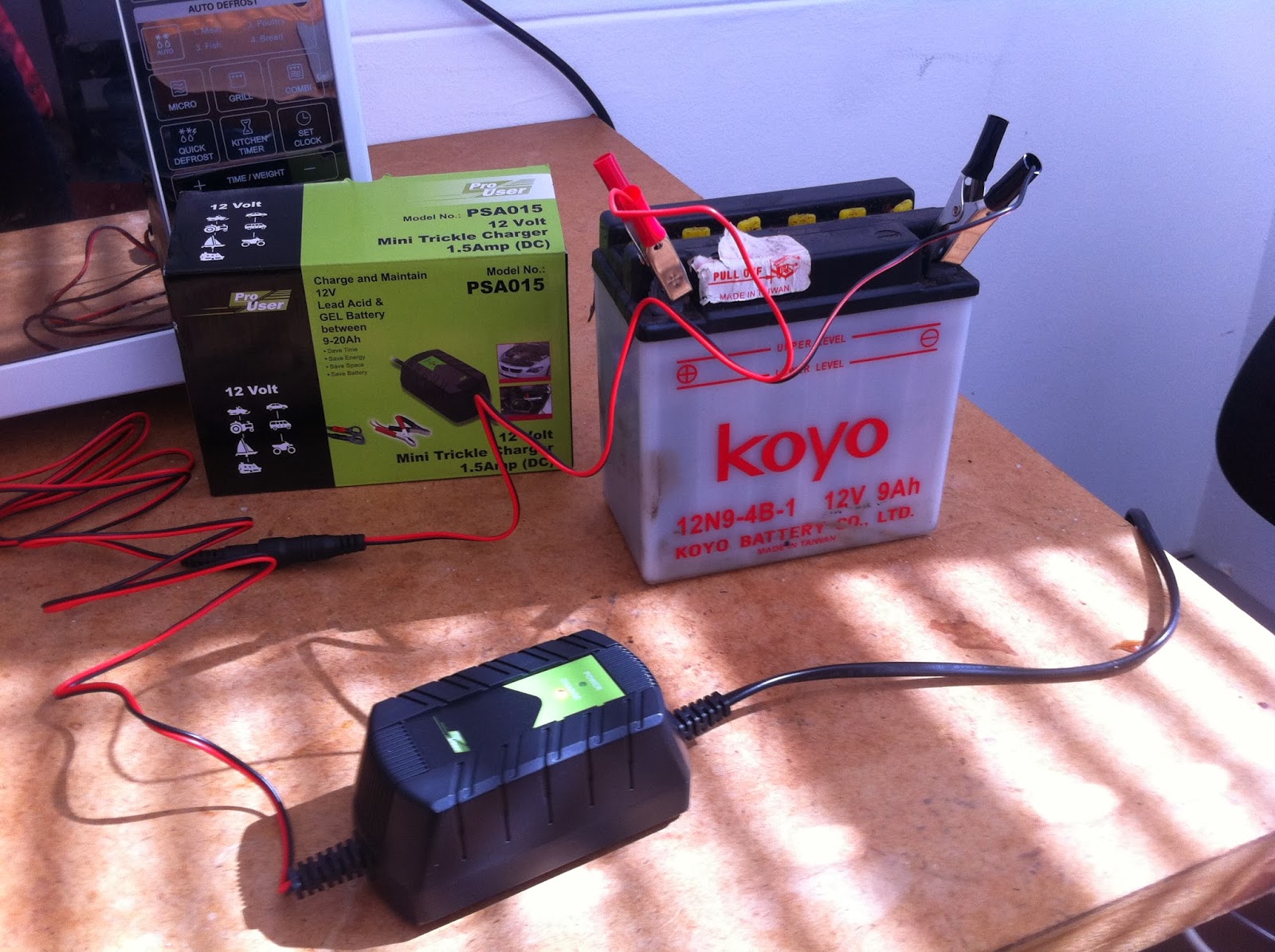
  • Bought a charger for the 12 volt motorbike battery I am using to charge the electric
  • returned the charger, then bought the correct charger with the correct amp rating
  • Selling three oxen at the Fischers Corner Auction yesterday
    • 1 at 246 kg for R2300.00 or R9.34 per kg
    • 2 at 339 kg (average) for R3300.00 or R9.73 per kg
    • total income – R8900.00 less comission at R710.00 and costs at R29.70 = R8159.99
    • (not to self – never sell at Fitches corner again – prices too low)
If you have a 9 amp hour battery you should be charging at about 10% of that as an amp input. This charger inputs 1.5 amps, but the instructions say it would be good for batteries between 9 and 20 amp hours.

I am feeling a bit tired this afternoon, but I can see we are moving forward.

Electric Fence Works like a bomb

OK. Well things are going much better. The portable electric fence is up and it running, and to my surprise all nine cattle now stay inside the fence. I have made some improvements to the water situation and bought two 200 litre drums (from a recylce place) I cut them in half with a chain saw.

There was no way on knowing what was in the drums, so I was a bit nervous that it could be poisonous. I washed it out as best I could with soap and water and it seems to be OK. One half drum gives m 100 l and this seems to last for about a day.
The electric fence runs off a Gallager energiser. A 12 v motor bike battery keeps it powered. I put this one on the fence on Thursday afternoon and it has kept going until now. I will monitor it to see how long it takes to run down. I still dont have a charger for the 12 volt battery and am still busy thinking whether I want a charger that I can plug into my solar panel or one that I can charge off mains here at home. Got to make up my mind quickly.

Be careful what you dream for

Perhaps a real adventure is one where you really don’t know where you are gonna end up. I can see now that our adventure of perusing Goedmoedsfontein is just such an adventure. I am not very sure where the adventure is going to lead, but for better or worse we have caught the train and we are headed out of the station.

In March last year (2013) we secured and option to purchase this beautiful 10 hectares. I have told you before that it has spring, a stream and a dam. I have told you before that it has some forest, some grassland and some marsh. I have told you before that is is just the right distance from town, to be in the country, but still allow our kids to go to school in the city. Just close enough for people to be able to drive out to the farm and buy their weekly supplies of eggs, chicken, boerewors and other fresh produce we dream of marketing from the little shop (or a ruin of a shop that we intend to renovate back to a shop) that is on the farm.

We managed to sell some property last year and secure the difference between what the bank would loan us and what the sellers wanted. That has all been finalised and all the documents have been signed at the transferring attorneys. (There is a bit of a “technical hitch” at the Bond Registration attorneys, but this should be cleared up in the next week.)

The funny thing is that I didn’t feel so much that the “train had left the station” when the sellers accepted our offer, or when the bank approved the finance or even when I paid the deposit to the conveyancers. In fact, I only  felt it this weekend when we brought 9 or our cattle from where we were keeping them in Tsitsikama to the farm.

I had worked the week before to create fenced pasture for them. It measures about 40 by 60 metres. The pasture is good. I rigged up a water supply from a rainwater tank which I haphazardly installed to catch some runoff from the roof of the cottage. So we loaded these cattle up on a hired trailer on Saturday afternoon and drove them to the farm. It was the first time have have loaded cattle or pulled them in a trailer. It was quite scary. Number one its a heavy load and you cant go very fast and number two these guys kept jumping around causing the trailer to sway uncontrollably. It was not fun.

After this exhausting journey we got the trailer as close as we could to the new padock (but this was still the other side of the stream) We let them off the trailer and they scattered in all directions. If Litha was not here I dont know what I would have done. But we eventually got them herded together and moving slowly in the direction of the padock into which we managed to secure them. I was exhausted by the time I got home and a bit shaken by the experience. The next morning, Sunday, Litha and I drove to the farm. All nine seemed quite restful. Some were mooing for their mothers (even though they were quite a bit over 12 months old they had not been weaned at Tsitsikama) All seemed fine, but when I cam back on Sunday afternoon, I found the whole herd out. I was alone. I ran round like crazy at first trying to direct them back, but the were determined to get away from the padock. I called my neighbour Richard. Luckily he was in he and a friend came to help. We go them in and I spent the rest of the evening trying to make the fences more secure. But the more I tried the more I could see that two black cattle were absolutely determined to escape they pushed at the fences and then over they went. By this time it was bout 8 pm. I called Litha and Hlubi. I stayed by the fence that had just been jumped to be sure the others would not also come out. They did not and eventually the family arrived and herd to two black cattle back from the tar road where they had got to so that I could get them back in the paddock.

With family back home preparing for the first day of school the next day, I sat in the dark at the farm watching the fence, stepping up every few minutes to beat a cow back from the fence it was trying to trample. It was a loosing battle. By about 10 pm as the rain was staring to come down, the two belligerent black cattle again jumped the fence. I had no choice but to let them go. I was hopeless to try no again to find them in the dark and what’s more the remaining  7 cattle seemed reasonably complacent and not intent on leaving the paddock any time soon. I went home, defeated and depleted, to sleep. In the 20 minute ride back home I could not shake the stress. I was upset. I was rattled and I was exhausted. I did not sleep well. My mind was racing. fearing the worst. fearing the whole heard was now dispersed all over the neighbouring farmlands. But I new there was nothing that I could do till the morning.

I left home at 5:30 am. I found a job seeker next to the road near the farm before 6 am (I could not believe my luck that there would be someone there that early – his name was Marius) Marius and I found the two black cattle heading toward us on the side of the road. They were reasonably easy to herd back and seemed quite relaxed and content to be re-united with the group they had abandoned the night before. I was relieved that the others had not also jumped the fence. Marius worked the whole day with Boyce to get the fences as strong as we could get them. I had to go in to the office for some crucial meetings. By the time I got back to the farm in the afternoon the cattle were all still in, but the two black cattle were mooing loudly again and looking agitated. As sure as anything right in front of my eyes the two black cattle jumped the fence again.
Richard from next door gain came to my rescue. suggesting that we separate the two black cattle out. He arranged for them to be located on his neighbours land were 2.4m high electric fence contained them last night. I kept the remaining 7 on my side last night and set up the portable electric fence for the first time. When I went this morning to drop Marius, they were happily inside the paddock. As a write now from home 20 km away from the farm, I a feeling less anxious that fences will be jumped tonight, but I will find out in the morning. I have definitely been jolted into a place in which i am uncomfortale. This is not theoretical any more. I am not a spectator to the spectacle.

Repairing the Dam Wall

Before even getting fences ready for cattle, I have been working to repair the break in the dam wall.

My thinking is that its a reasonably small job, but the effects will be quite significant at the dam level rises.

I am interested in attracting the birds and animals that need permanent standing water to sustain themselves. Not to mention the fish of course.

It will be interesting to see what fish species, if any are in the dam. I wonder if there are any Tilapia. It is said that in South Africa Tilapia (Mocambicus) are only indigenous as far down the coast as the Bushman’s river. They have of course been introduced to rivers all along the coast as far as Cape Town, but it would be interesting to see if they are present here in our dam.
Perhaps I can play with the idea of cages in the dam to grow out Tilapia fingerlings that I raise in my tanks.

Of Simplicity and Beauty

So, it’s Christmas Eve. If you are reading this you have probably survived the malls and the shopping chaos. You have probably spent more money than you had planned. You have probably bought a whole lot of stuff that you don’t really like for people who don’t really want more stuff. But this is our tradition, or rather this is what we have been lead to believe is our tradition. Even those of us who do not come from the land of snowy pine trees, jingle bells and basted turkeys have kind of begun to play along with the “season” and obediently do year after year what is expected of us.
Don’t get me wrong. I love the year-end break. I love floating in the pool, not shaving and pottering aimlessly around the backyard in those moth-eaten khaki shorts that my wife told me to throw out some time before the 1994 elections. But, when I am quiet with myself and think about it, I see that what I love most about Christmas holidays is that there is less “stuff”. There is less driving, less school, less work,  less email, less meetings and less clothing (at least in the backyard).
It is perhaps in this time that I slow down my mind enough to ask myself: “If having less makes me so happy, why do I spend so much of my life energy trying to get more? “ A curious question actually, and I am not sure that I can answer it for myself completely in my own life. But what I am more interested to talk to you about in this column today, is our cities and the buildings in them.  Because it seems to me that the ways in which we have complicated our lives with more and more stuff, is reflected back at us in the shape and form of our cities and buildings that grow more and more complex, less and less efficient and further and further away from the ideal of “natural beauty” that remains embedded somewhere deep inside each and every one of us.
So, what I am dwelling on in my mind these holidays is the question: “Can we find beauty in the process of simplifying our cities and the buildings in them?”.  For me, this quest for simplicity must be a one that understands the city as a living function whole; perhaps in the same way that the beauty of the flower or the butterfly comes out if the simplicity of the design solution as a response to the “whole”. The design of the honey bee colony seems to me to be the simplest, most efficient way of pollinating flowers while feeding honey to young bees. Therein lays its beauty. But our cities are not like this. Our buildings are not like this. Rather, they invent complexity. They reflect in-elegant clumsy solutions of our busy cluttered minds.
The most efficient and simple way to put bread on the table is surely not to be a worker in a giant bread factory in order to earn just enough wages to buy bread. The most efficient and simple way to deal with rainwater can surely not be to pay taxes to build a bureaucracy to run a massive storm water systems to lead perfectly good drinking water off our roofs through complicated concrete channels to the sea, while catching other rainwater deep in the mountains in expensive dams and piping it hundreds of kilometres right to your toilet where you flush it into yet another pipe that takes the water away again to be collected in one big smelly lake before being dumped again, in the sea.
No, of course it does not make sense. But we have become so tired from working so hard to accumulate more “stuff” that we have forgotten that it even had to make sense in the first place. But before you think that I am going on about bread making or water reticulation, I am not. I am asking myself for example: “ Is there a simpler more beautiful way to educate my children?”, “Is there a simpler more beautiful way to provide quality food for my family?”, “Is there a simpler more beautiful way to provide shelter for my family?” “Is there a simpler, more beautiful way to see to it that my family is clothed?”
The sad truth is that I, like you, know that there are simpler and more beautiful ways to do all these things. We also know therefore that there are simpler design solutions for the buildings and cities that must accommodated these things.
 I, like you know, that if we were to have the courage to change, we would be much happier people on a much healthier planet.
 But……where to find this courage? Perhaps it is here, in my backyard somewhere? Perhaps in the cool shade of the Avocado tree?

All that is “building” is not “Architecture”

This column first appeared in the
The Port Elizabeth Herald on 14 October 2013.

Last week Monday, 1October, was “World Architecture Day”. No; I did not do anything special either. I suppose I got distracted and caught up in all the excitement of World Yo-Yo day and the International Tennis Elbow Awareness week. You see, we live in a world where everything is important and Architecture has become one of those many, many important things. But, I wonder, is a world where everything is important not the same as a world where nothing is important? To be honest, I wasn’t even thinking about any of this on the evening of World Architecture Day. I was at home mending the hole in my backyard chicken house that the dogs had caused over the weekend while we were away. I did notice though, that the weaver birds had built the first nest of the spring in the Mulberry tree that overhangs my duckpond. The nest was well constructed, strong, resistant to wind and, I presume, quite dry inside. But, we know that the weaver bird’s nest is not “Architecture”. Animals can build, but only artists can create Architecture. Architecture is much more than just building, it is an art form. Architecture is a statement by a human mind about the mystical nature of beauty.

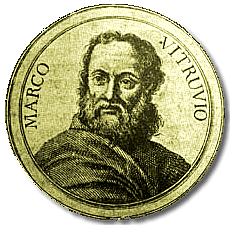
Two thousand years ago the roman Architect Vitruvius explained that for a building to be described as “Architecture” it must fulfil the requirements of “commodity, firmness and delight”. In other words, it is not good enough for a building simply to stand and to be functional. It must deliver “delight” to the users of the building. It must deliver “delight” in the same way that a great painting, or a great sculpture, or a great piece of music delivers “delight” to its audience. The difference with Architecture of course is that it is a functional, public art form that, in a very real way, touches the lives of the people that use it. But, the great advantage and significance of this art form is also its great weakness. Because, while those artists who paint with oil on canvas are left to do their own thing, Architects, are continually harassed by bureaucrats and salesmen claiming to be experts in “firmness” or “commodity”. The debate and discussion around “delight” and “what is beauty?” is largely abandoned in favour of arguments that can be supported by “measurables”: tangible things that can be quantified and counted. What strength of beam? What level of compaction below the surface bed? What length of escape to the fire exit?
But why, you may ask, am I even bothering you with this discussion? Is this not rather for Architects and Artists to discuss among themselves in coffee shops and libraries? I would say: “No! Absolutely not!”, because architecture, like other art forms, can only exist as art when it conects with the pubic that view it and use it. Great architecture needs great Architects, but only as much as it needs a public to appreciate it and powerful people to commission it.
Great architecture today, as always, happens only with the commitment and dedication of private sector investors, public sector developers and civic minded wealthy families. Very often individuals in these institutions make extraordinary sacrifices and take big risks in order to promote the idea of great architecture in an environment hostile to “outputs” that that which cannot be readily measured. An entire municipality or department of government can achieve a “clean audit” for ten years in a row without building one great piece of architecture. A property developer listed on the Johannesburg Stock Exchange can deliver excellent results for 20 years without building one great piece of Architecture. Wealthy families can show a much faster return on their money than by investing in great Architecture. Yet still, selfless individuals in these institutions, dedicated to the idea that there is more to this world what can be easily measured, have consistently seen to the implementation of great works of Architecture by great Architects. Because of this fact and in honour of these extraordinary people, every two years (for much of the 112 that the Eastern Cape Institute of Architects has been in existence), we pause to recognise and acknowledge great Architecture of our region. This process of acknowledgment culminates in an awards ceremony next week and a public exhibition of all the works of Architecture that put themselves forward for public scrutiny in the hope of receiving a much coveted “Award of Merit”.
This year the public are invited to view this exhibition of great work.  All of this happens in the dignified setting of the Port Elizabeth Opera House on 14, 15 and 16 October in an event called the “Urban Assembly”, which not only has three different exhibitions running simultaneously, but also has debates, speakers and activities running in the ornate and beautiful spaces that comprise africa’s oldest Opera House. This event seeks to elevate the discussion around the building of great Architecture and by extraction the building of great cities. It is for people that believe that we are able to transform the cities of our future and for people that know that, as a country and as a city we already have all the essential ingredients to build a great urban work of art in which we can all live our lives sustainably, efficiently and with the joy and pride that comes from being of a place that resonates with our contemporary culture.
Make a point of being there.
Tim Hewitt-Coleman 9 10 13