The Margins

The Dam is settling down nicely after removing silt a few weeks ago.

I spent a great day out at Pebblespring. The morning was really beautiful after the rain yesterday. The skies were clear and there was a kind of silence that sounds different to there just being no noise. I did some work preparing pasture on the road side of the stream. The grazing is good there, but in order to run the temporary electric fence there, some work needed doing in clearing a new path through the forest. I am careful when cutting a new path to only cut alien invasive trees. In fact most of the bush in that area is Port Jackson, with a bit of Poplar thrown in, but there is a surprising amount of indigenous stuff fighting its way through. My objective is to help get this indigenous bush back on its feet.

In the afternoon the whole family came out. We made a braai. It was great. But now I am back home. Had my shower, now drinking my coffee, also great.

I was reading Wendell Berry’s “Unsettling of America” this morning. The chapter spoke of marginal land and how much marginal land is abandoned in the US because it is just not profitable for big “Agribusiness” to work it property.

Pebblespring is like that. Abandoned, when we found it, not farmed for so many years because, its marginal. The slopes are too steep and the marsh to wet for big equipment. And its too small to make sense as a significant ” Agri Investment’, But perhaps, if I am running an experiment here, one of the things I am looking for an answer to is:

Is there something useful, beneficial and sustainable that can be done with Marginal land like this?

But there are other questions:

  • Can I support my family on a piece of land like Pebblespring?
  • Can I carry on my career as an architect and make a success of Pebblespring?
  • Is there enough time for both?
  • Can I really make my family comfortable off the grid?
  • Can I support and enhance bi-diversity while still making the landscape productive?

These questions float through my mind as I wield the chainsaw in the forest or drag branches to the heap. I think about many things. I think about what the land must have looked like long ago. Before the Dutch came. Was it all forest or what there some grassland? My neighbours speak about elephant bones they have dug up on their land. It must have been vibrant and diverse. What did the Dutch farmers (and the Irish after them) do? Did they cut the  forest for timber, did they just burn it for pasture? How did the Khoi Khoi pastoralists use the land? How did they interact with the forest? Did they burn for pasture? I am interested in all of this, because I am still trying to formulate the picture in my mind of what I am trying to direct, to steward Pebblespring to become. Like the artist of a giant landscape painting or a landscape sculpture, except this is  a living sculpture, an edible landscape, a practical beneficial landscape, but a landscape which holds and captures the mystery of beauty.
The real pleasure of physical work

It was my first day back at work today after a four day long weekend which started with “Workers day on Thursday 1 May. I spent much of my worker’s day weekend working. Physical work, cutting trees, hauling branches, digging, holes, building fences and fixing quad bikes. Physical work is for me a kind of meditation. I am sure that’s not the right term, but its something that is good for me. It makes me feel alive and somehow “in touch”. Working outside, with the land and the forest has a very different feeling to “working” at my desk in the office, where I am invariably, writing or designing, or delegating or managing or strategising or cajoling or apologising or berating. In fact I am no longer sure that “working” is the correct term for what I do in the office, or for what millions of white collar workers do around the world in offices just like mine every day. There is such a disconnectedness between my actions in my office and anything actually getting done physically in the real world. So much of the office energy goes toward complying with government and bureaucracy. So much energy goes into delegating what I have been tasked with to someone who will delegate to still someone else who will delegate to someone else. So much energy we put in to avoid doing any real work. Years and years of study and building our careers to be sure that we are as far as possible away from being called upon to do any physical work, and for what? Because when I am there, on the ground, wrestling the chainsaw or hammering the nail or straining the wire, it is glorious, it is satisfying
and I am in a place that I want to be.

Is it just me?

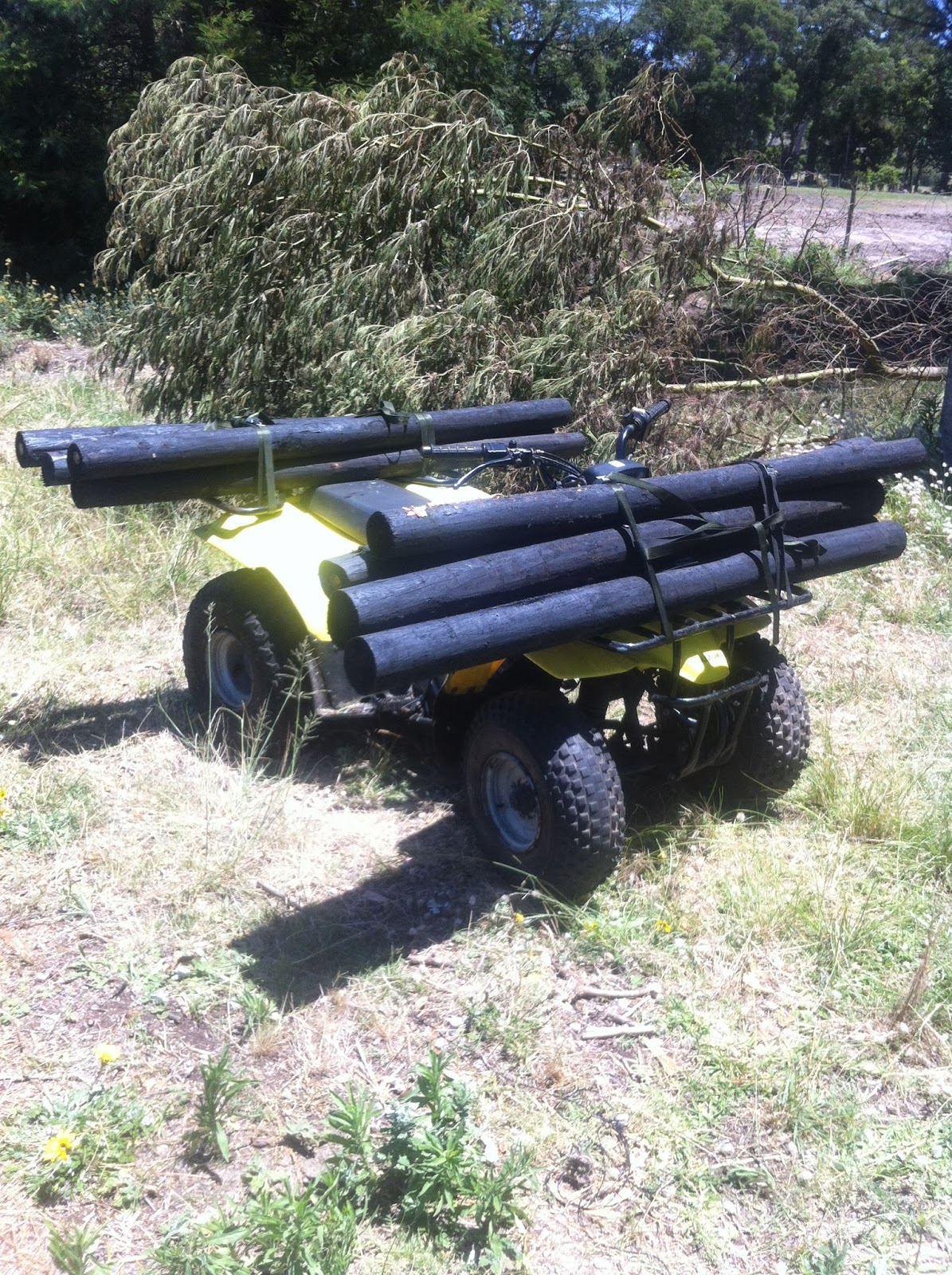
160 cc Susuki Quadrunner helping out with some fence poles.
The right tools obviously make things a little easier.

Dam and Damn Aliens.

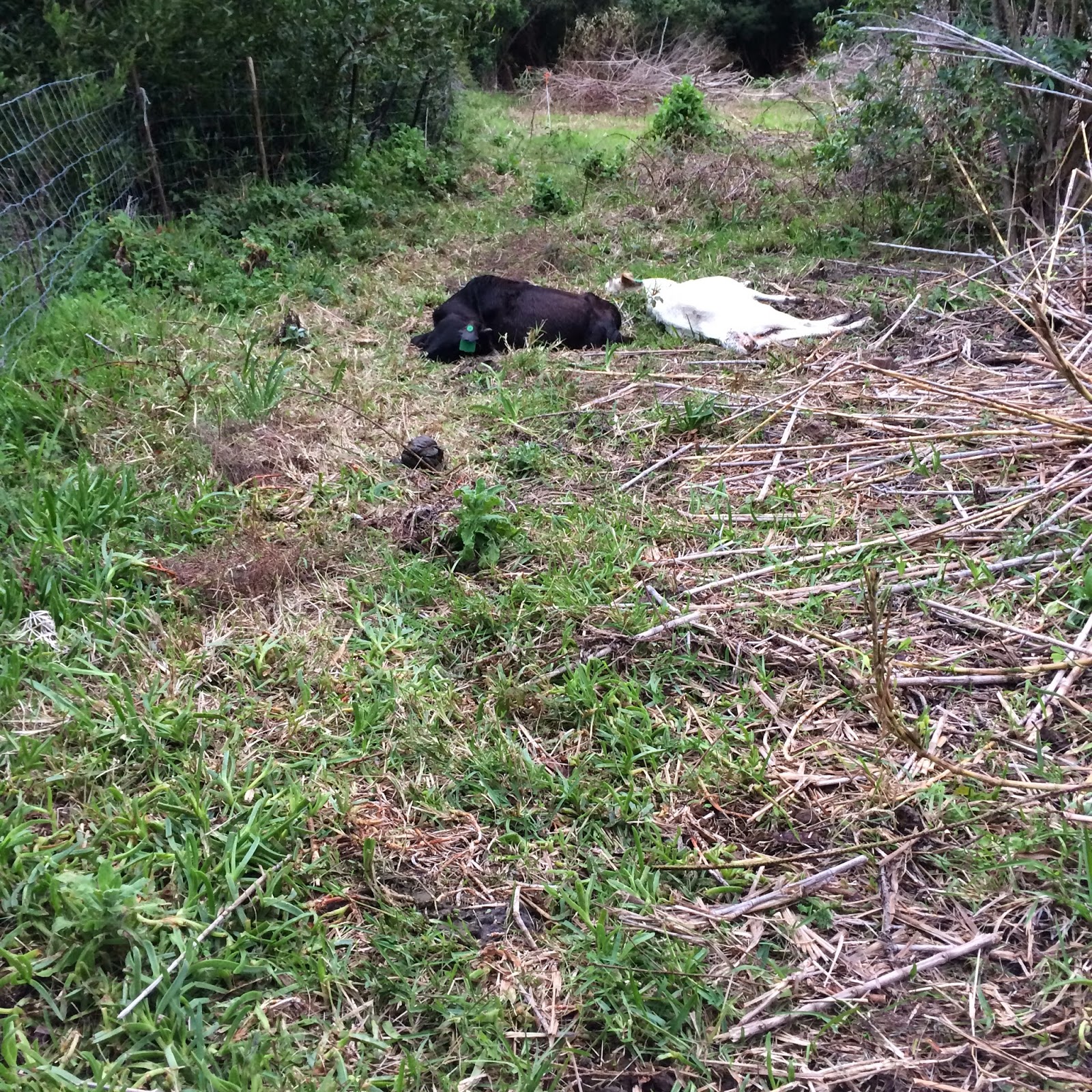
I am still a bit upset about the three cattle we lost. I know I could have avoided it. The spray I got from the vet, really cleared up this ticks on the remaining three and they are looking much better.

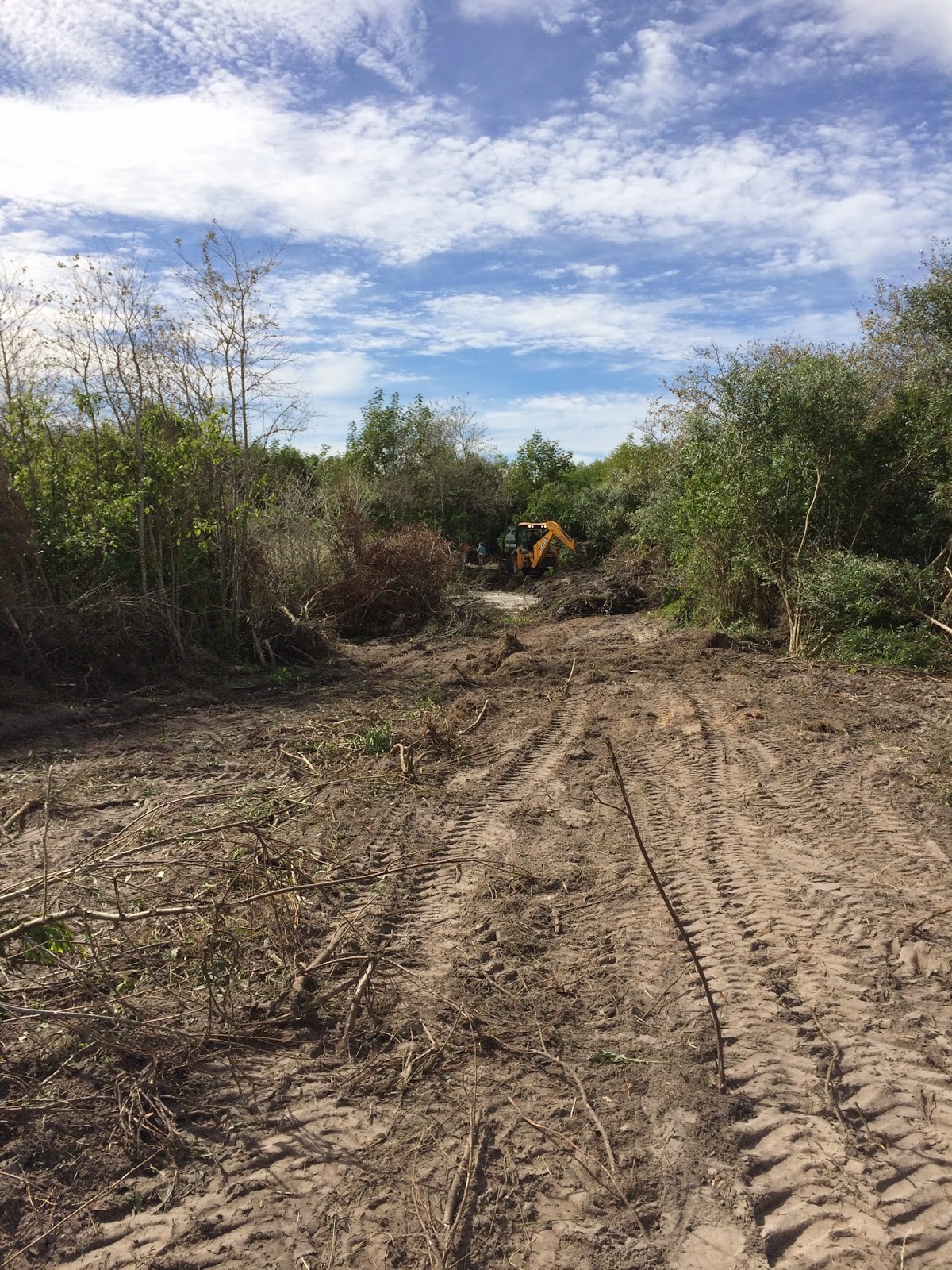
We had the TLB (tractor, loader backhoe) out again yesterday. Doing some more work on clearing alien vegetation on and around the dam wall, which now doubles as the access route.  Basically what we are doing is removing poplars and inkberry  that are growing into the dam. Problem is, we made more progress than we thought we would yesterday and about a metre of wet material was added to the dam wall over about a 15 m length. That depth of material will take a while to dry out, so we cant drive on it yet. No big deal, except, I had parked my car at the cottage and now cant get it out. I had to phone Hlubi to come and pick us up and take us home.

Perhaps the route will be dry enough by Tuesday. When I checked it today, it was sill so muddy, that I couldn’t walk over it. Its like sinking sand in places. I am sure though it will be OK once it dries. We excavated the same soil last time and it dried out OK for us to drive on.

I have been spending my mornings for the last few days reading Wendell Berry’s “Unsettling of America”. What he says really resonated with me and plays over in my mind. Even when I was working with the dam wall yesterday I was reflecting on what Berry speaks of as a “nurturing” spirit as opposed to the spirit of conquest. I can see what we are doing at Pebblespring seeks to nurture, but when we bring heavy machinery on site, it is nerve racking. Perhaps it feels to close to “Conquest”. This property has been so badly neglected. It has gone to ruin. If the idea is that we nurture it in order that is can, in return, provide for us, then we will have to begin with some drastic “surgery”  But what I call drastic is nowhere near what my neighbours are advising “bulldoze the whole thing flat”, “burn it all down”.
There is a gentle, more nurturing way. I will find it.

Death and Destruction

I have delayed writing this post. Its been too painful.

Three cattle are dead. Tick born disease perhaps. Inkberry poisoning, also a possibility. I had to go out of town last weekend. I left on Friday. When I came back on Tuesday, they were dead.

I am devastated by this failure. I know all the rhymes about how we learn from failing, Its just that it feels so bad. It feels so discouraging .It brings everything into question. It brings my dream of this farm into question. I know it shouldn’t. I know I should just shrug it off, but I am just telling you how I feel. I know that I am not ready to bring animals onto the farm, I know I am not ready to but the farm I know things are too hectic with work and with family. I know all of this, but I also know that the only way to make this happen is to make it happen.

But maybe this is what this blog is about: Communicating the real struggle that it is to transition to some kind of agrarian reality. Showing that its not all about strolling in the forest and singing songs by the camp fire at night.

Its real and it gets nasty!

Look after what we have got.

(I wrote this Column for the 9 April 2014 edition of Port Elizabeth’s daily newspaper, “THE HERALD”)
It was a windy, wet Wednesday. The sound of the angry sea crashing over the rocks was not even audible over the noise of the lone excavator as it crushed and smashed the last remains of what was the Seaview Hotel. Like a deranged beast, like an angry elephant, swinging left and right with its devastating mechanical trunk. The once gracious and manicured Minhetti was no more.
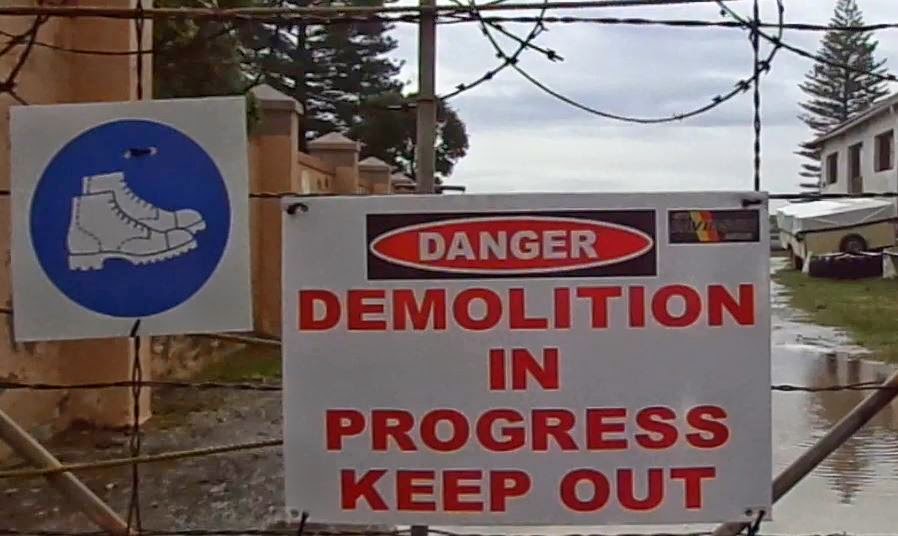
My son sat in the car, dry from the rain, as I stood by the gate, by the sign “Dangerous – Demolition in Progress”. I was not sad nor sentimental, not angry nor frustrated. I did not really even like the Seaview Hotel all that much the once or twice that I had been there. But I was filled with and uneasiness that stirred somewhere deep inside my innards. Over the course of my short life I have not yet been able to figure out what these deep feelings of uneasiness mean, or even whether they are of any significance. I have learned though, that it is normally I sign that I should step back and ponder. So here I sit, this morning, pondering over a fine Cappuccino in an average mall café.
I ponder over how we commit large amounts of energy into showing how frustrated “we” are that “they” demolished “our” hotel, or made potholes in “our” roads. Or how “they” built Greenacres, killing “our” beloved, historical Main Street. We know that it is too late, but still we commit the energy to raise our voice. Like the English complaining about the weather. Is this not a form of insanity? (Knowing nothing can come of our whinging, yet whinging anyhow!) But then I ask myself: ”If it is too late to save the Seaview Hotel, then what is it not too late for?”
I am sure each and every one of us has a best building or favourite neighbourhood, about which we are sentimental. But not each of us has a newspaper column in which to talk about it!
I do.
So, without any shame, I tell you: “Now is the time to take action to save Central, Port Elizabeth.” Framed by Govan Mbeki Avenue, the Baakens Valley, Rink Street and Russell Road, Central is home to the most extraordinary collection of rich and poor, young and old, sinner and saint. All framed in beautiful avenues, delightful squares, quaint lanes and irreplaceable buildings. How long will those of us that find meaning in Central wait before we find the energy to stand up, make a noise and take action? Will we wait for the last heritage cottage to be burned by damp and freezing vagrants? Will we wait for the last antique shop to flee to Walmer? Will we wait for the last coffee shop to tire of hastily hosing vagrant urine of its veranda every morning before the first customers arrive? Will we wait for the last office dweller to driven to Newton Park by the grime, dirt and continuous harassment by street people, drug dealers and petty thieves? When the last housewife, loses her last child in the hip high grass in any number of once perfect parks and playgrounds? Will it be after the bulldozers come, to clear the land, to flatten the monuments? Will it be then that we say “But how could “they” do this to “us”? How can “they” rob “us” of this enduring example of how city living can be tolerable, bearable and even enriching. How can “they” rob “us” of this model of authentic living that was our only contribution to the country’s emerging thinking on the future of the city?
I am sorry my friends, but I must offer to you that we are all delusional. Sadly we have come under the spell of a compelling lie, a myth that there exists such a thing as an “us” and a “them”. We can understand why the politically powerful may find it useful to perpetuate this myth, but it serves no purpose when we are needing to get things done. Right now, the thing that I am motivating, needs to get done, is that we save Central. If you are with me, then let us agree on one action we can take right now, as you put down this newspaper. Go find out more about the excellent initiative underway right now to establish a Special Rating Area (SRA) for Central (basically you pay a bit more rates to get better cleansing, security maintenance etc.)  It’s a “no brainer. SRA’s have been set up all over South Africa and the world.  Jo’burg’s got them. Richmond Hill has just set up an SRA, proving it can be done in our region.
If you do not live, work or invest in Central, all is not lost. Make a point of having a coffee in Parliament Street once a week. Make a point of buying an antique in Lawrence Street once a month, make a point of taking your kids to the Donkin Reserve once a term, make a point on attending a church service once a year in any one of the most beautiful Gothic revival churches. The point I make is, that our energy can be much better spent by expending it before the demolition than after the demolition.
Now that you are clear about what needs to be done: get out and do it! (Please)

The Old Oak Tree

There is an old Oak Tree toward the east of the dam. It is in thick bush. I cut my way through to it yesterday. I had found it before, some months ago, when walking a different route. My neighbour, Gavin Flanagan told me some months ago that there was an old Oak Tree, he told me there were springs and a “well” I set out to find all of those and I did. But having a closer look at the tree I see that it is not very healthy.Some of the big branches seem dead. Others have broken off. There are leaves growing off one of the big branches, but not vigorously. I see some places where there is rot in the trunk and in other places I notice the tell tales marks of wood boring insects.

So I am trying to find out what can be done to help this tree. Any clever people reading this know what to do? What kind of insect is likely to be boring into the trunk? Is there a safe method to get rid of them? Are there environmental changes I can make? (getting more light on the trunk, getting more cross wind?)

I measured the circumference at 2.3 metres. I have read somewhere that a very rough estimate of an English Oak’s age would be one year for every 25 mm of trunk circumference. Our estimate therefore is that the tree is 92 years old, having started growing in 1922.

I am interested because I really like trees and because I am am interested in anything that tells the story of the farm, the various chapters of its history. This is part of the appeal of the site. Its like a journey of discovery, unravelling a mystery.

Building Procedes

Well, quite a bit of work has been done on the cottage. I have a great team on the site headed by Gavin Fortuin and his colleague Roland. The gables have been repaired a new room has been prepared inside for the toilet and the floor of the living room has been excavated in preparation for the earthen floor. I met Diane on site on Thursday. She has made and earthen floor before. In fact she has built a cob house along William Moffat drive in Port Elizabeth. You can see it here.

Water for the works is still a big problem.

In the meantime we have moved the cattle over the stream to the grazing on the road side of the property.
The grazing is good there, but I was concerned to have them close to the road not trusting that they would not want to wonder off. The have been very well behave though since I put them there on Wednesday. I just moved them to a new patch of pasture this morning.

Pebblespring Farm

In a family meeting last night we agreed on the name for the farm…. “Pebblespring


The name, “Pebblespring farm” is a nod to the Khoisan and what they called “Kragga Kamma” lake. The surrounding area that is named “Kragga Kamma” after this lake. One of the streams that feeds the Kragga Kamma lake has as its source the spring on the eastern boundary of our property.
The most reliable source we can find (Margret Harrodene) records the Khoisan translation for Kragga Kamma as being “pebbly waters”. Our spring is at the source of a little river that feeds the “Pebbly Waters” so we called the spring “Pebble Spring” and the farm Pebblespring Farm. I love it! The name talks to the fact that this property would have been a centre of human habitation for a very long time before the dutch arrived an called it Goedmoedsfontein, in itself a beautiful name meaning “Spring of Wellness and Contentment”.

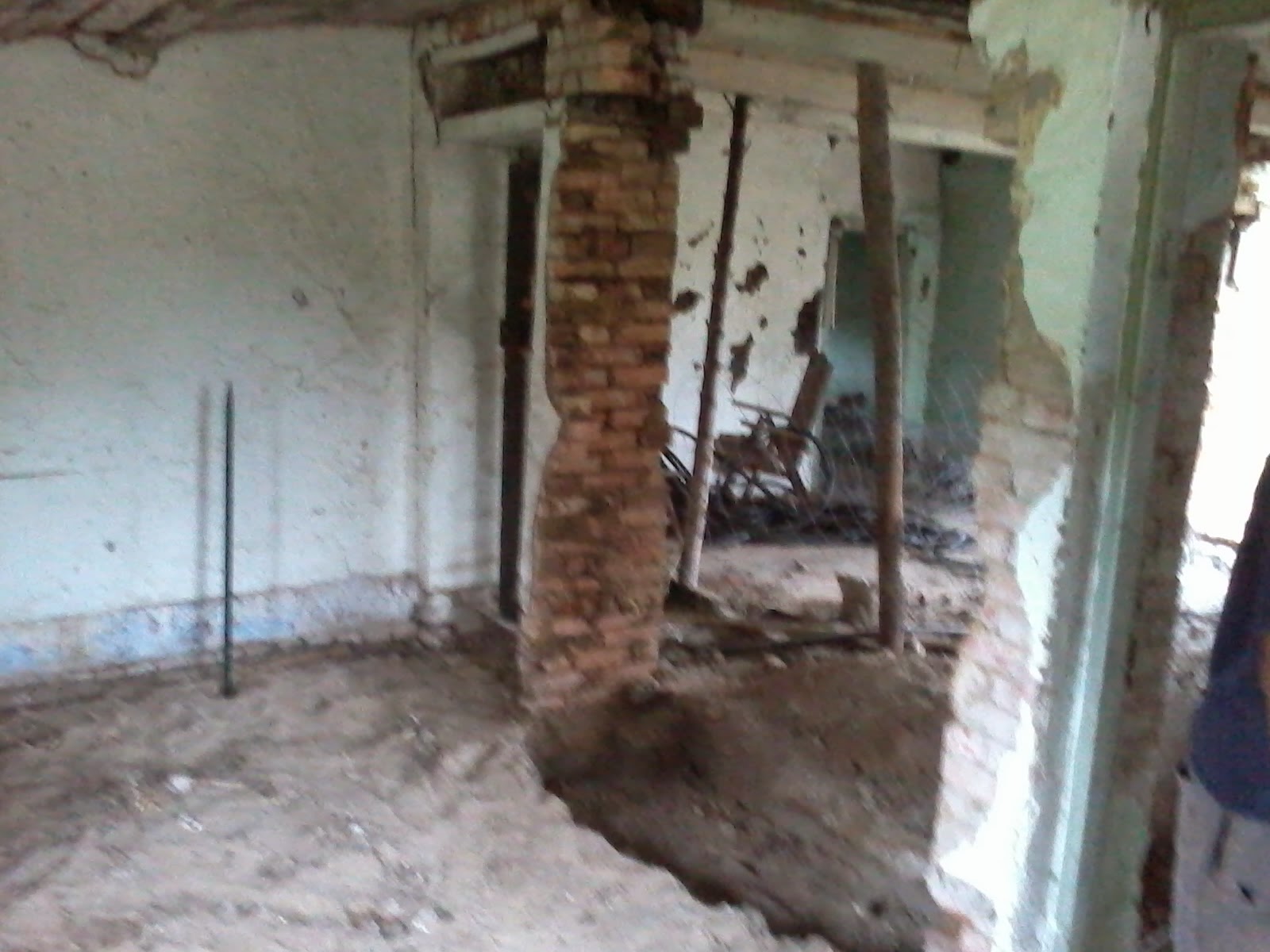
The collapsed wall is being replaced down to the foundations

In other news, the builders started today on the maintenance and repairs to the shop and cottage. All work is proceeding in accordance with a heritage permit received from the Provincial Heritage Resources Agency. (which by the way required us to do work by June this year.)

I am also glad that the truck made it up the new (still very bumpy) driveway.
http://youtu.be/CDEcVcD2OVU


Clearing Alien vegetation off the dam wall.

Today we brought in a TLB. I booked it for three hours. we started at 9am. I am trying out the TLB to see what it can do in what space of time. I am happy to say we managed to clear alien vegetation in a 3m wide strip all the way though to the cottage. We cleared Ink Berry, Black Wattle, Port Jackson ( Acacia Saligna) and Poplars. Our plan is not to surface the cleared strip we are driving on or build any culvert, as these could be understood to be  “Structure” the construction of which are “listed activities” in wetland areas in terms of environmental legislation.

I can now drive my car along this cleared strip and get all the way to the cottage. There has been vehicular access to the cottage for the last 20 or 30 years. Not since the subdivision which somehow cat off the access route and located in the neighbours property. The strip of alien vegetation I have cleared runs along the existing dam. I am sure it will be a problem in a very big flood once every 10 years, but I suppose then we will have to be cut off from the world for a day or two.

The TLB can knock down trees, move sand, dig the dam deeper. Its a very versatile tool.

It cost R300 per hour. so R900 rand in total for this morning work. We hired it from a company called Glendore Sand. The drivers name was Nathi. He was great.

To hire people to do that by hand would have been much more expensive and take a huge amount of time and management input.Its quite sad. So many people are looking for work, but it just does not make sense.

I loaded these videos that give an idea of the work.

 http://youtu.be/_dV_3S54adc
http://youtu.be/En1nsElKnwA